Mona Island
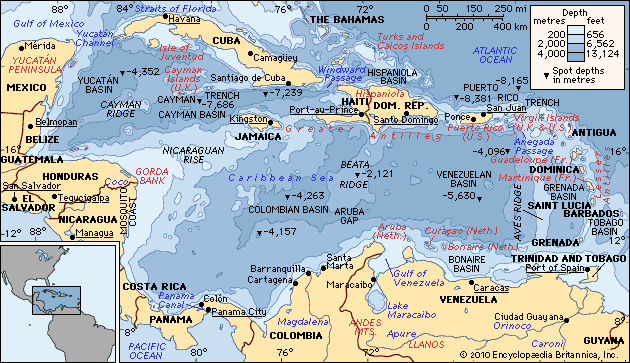
Mona Island is a limestone plateau located in the center of the Mona Passage, approximately 45 miles (70 km) west of Mayagüez, Puerto Rico.
What is Mona Island?
Mona Island is a limestone plateau located in the center of the Mona Passage, approximately 45 miles (70 km) west of Mayagüez, Puerto Rico1.
Spanning roughly 20 square miles (52 square km), the island is characterized by limited vegetation, though some reforestation efforts have occurred. While it features excellent beaches and fishing opportunities, government-led tourism initiatives have not been successful, and the island currently has no permanent inhabitants. Historically, the island served as a site for commercial guano collection until approximately 1920.1
It is important to distinguish this geographic location from the mona monkey, a small, long-tailed primate species native to West Africa that was introduced to other regions, such as Grenada.2
What is the significance of the Mona Passage for shipping?
The Mona Passage is a vital maritime strait located in the West Indies between the islands of Hispaniola and Puerto Rico. Its primary significance lies in its role as a strategic connector between the Caribbean Sea and the Atlantic Ocean.3
By serving as a major gateway, the passage provides a critical transit route for vessels navigating between the Atlantic and the Caribbean, significantly influencing regional maritime traffic and trade logistics.
What kind of unique wildlife lives on Mona Island?
Mona Island is home to the Mona rhinoceros iguana (Cyclura stejnegeri), a species that is currently classified as critically endangered by the International Union for Conservation of Nature.14
While the island is a limestone plateau with limited vegetation, it provides a specific habitat for this unique reptile. It is important to note that while other animals like the mona monkey are named for their association with certain regions or have similar names, they are not native to Mona Island; for instance, the mona monkey is a West African species introduced to other islands like Grenada.25
Why was guano mining important to the island’s history?
Guano mining was a significant commercial activity on Mona Island until approximately 1920. The island’s limestone caves provided a natural environment for the accumulation of bat guano, which was harvested for its value as a fertilizer.67
While bird guano is generally considered more potent due to its high concentrations of nitrogen and phosphoric acid, bat guano—such as that found on Mona Island—was also historically sought after for agricultural use. The extraction of these deposits represented the primary industrial use of the island before it became uninhabited and was later designated for conservation efforts.76
Sources
- Mona Island — Encyclopædia Britannica
- Grenada - Plant and animal life — Encyclopædia Britannica
- Mona Passage — Merriam-Webster
- iguana: Top Questions — Encyclopædia Britannica
- iguana — Encyclopædia Britannica
- guano — Encyclopædia Britannica
- guano — Merriam-Webster
Published on · 2 min read