Giant Panda
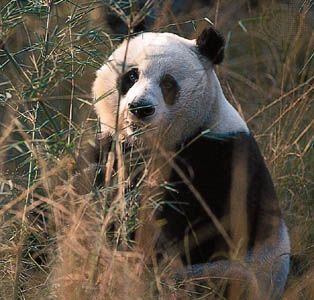
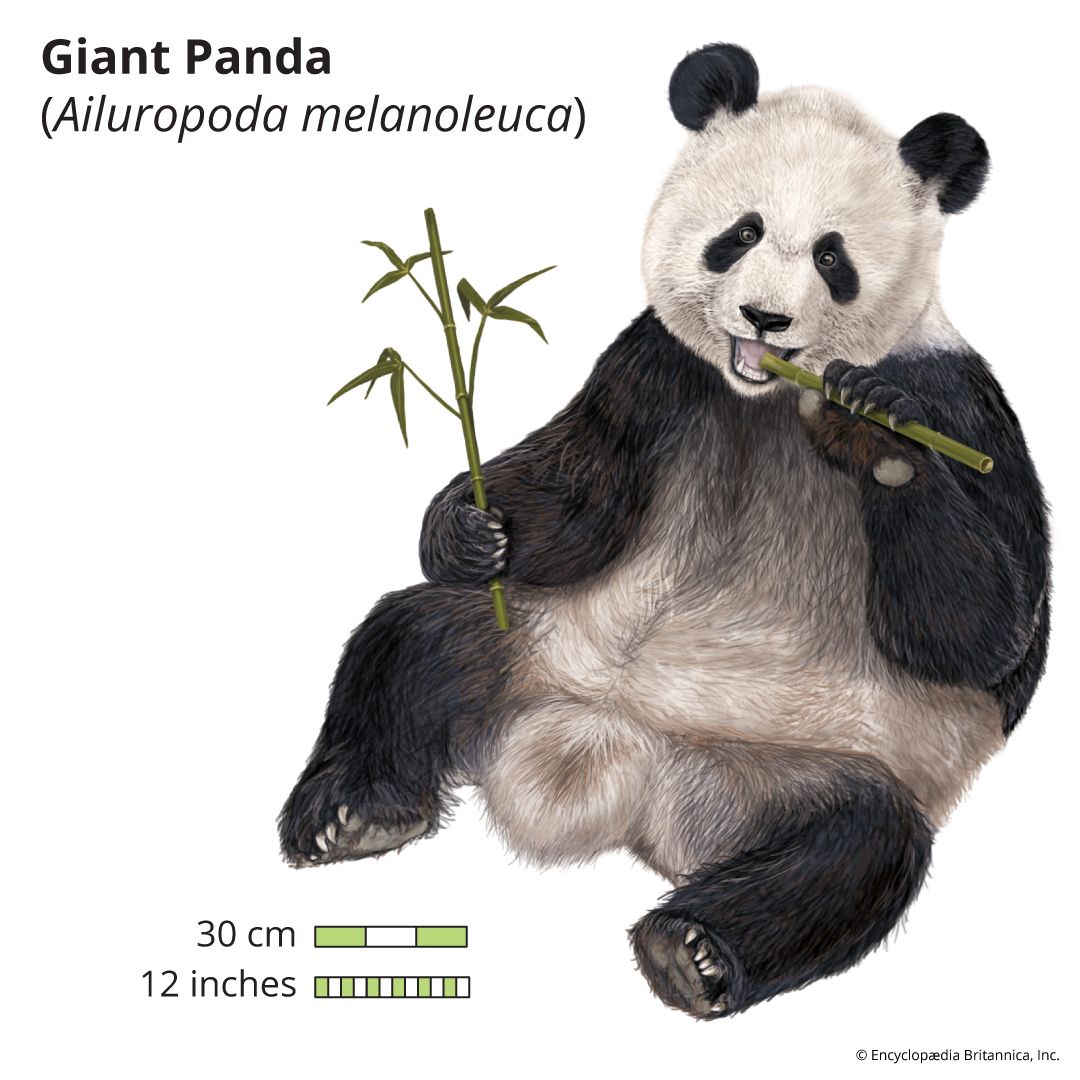
To survive on a diet consisting almost exclusively of bamboo, the giant panda has developed several specialized physical adaptations:
What genetic adaptations have giant pandas developed to survive on a bamboo diet?
To survive on a diet consisting almost exclusively of bamboo, the giant panda has developed several specialized physical adaptations:
- Forepaws: Pandas possess an enlarged wrist bone that functions similarly to a thumb, providing the dexterity required to grasp and handle bamboo stems and shoots.1
- Teeth and Jaws: The species has evolved specialized teeth and jaw structures to facilitate the consumption of tough bamboo fibers.1
Despite these adaptations, the giant panda retains the digestive system of its carnivore ancestors, meaning it cannot digest cellulose, a primary component of bamboo. To compensate for this inefficiency, pandas have adopted a behavioral strategy of consuming prodigious quantities of bamboo, spending up to 16 hours a day feeding and passing the material through their digestive tracts rapidly.1
How has the giant panda become a symbol of conservation efforts worldwide?
The giant panda has become a global icon for conservation primarily due to its status as a charismatic megafauna—a term describing popular, attractive animals used by organizations to generate public interest and funding.2
Its role as a symbol is reinforced by several key factors:
- Flagship Species: The giant panda serves as a “flagship species,” acting as an ambassador for its habitat. Because of its broad appeal, it is the official mascot of the World Wide Fund for Nature (WWF), featuring prominently in the organization’s logoF)](https://www.britannica.com/topic/WWF), featuring prominently in the organization’s logo.4
- Umbrella Effect: By highlighting the panda’s plight, conservationists draw attention to the broader ecosystem. Efforts to protect the panda’s bamboo forest habitat indirectly safeguard numerous other plants and animals that share the same environment.2
- Panda Diplomacy: China has long utilized panda diplomacy, gifting or loaning pandas to other nations to foster international cooperation. These agreements have evolved from simple diplomatic gestures into structured partnerships that generate essential funding and support for conservation and research.31
While this focus has been highly effective in increasing the wild panda population, some scientists caution against “flagship fatigue” or the risk of overlooking less charismatic endangered species.2
Where do giant pandas live in the wild, and what is their natural habitat like?
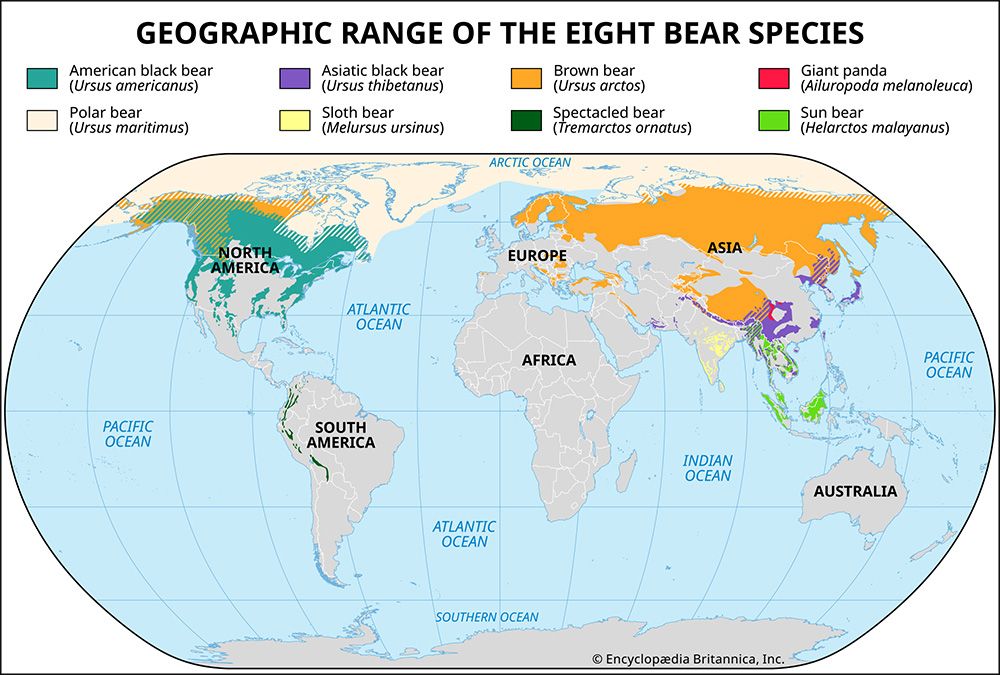
Giant pandas live in the wild exclusively in remote, mountainous regions of central China, specifically within the provinces of Sichuan, Shaanxi, and Gansu. Their natural habitat is primarily characterized by dense bamboo forests located along the eastern edge of the Tibetan Plateau.5
These forests are essential to the panda’s survival, as bamboo constitutes 90–98 percent of their diet. The environment is often rugged and mountainous, and because pandas cannot digest cellulose efficiently, they require large, undisturbed areas of forest to find enough food to sustain themselves.51
Currently, much of the wild population is confined to a series of protected areas and reserves. These habitats face ongoing threats from human encroachment, including timber harvesting, infrastructure construction, and agricultural expansion, which lead to habitat loss and fragmentation. Additionally, the species is vulnerable to natural cycles of bamboo die-offs, which can take 5 to 10 years to recover, as well as the long-term impacts of climate change.251
How are giant pandas classified within the bear family, and what makes them unique?
The giant panda (Ailuropoda melanoleuca) is classified within the family Ursidae, which includes all bears. While its taxonomic placement was historically a subject of scientific controversy—with some researchers suggesting it belonged with raccoons or in its own unique family—modern molecular analyses have confirmed that bears are the giant panda’s closest relatives.1
Several unique characteristics distinguish the giant panda from other members of the bear family:
- Specialized Diet: Unlike most bears, which are generally omnivorous, the giant panda is a specialized herbivore that relies almost exclusively on bamboo, which makes up 90–98 percent of its diet.16
- Anatomical Adaptations: To handle bamboo, the panda has evolved an enlarged wrist bone that functions like a thumb, providing the dexterity needed to grasp and manipulate stalks.1
- Reproductive Traits: Like other bears, pandas experience a delay in implantation of the fertilized ovum. However, they produce the smallest offspring of any placental mammal relative to the mother’s size, weighing only about 1/800th of her weight at birth.1
- Behavioral Markers: Pandas are solitary animals that use a specialized scent gland located near the tail to communicate information about their identity, sex, and social status to other pandas.1
Sources
- giant panda — Encyclopædia Britannica
- Are pandas endangered? — Encyclopædia Britannica
- Panda Diplomacy — Encyclopædia Britannica
- charismatic megafauna — Encyclopædia Britannica
- Sichuan - Plant and animal life — Encyclopædia Britannica
- bear: Top Questions — Encyclopædia Britannica
Published on · 4 min read