Mount Greylock
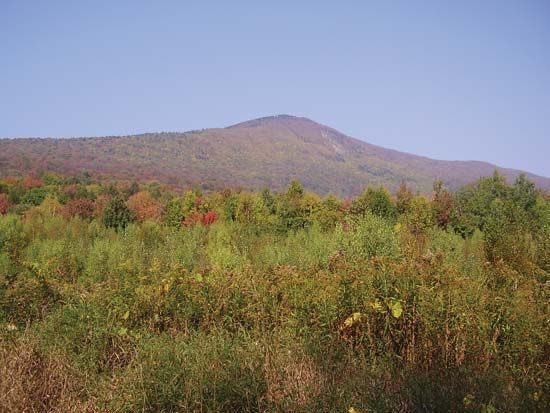
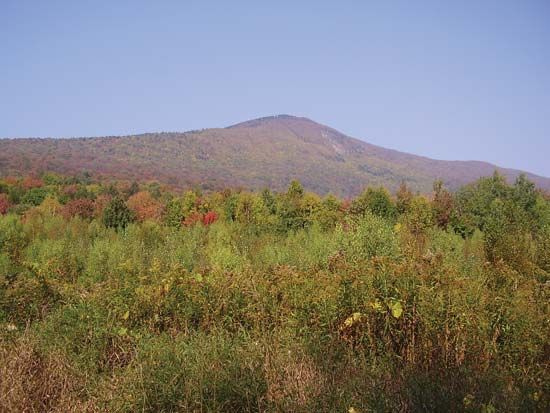
Mount Greylock is the highest point in Massachusetts, reaching an elevation of 3,491 feet (1,064 metres). Located in the Berkshire Hills—a segment of the…
What is Mount Greylock?
Mount Greylock is the highest point in Massachusetts, reaching an elevation of 3,491 feet (1,064 metres). Located in the Berkshire Hills—a segment of the Appalachian Mountains—the peak is situated 5 miles south-southwest of North Adams.12
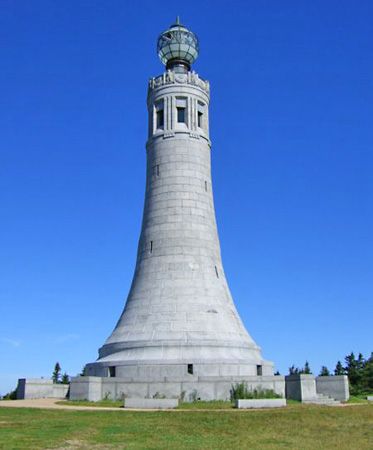
The mountain is part of the Mount Greylock State Reservation and features a 92-foot granite beacon tower, erected in 1932 as a war memorial. Visitors can reach the summit via road or the Appalachian National Scenic Trail. The summit also hosts the historic Bascom Lodge, which is open during the summer and fall. The name of the mountain honors an 18th-century Waranoke Indigenous chief. Today, the area remains a popular destination for winter sports and year-round recreation.12
What is the history of the Appalachian National Scenic Trail?
The Appalachian National Scenic Trail was first proposed in 1921 by regional planner Benton MacKaye, who advocated for its creation in a published article. Following this vision, the first section of the footpath opened in New York in October 1923.3
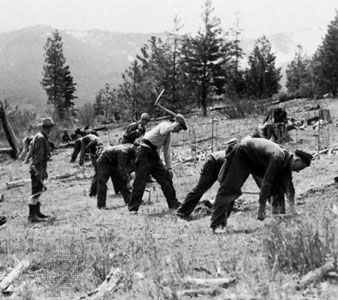
Construction of the trail was a collaborative effort involving volunteers from various hiking clubs, federal agencies, and the Civilian Conservation Corps. This work continued until the trail was completed in 1937. The project was coordinated by the Appalachian Trail Conference, which was founded by MacKaye and is now known as the Appalachian Trail Conservancy.
Over the decades, segments have been frequently rerouted to improve scenic quality or in response to land development, road construction, and natural disasters. In 1968, the U.S. Congress established the National Trail System, designating the Appalachian Trail as one of its two initial units alongside the Pacific Crest National Scenic Trail.3
How were the Berkshire Hills formed?
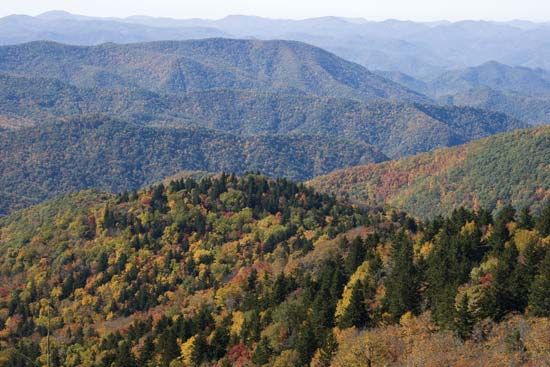
The Berkshire Hills are a segment of the Appalachian Mountains, one of the oldest mountain systems on Earth. Their formation is the result of complex geological processes spanning hundreds of millions of years, primarily driven by plate tectonics and the progressive collision of continental blocks and island arcs.24
The geological history of this region involves three major mountain-building events, or orogenies:
- Taconic Orogeny: Occurring about 472 million years ago, this event involved the subduction and destruction of the ancient Iapetus Ocean.4
- Acadian Orogeny: Taking place between 390 and 370 million years ago, this further contributed to the structural development of the range.4
- Alleghenian Orogeny: During the late Carboniferous to Permian periods (300 to 250 million years ago), a massive “interior crumpling” occurred as the supercontinent Pangaea formed, causing the Earth’s crust to buckle, fold, and fault.24
Following these upheavals, the hills were sculpted by the continuous action of water and, more recently, by glacial forces during the Pleistocene Epoch, which stripped topsoil and polished the landscape.2
Who was the Waranoke chief named Greylock?
The name Greylock refers to an early 18th-century Waranoke chief, though historical records provide limited biographical details regarding his life and leadership beyond his association with the mountain that now bears his name.1
Mount Greylock, the highest point in Massachusetts, serves as a namesake for this figure. Located in the Berkshire Hills, the peak is a prominent landmark accessible via the Appalachian National Scenic Trail.1
Sources
- Mount Greylock — Encyclopædia Britannica
- Berkshire Hills — Encyclopædia Britannica
- Appalachian National Scenic Trail — Encyclopædia Britannica
- Appalachian Mountains - Geology of the Appalachian Mountains — Encyclopædia Britannica
- Berkshire Hills — Merriam-Webster
- Appalachian orogenic belt — Encyclopædia Britannica
- Berkshire — Encyclopædia Britannica
- Taconic Range — Encyclopædia Britannica
Published on · 2 min read