Mountain Mahogany
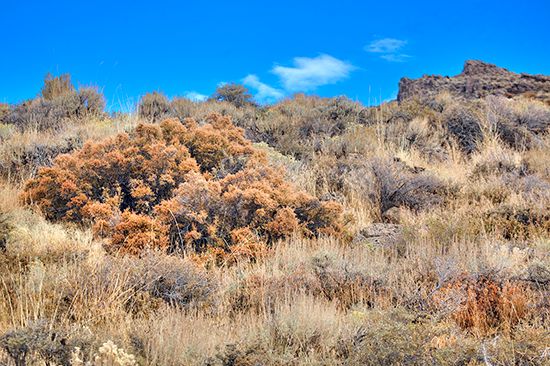
Mountain mahogany refers to a genus of five or six species of shrubs or small trees known as Cercocarpus, which belong to the rose family (Rosaceae). It is…
What are the different species of mountain mahogany?
Mountain mahogany refers to a genus of five or six species of shrubs or small trees known as Cercocarpus, which belong to the rose family (Rosaceae). It is important to note that these plants are entirely unrelated to the tropical mahogany trees found in the family Meliaceae.1
Common species include:
- Birch-leaf mountain mahogany (Cercocarpus betuloides): A scaly-barked tree that can grow up to 9 metres tall.1
- Curl-leaf mountain mahogany (C. ledifolius): Also a scaly-barked tree reaching heights of up to 9 metres.1
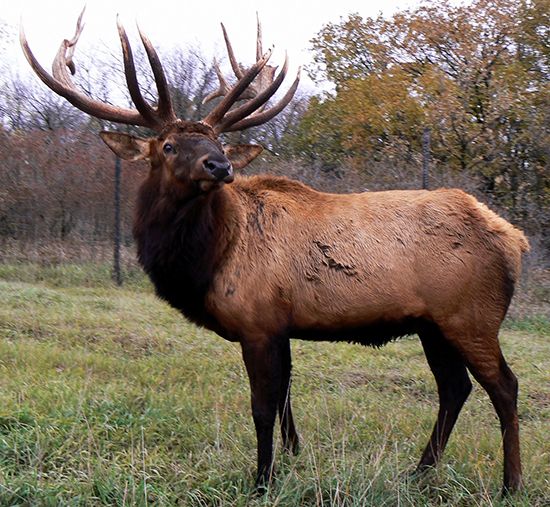
- True, or alder-leaf, mountain mahogany (C. montanus): A long-lived shrub frequently found in the foothills of the Rocky Mountains and a common food source for elk and deer.1
- Catalina mahogany (C. traskiae): A rare species limited to a single population on Santa Catalina Island.1
What are the unique characteristics of mountain mahogany that distinguish it from other plants?
Mountain mahogany (Cercocarpus) is often confused with tropical mahogany due to its name, but it is actually a member of the Rosaceae family and is entirely unrelated to the tropical variety.1
Several unique characteristics distinguish these North American shrubs and small trees:
- Wood Quality: They are prized for their exceptionally hard heartwood, which is highly valued for carving. Historically, this wood was used to construct the Tabernacle organ in Salt Lake City.1
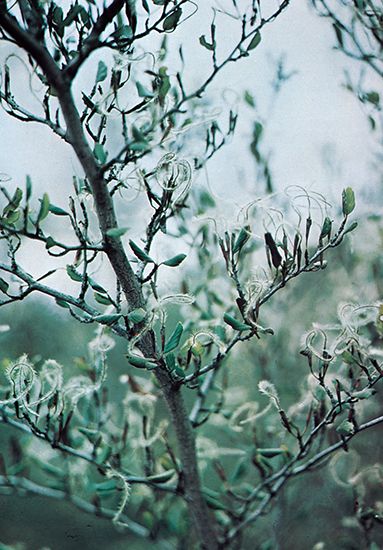
- Reproductive Features: Unlike many other plants, their small, trumpetlike flowers lack petals. They are wind-pollinated and produce achene fruits equipped with a 3–10 cm feathery plume, a specialized adaptation for wind dispersal.1
- Ecological Role: These evergreen plants are vital components of chaparral communities in the western United States and northern Mexico, serving as a critical food source for elk and deer.12
How tall can mountain mahogany grow, and what is its typical lifespan?
Mountain mahogany species vary in their growth habits, with some reaching heights of up to 9 metres (30 feet), such as the birch-leaf mountain mahogany (Cercocarpus betuloides) and the curl-leaf mountain mahogany (C. ledifolius).1
Regarding their lifespan, while specific numerical ranges for all species are not detailed in the available data, the true, or alder-leaf, mountain mahogany (C. montanus) is explicitly characterized as a long-lived shrub as a long-lived shrub.1
How does mountain mahogany reproduce and spread its seeds?
Mountain mahogany (Cercocarpus) reproduces through a wind-pollinated process involving small, bisexual, trumpetlike flowers that lack petals.4
Following pollination, the plants produce cylindrical achene fruits. These fruits are uniquely adapted for wind dispersal; each is equipped with a feathery plume measuring 3–10 cm (1–4 inches) in length, which allows the seeds to be carried by the wind to new locations.4
Sources
- mountain mahogany — Encyclopædia Britannica
- desert mahogany — Merriam-Webster
- cypress — Encyclopædia Britannica
- Fruit - Wind dispersal — Encyclopædia Britannica
- cycadophyte - Gametophyte phase — Encyclopædia Britannica
Published on · 2 min read