New England Range
The New England Range is a section of the Eastern Highlands, also known as the Great Dividing Range, located in northeastern New South Wales, Australia.
How was the New England Range formed geologically?
The New England Range is a section of the Eastern Highlands, also known as the Great Dividing Range, located in northeastern New South Wales, Australia.1
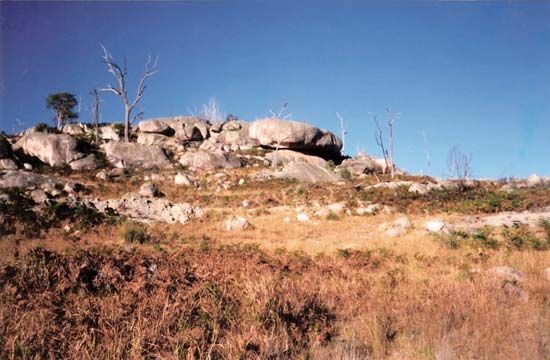
Geologically, the Eastern Highlands—which include the New England Range—are characterized as a low plateau that rose approximately 90 million years ago. This uplift is believed to have been a result of the tectonic breakup of the Lord Howe Rise and New Zealand.12
While the broader Australian continent contains ancient Precambrian rocks and Paleozoic-age formations, the specific uplift of this eastern highland region occurred during the Mesozoic Era. Today, the range serves as a significant plateau, reaching elevations above 3,000 feet (900 meters) and acting as a vital source for numerous regional rivers.231
What economic activities, such as agriculture or mining, are associated with the New England Range?
The New England Range in northeastern New South Wales, Australia, supports a diverse range of economic activities, primarily driven by its fertile geography and mineral wealth.
Agriculture and Forestry
The region’s numerous river valleys are highly fertile and support intensive cultivation of mixed crops, fruits, and potatoes. Livestock production is also a significant component of the local economy, with cattle and sheep grazing across the range. Additionally, the area’s generally wooded landscape facilitates the timber industry.4
Mining
The New England Range is known for its mineral deposits. Mining operations in the region include the extraction of:
- Gemstones: Diamonds, sapphires, and emeralds.4
- Metals: Gold and tin. While tin production has declined across the broader state, it is still obtained in small quantities within the New England region.41
These activities are centered around major towns such as Armidale, Inverell, Glen Innes, and Tenterfield, which are connected by a network of major highways.4
What is the climate like in the New England Range, and how does it vary with elevation?
The climate of the New England Range is notably distinct within Australia, often described as having a resemblance to the climate of England, which served as the inspiration for the naming of New England National Park.1
Because the range is a significant plateau with large areas exceeding 3,000 feet (900 meters) in elevation, the climate is influenced heavily by altitude. Higher elevations, such as those found at Point Lookout (5,138 feet or 1,566 meters) and Round Mountain (5,300 feet or 1,615 meters), experience cooler temperatures compared to the surrounding lowlands.61
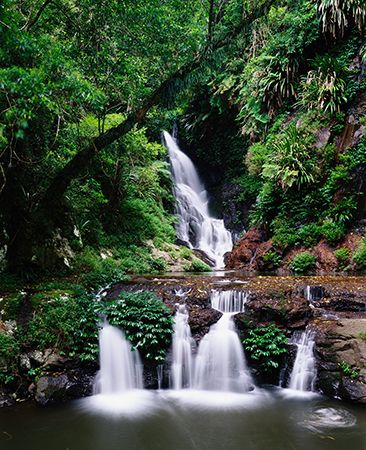
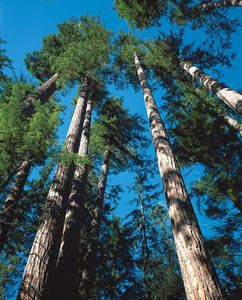
The eastern slopes of the range, where the national park is situated, are characterized by these cooler, temperate conditions, which support lush virgin forest ecosystems, including stands of red cedar and hoop pine. While the provided data highlights the climatic resemblance to England and the impact of elevation on vegetation, it does not detail specific temperature ranges or rainfall statistics across the varying altitudes.1
What types of flora and fauna can be found in the New England Range ecosystem?
The New England Range in Australia features a diverse ecosystem, particularly within the New England National Park, which is characterized by its extensive virgin forest cover.6
Flora
The eastern slopes of the range are home to heavy stands of native timber, including:
Fauna
The region supports a variety of native Australian wildlife. Notable animal species found in the area include:
- Wallabies
- Kangaroos
- Gliders
- More than 100 species of birds6
Please note that information regarding flora and fauna in the U.S. region of New England (such as Massachusetts or the Appalachian forests) is distinct from the Australian New England Range and is not applicable to this ecosystem.17
Sources
- New England Range — Encyclopædia Britannica
- Australia - The modern geologic framework — Encyclopædia Britannica
- Australia - Tectonic framework — Encyclopædia Britannica
- New Hampshire - Resources and power — Encyclopædia Britannica
- New South Wales - Resources and power — Encyclopædia Britannica
- New England National Park — Encyclopædia Britannica
- Massachusetts - Plant and animal life — Encyclopædia Britannica
- North America - The Eastern Upland forest — Encyclopædia Britannica
Published on · 3 min read