Red Cedar
Red cedar is a common name applied to several evergreen trees within the cypress family (Cupressaceae) that are valued for their aromatic, decay-resistant…
What is Red cedar?
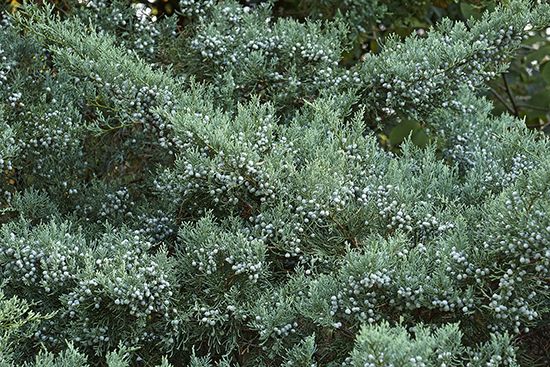
Red cedar is a common name applied to several evergreen trees within the cypress family (Cupressaceae) that are valued for their aromatic, decay-resistant wood. The term most frequently refers to two distinct species:12
- Western red cedar (Thuja plicata): Also known as the giant arborvitae, this tree is native to the Pacific coast of North America. It can grow up to 60 meters tall and is widely used for shingles, boat building, and outdoor structures due to its high resistance to moisture.13
- Eastern red cedar (Juniperus virginiana): Native to eastern North America, this species is often found in poor or limestone soils. Its fragrant wood is commonly used for cabinets, fence posts, and pencils.142
While these trees are popularly called “cedars,” they are distinct from the “true cedars” of the genus Cedrus (family Pinaceae). The wood from red cedars is prized for its durability and insect-repellent properties.2
How do Eastern and Western red cedars differ?
While both Eastern and Western red cedars are members of the cypress family (Cupressaceae) and are valued for their aromatic, decay-resistant wood, they are distinct species with different characteristics and ecological roles.35
Key Differences
Feature
Eastern Red Cedar (
Juniperus virginiana
)
Western Red Cedar (
Thuja plicata
)
Scientific Name
Juniperus virginiana
Thuja plicata
Common Name
Eastern red cedar
Giant arborvitae
Native Range
Eastern North America
Pacific coast of North America
Size
Typically 12–15 meters tall
Can grow up to 60 meters tall
Habitat
Often found in poor or
limestone
soils Often found in poor or
limestone
soils
Native to the Pacific coast
Common Uses
Cabinets, fence posts, and pencils
Shingles, boat building, and outdoor structures
The Eastern red cedar is often considered an undesirable weed in parts of its range because it frequently invades pastures, prairies, and open grassy areas. In contrast, the Western red cedar is highly prized for its moisture resistance, making it a staple for outdoor construction and maritime applications. Both species are distinct from the “true cedars” of the genus Cedrus, which belong to the pine family (Pinaceae).3561
Why is red cedar wood often used for closets and chests?
Red cedar wood is frequently used for lining closets and constructing chests primarily because of its natural properties as a decay-resistant and insect-repellent material) and insect-repellent material.6
The wood contains aromatic oils that are released from the timber, which provide a pleasant scent while effectively deterring pests that might otherwise damage stored clothing or linens. Because the wood is also light, soft, and durable, it remains a practical choice for interior storage applications where protection against environmental factors is desired.657
What role do these trees play in their local ecosystems?
The provided search results do not contain specific information regarding the ecological roles of the Eastern red cedar (Juniperus virginiana) or the Western red cedar (Thuja plicata) within their respective environments, such as their interactions with local wildlife or their contributions to soil health and forest structure.
While the articles note that the Eastern red cedar is native to poor or limestone soils and often invades open areas like pastures and prairies, they do not detail the specific ecological functions these trees perform in those habitats. Similarly, while the Western red cedar is described as a conifer native to the Pacific coast, its broader role in that ecosystem is not addressed.34
Sources
- red cedar — Encyclopædia Britannica
- red cedar — Merriam-Webster
- eastern red cedar — Encyclopædia Britannica
- Western red cedar — Encyclopædia Britannica
- cedar — Encyclopædia Britannica
- Did you know? — Merriam-Webster
- cedarwood — Merriam-Webster
- eastern red cedar — Merriam-Webster
- western red cedar — Merriam-Webster
Published on · 3 min read