Norway Current
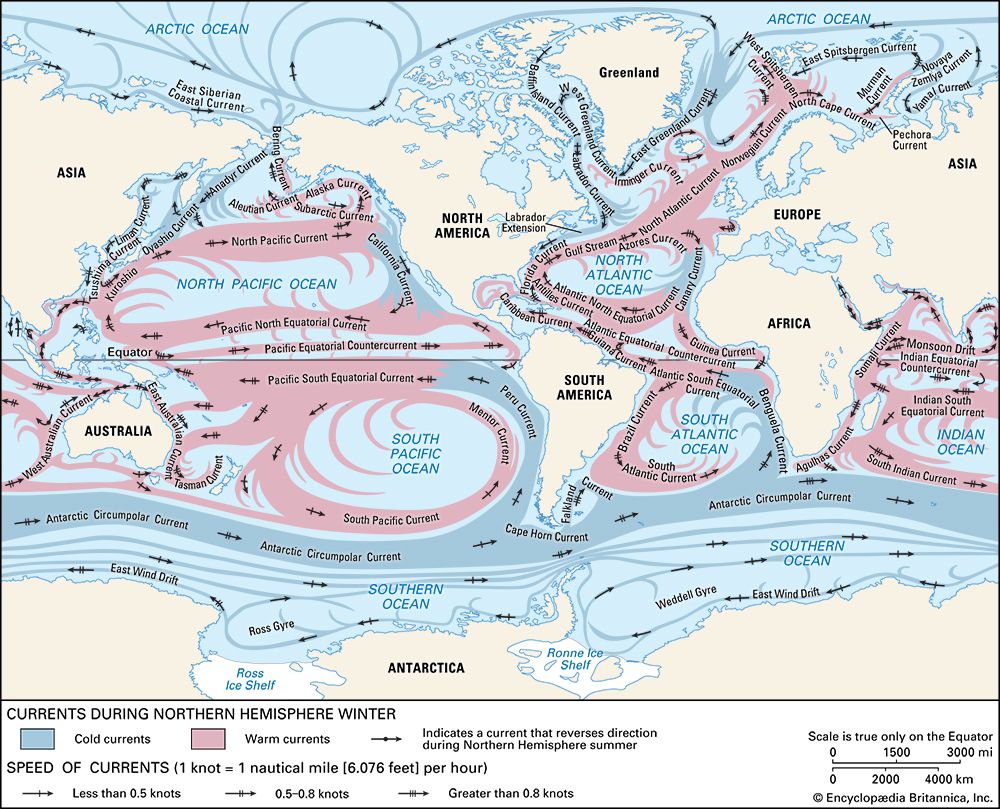
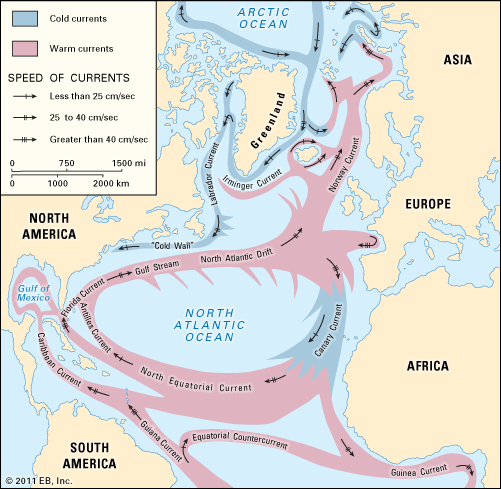
The Norway Current is a branch of the North Atlantic Current and is often viewed as a continuation of the Gulf Stream.
What is Norway Current?
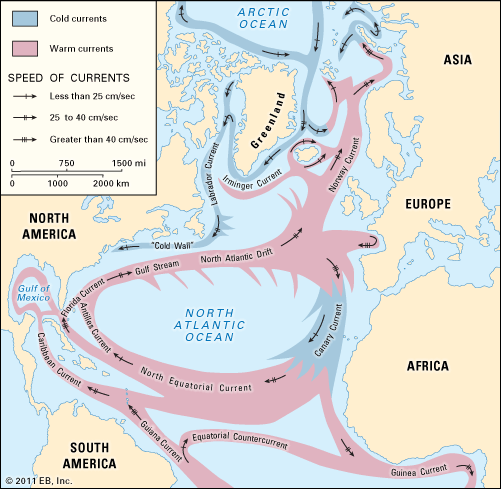
The Norway Current is a branch of the North Atlantic Current and is often viewed as a continuation of the Gulf Stream.1
Entering the Norwegian Sea north of Scotland, the current flows northeast along the Norwegian coast and eventually into the Barents Sea. It plays a vital role in regional climate, as its relatively warm waters—ranging from 46° F (8° C) in the south to 39° F (4° C) in the north—exert a moderating influence on the climate of Norway and northern Europe.1
The current moves at approximately 0.5 knots and creates productive fishing grounds through thermal mixing, particularly where its eddies meet those of the East Greenland Current.1
How does the Gulf Stream influence the North Atlantic Current?
The Gulf Stream serves as the primary feeder for the North Atlantic Current, acting as its warm, swift, and concentrated predecessor. As the Gulf Stream flows northeastward from the North American coast, it eventually reaches the area of the Grand Banks near Newfoundland, where it begins to break apart into a complex, meandering network of currents.234
The North Atlantic Current emerges as the northeastward extension of this system. While the Gulf Stream is a concentrated flow, the North Atlantic Current is composed of broader, slower-moving filaments that carry warm, saline water toward northwestern Europe. This transition is a critical component of the Atlantic Meridional Overturning Circulation, a larger system that transports heat poleward and helps regulate global climate patterns.325
Essentially, the Gulf Stream provides the momentum and thermal energy that the North Atlantic Current then distributes across the northern Atlantic, influencing the mild climates of regions like Norway and the British Isles.235
Why does the Norwegian Current make Norway’s climate milder?
The Norwegian Current significantly moderates Norway’s climate by transporting vast quantities of warm, tropical water—estimated at four to five million tons per second—into the surrounding seas. As a northeastern extension of the Gulf Stream and the North Atlantic Current, this current maintains subsurface temperatures that remain well above freezing, even in Arctic regions.14
The warming effect is twofold:
- Direct Thermal Influence: The warm water prevents coastal fjords from freezing, even in northern areas like Finnmark.1
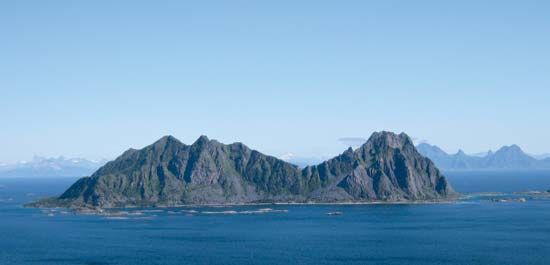
- Atmospheric Interaction: The current warms the air above it, and prevailing westerly winds carry this heat deep into the country. This process creates one of the world’s most significant thermal anomalies; for instance, the January mean temperature in the Lofoten Islands is approximately 43° F (24° C) higher than the global average for that latitude.781
By supplying moisture and heat to the atmosphere, the current helps maintain a mild marine climate along the western coast, contrasting sharply with the colder, inland climate found in the mountainous eastern regions.81
What role do ocean currents play in creating fishing grounds?
Ocean currents are fundamental to the formation of productive fishing grounds by regulating nutrient availability and creating favorable environmental conditions for marine life. Their influence primarily occurs through two key processes:
Upwelling
The most productive waters globally are found in regions of upwelling, where currents bring nutrient-rich water from the depths toward the surface. These nutrients trigger rapid reproduction of phytoplankton, which in turn support zooplankton and higher-level nekton. Notable examples of such rich fisheries include the waters off the coasts of Peru and California, where currents interact with coastal features to drive this nutrient transport.910
Thermal Mixing
Fishing grounds also form where currents with different temperatures and salinities converge. For instance, the North Atlantic Current often mixes with cold polar water, creating highly productive zones near islands and along the coast of northwestern Europe. Similarly, the Norway Current creates excellent fishing grounds through the thermal mixing of its warm waters with the colder East Greenland Current, particularly around the Faroe and Shetland islands.114
Sources
- Norway Current — Encyclopædia Britannica
- Gulf Stream — Encyclopædia Britannica
- Atlantic Ocean - The North Atlantic — Encyclopædia Britannica
- North Atlantic Current — Encyclopædia Britannica
- Climate - The Gulf Stream — Encyclopædia Britannica
- Atlantic Meridional Overturning Circulation — Encyclopædia Britannica
- Climate - Circulation, currents, and ocean-atmosphere interaction — Encyclopædia Britannica
- Norway - Climate of Norway — Encyclopædia Britannica
- Marine ecosystem - Upwelling — Encyclopædia Britannica
- Marine ecosystem - Migrations of marine organisms — Encyclopædia Britannica
- How Do Ocean Currents Affect the Biosphere? — Encyclopædia Britannica
- Marine ecosystem - Ocean currents — Encyclopædia Britannica
- plankton - Plankton and biological productivity — Encyclopædia Britannica
- Marine ecosystem - Seasonal cycles of production — Encyclopædia Britannica
Published on · 3 min read