How Do Ocean Currents Affect the Biosphere?
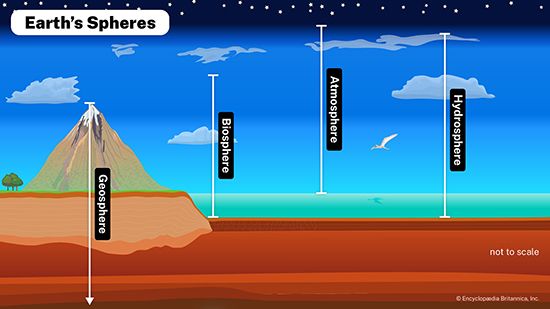
Ocean currents are vital to the biosphere, acting as a global transport system for heat, nutrients, and organisms.
How Do Ocean Currents Affect the Biosphere?
Ocean currents are vital to the biosphere, acting as a global transport system for heat, nutrients, and organisms.12
Climate Regulation
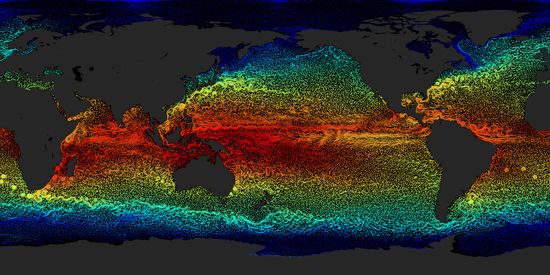
By moving warm water from the tropics toward the poles, currents like the Gulf Stream moderate the climate of regions such as northwestern Europe. This temperature regulation directly shapes terrestrial and marine ecosystems by determining which species can thrive in specific environments.12
Biological Distribution and Productivity
Currents dictate the range and distribution of marine life by transporting larvae, seeds, and organisms across vast distances. For example, the Antarctic Circumpolar Current restricts the range of species like krill, while other currents facilitate the migration of eels or the expansion of tropical species into higher latitudes.13
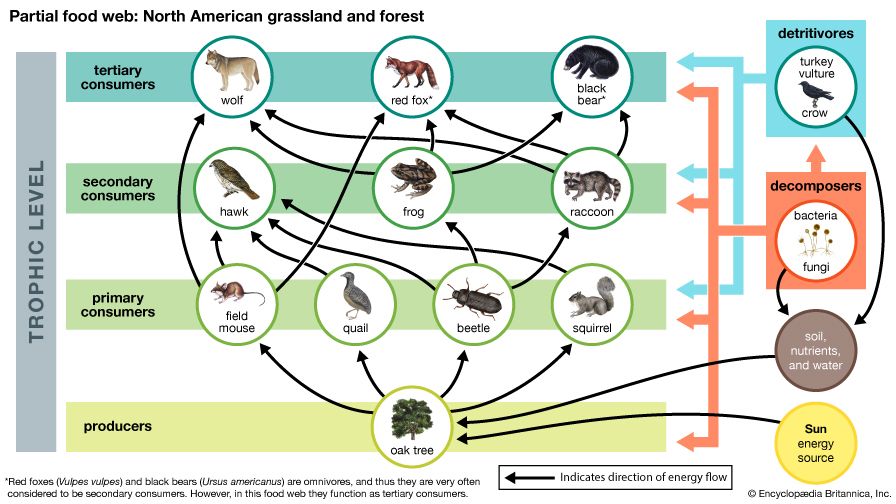
Furthermore, currents are essential for biological productivity. Currents that bring nutrient-rich water to the surface, such as the California Current and Peru Current, support massive plankton populations, which form the foundation of the marine food web.4
How does the Coriolis effect influence the direction of ocean currents?
The Coriolis effect is an inertial force resulting from Earth’s rotation, which causes moving objects—including ocean currents—to appear to deflect from a straight path when viewed from an Earth-bound reference frame5.5
Directional Deflection
Because Earth rotates from west to east, the Coriolis force deflects moving water to the right of its intended path in the Northern Hemisphere and to the left in the Southern Hemisphere. This deflection influences large-scale circulation patterns:65
- Gyres: Ocean currents move in clockwise (anticyclonic) patterns in the Northern Hemisphere and counterclockwise (cyclonic) patterns in the Southern Hemisphere.6
- Equatorial Impact: At the Equator, there is no apparent horizontal deflection because the Coriolis force is proportional to the sine of the latitude, which is zero at that location.65
Vertical and Boundary Effects
The Coriolis effect also drives the Ekman spiral, where surface water is displaced at an angle (typically 45°) to the wind direction, with deeper layers experiencing further deflection. Additionally, the increase of the Coriolis force with latitude contributes to “westward intensification,” causing western boundary currents like the Gulf Stream to become narrow, fast-moving jets.78
What is the difference between surface currents and deep-ocean circulation?
Ocean circulation is primarily categorized into two distinct types based on the forces that drive them: wind-driven surface currents and density-driven deep-ocean circulation.9
Surface Currents
Surface currents are primarily forced by wind stress on the sea surface, which induces a momentum exchange.12 This wind-driven circulation is the more vigorous of the two and is typically configured as large gyres that dominate specific ocean regions. These currents are most prominent in the upper layers of the ocean, often extending to a depth of about 100 meters within the Ekman layer.1093
Deep-Ocean Circulation
In contrast, deep-ocean circulation, or thermohaline circulation, is driven by horizontal variations in water density caused by differences in temperature and salinity. This process involves the sinking of cold, dense water in polar regions, which then spreads along the seafloor to envelop the global ocean. While this circulation is much more sluggish than surface currents—moving at a typical speed of only 1 centimeter per second—it transports tremendous volumes of water, heat, and nutrients across vast distances.10911
How could melting ice sheets impact the global thermohaline circulation?
Melting ice sheets and glaciers pose a significant threat to the thermohaline circulation—the global “conveyor belt” of ocean currents—by altering the density of seawater in critical regions like the North Atlantic.314
The Mechanism of Disruption
The thermohaline circulation is driven by the sinking of cold, saline, and dense water in polar regions, a process that pulls warmer surface waters from the subtropics toward the poles. As global warming causes ice sheets, such as the Greenland Ice Sheet, to melt, they release large volumes of freshwater into the subpolar North Atlantic. Because freshwater is less dense than saline water, this influx lowers the density of surface waters, inhibiting the sinking motion necessary to drive the circulation.31514
Potential Consequences
- Weakening of the AMOC: The Atlantic Meridional Overturning Circulation (AMOC) has already shown signs of decline since the late 19th century, which experts attribute in part to increased freshwater inputs.15
- Climatic Shifts: A weakened circulation could lead to significant regional impacts, including a dramatic cooling of Europe, altered rainfall patterns such as shifts in the Indian monsoon, and increased drought frequency in parts of Africa.15
- Scientific Debate: While some models suggest a potential total collapse of the system, others argue that the circulation remains relatively stable or that freshwater inputs from the West Antarctic Ice Sheet might partially offset these effects by increasing density gradients.15
Sources
- How Do Ocean Currents Affect the Biosphere? — Encyclopædia Britannica
- Marine ecosystem - Ocean currents — Encyclopædia Britannica
- thermohaline circulation — Encyclopædia Britannica
- plankton - Plankton and biological productivity — Encyclopædia Britannica
- ocean current - Coriolis effect — Encyclopædia Britannica
- Ekman spiral — Encyclopædia Britannica
- Coriolis force — Encyclopædia Britannica
- ocean current - The subtropical gyres — Encyclopædia Britannica
- ocean current - Distribution of ocean currents — Encyclopædia Britannica
- ocean current - Ekman layer — Encyclopædia Britannica
- ocean current - Thermohaline circulation — Encyclopædia Britannica
- ocean current - Two types of ocean circulation — Encyclopædia Britannica
- ocean current - Pressure gradients — Encyclopædia Britannica
- Global warming - Ocean circulation changes — Encyclopædia Britannica
- Atlantic Meridional Overturning Circulation — Encyclopædia Britannica
- iceberg - Impact on ocean structure — Encyclopædia Britannica
Published on · 4 min read