North Atlantic Current
The North Atlantic Current is a major northeastward extension of the Gulf Stream that plays a critical role in regulating the climate of northwestern Europe.…
What are the main characteristics of the North Atlantic Current in terms of temperature and salinity?
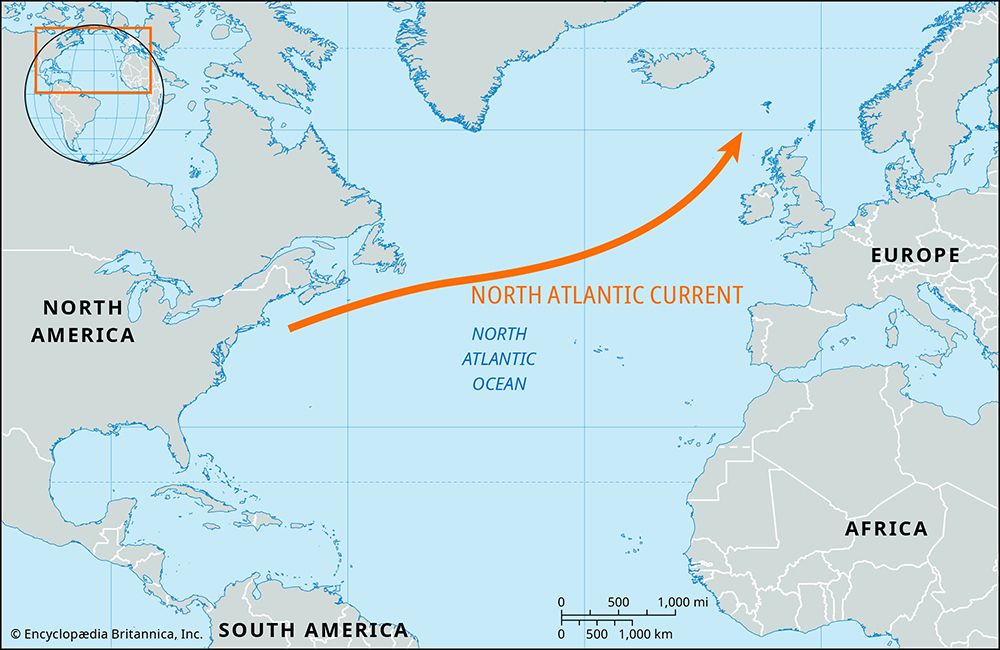
The North Atlantic Current is a major northeastward extension of the Gulf Stream that plays a critical role in regulating the climate of northwestern Europe. Its primary characteristics regarding temperature and salinity are as follows:12
- Temperature: The current is characterized by its warm temperature. By transporting this warm water into high northern latitudes, it helps maintain a mild climate in northwestern Europe, keeping ports such as those in Norway ice-free even at high latitudes.13
- Salinity: The current is noted for its high salinity. This high salt content is a defining feature of the North Atlantic, which maintains higher salinity levels than any other ocean due to intense evaporation in the Mediterranean and the subsequent outflow of saline water.145
As the current moves northward, the water gradually cools and some evaporates, which increases its density and salinity before it reaches the Arctic Ocean. This process is a vital component of the Atlantic Meridional Overturning Circulation, as the resulting cold, dense water sinks to form deep ocean currents.6
What role does the North Atlantic Current play in the global ocean circulation system?
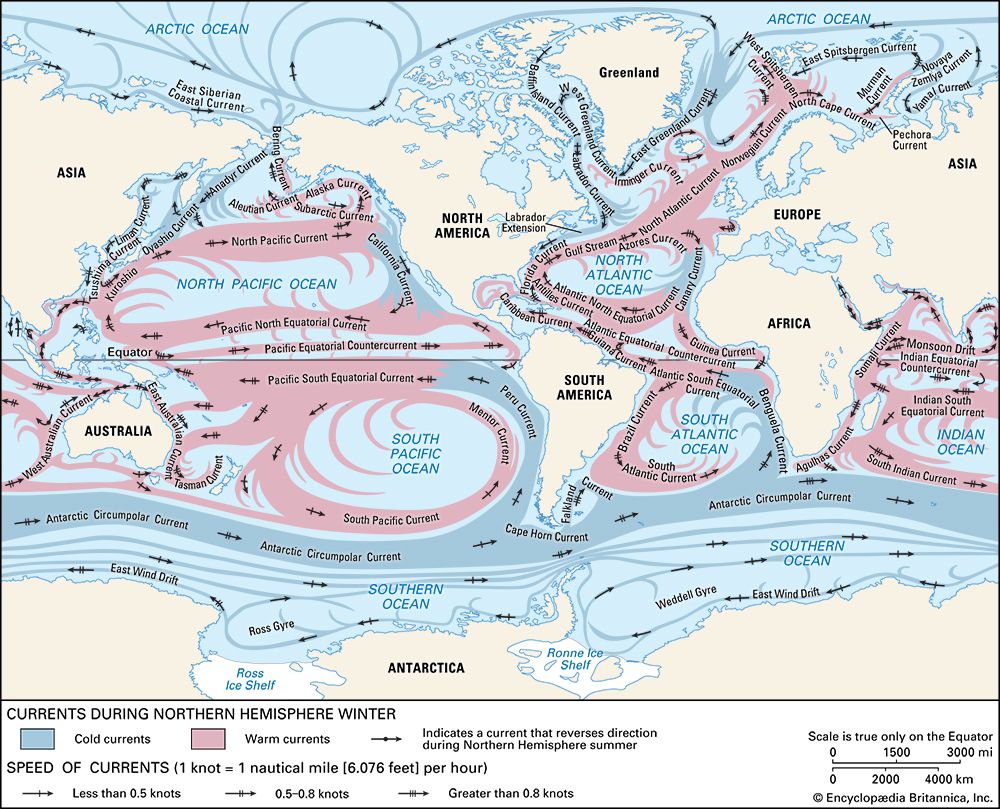
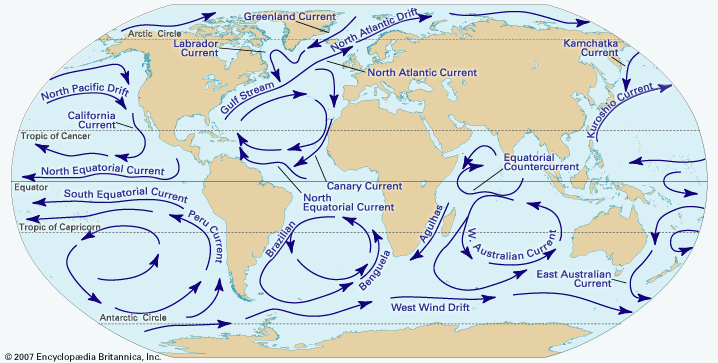
The North Atlantic Current serves as a vital component of the Atlantic Meridional Overturning Circulation (AMOC), which is the Atlantic segment of the global thermohaline circulation system.17
Its primary roles in this global system include:
- Poleward Heat Transport: As a northeastward extension of the Gulf Stream, the current conveys warm, saline surface water from lower latitudes toward the high latitudes of the North Atlantic. This process is essential for regulating regional and global climate patterns, as the heat is released into the atmosphere, significantly warming northwestern Europe.827
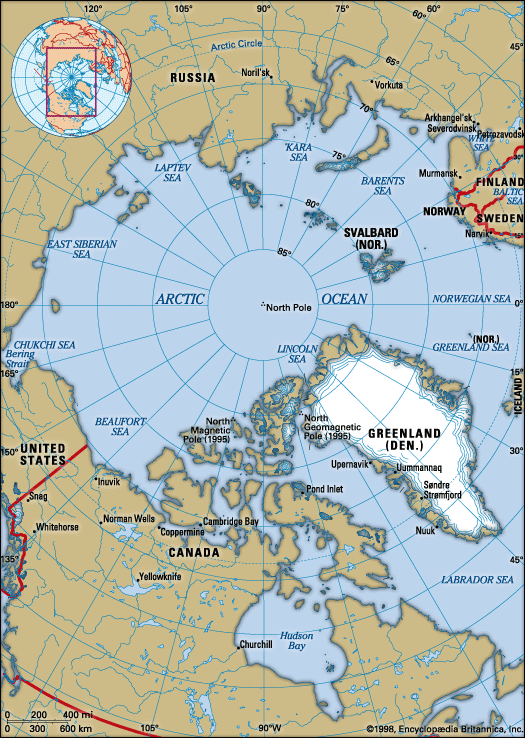
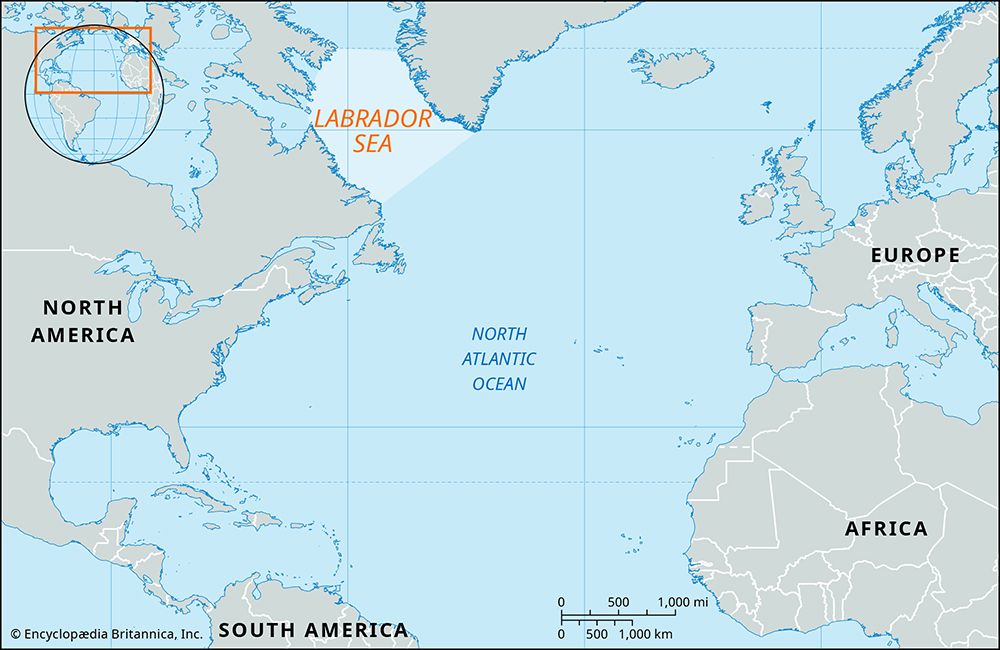
- Deep Water Formation: Upon reaching the Arctic and sub-Arctic regions (such as the Labrador, Greenland, and Norwegian seas), the water cools and undergoes evaporation, increasing its density and salinity. This dense water sinks to form North Atlantic Deep Water, which then flows southward as the lower limb of the AMOC, effectively ventilating the global ocean.127
- Nutrient Cycling: The circulation system helps move nutrients throughout the Atlantic basin, supporting marine and terrestrial ecosystems.7
What is the North Atlantic Current and where is it located?
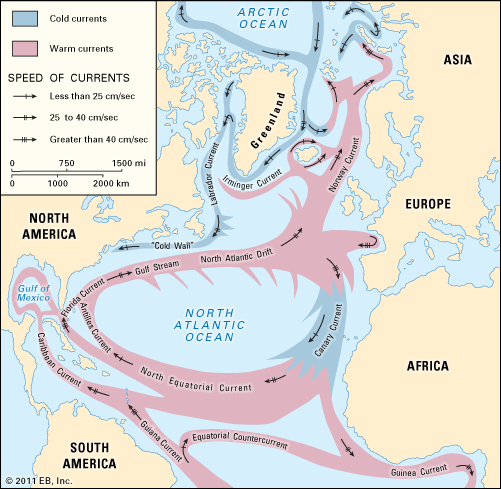
The North Atlantic Current—also known as the North Atlantic Drift—is a major, clockwise-setting ocean current system in the North Atlantic Ocean. It serves as the northeastward extension of the Gulf Stream, emerging in mid-ocean as the Gulf Stream moves away from the North American continental slope.13
Regarding its location, the current extends from southeast of the Grand Banks off Newfoundland, Canada, and flows toward the Norwegian Sea off the coast of northwestern Europe. It is composed of several broad currents that reach into the northernmost regions of the North Atlantic between Scotland and Iceland.13
Characterized by warm temperatures and high salinity, the current plays a vital role in regional climate; its warmth, combined with prevailing westerly winds, helps maintain a mild climate across northwestern Europe.1
What is the relationship between the North Atlantic Current and the North Atlantic Oscillation?
The North Atlantic Current and the North Atlantic Oscillation (NAO) are closely linked through the atmospheric and oceanic processes that regulate the climate of the North Atlantic region.
The NAO is an irregular climate fluctuation defined by a north-south atmospheric pressure gradient between the subtropical high (near the Azores) and the Icelandic low. This pressure gradient dictates the strength and path of the prevailing [westerly winds] across the North Atlantic.101112
The relationship functions as follows:
- Wind-Driven Heat Transport: When the NAO is in a “positive mode,” the pressure gradient is steep, resulting in stronger westerly winds. These winds play a critical role in driving the North Atlantic Current, which transports warm, saline water from the Gulf Stream toward Europe.101113
- Climate Amelioration: The increased strength of these winds during a positive NAO phase delivers more heat from the North Atlantic Current to Europe, significantly warming its winters.101112
- Phase Variability: Conversely, in a “negative mode,” the pressure gradient weakens, slowing the westerly winds. This reduces the efficiency with which the North Atlantic Current’s warmth is transported to northern Europe, often leading to colder, drier winters in that region and shifting the Gulf Stream’s influence.1112
Sources
- North Atlantic Current — Encyclopædia Britannica
- Atlantic Meridional Overturning Circulation — Encyclopædia Britannica
- Climate - The Gulf Stream — Encyclopædia Britannica
- Atlantic Ocean - Salinity — Encyclopædia Britannica
- Atlantic Ocean - Temperature — Encyclopædia Britannica
- Atlantic Ocean: Top Questions — Encyclopædia Britannica
- ocean current - Thermohaline circulation — Encyclopædia Britannica
- Climate - Thermohaline circulation — Encyclopædia Britannica
- Atlantic Ocean - The North Atlantic — Encyclopædia Britannica
- Atlantic Ocean - The North Atlantic — Encyclopædia Britannica
- North Atlantic Oscillation — Merriam-Webster
- North Atlantic Oscillation — Encyclopædia Britannica
- Climate change - Interannual variation — Encyclopædia Britannica
- Gulf Stream — Encyclopædia Britannica
Published on · 3 min read