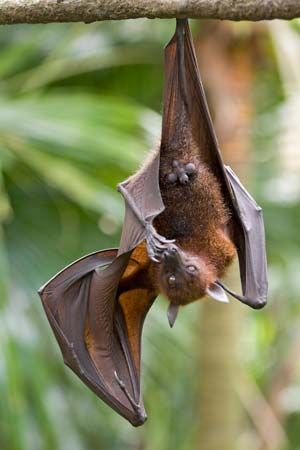
Frugivore
A frugivore is any animal that subsists totally or primarily on fruit. While many animals include fruit in their diet, some species practice frugivory…
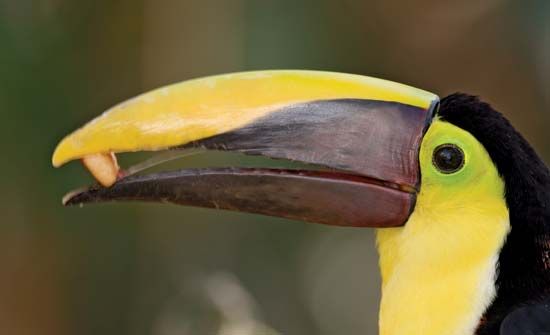
Which animals are considered frugivores, and what are some examples?
A frugivore is any animal that subsists totally or primarily on fruit. While many animals include fruit in their diet, some species practice frugivory exclusively.1
Examples of animals that are considered frugivores include:
- Bats: Several species, such as the Jamaican fruit bat and various flying foxes.1
- Birds: Many passerine birds are known to be frugivorous.1
- Fish: Certain species within the family Characidae rely on fruit for sustenance.1
Frugivory is often a mutualism that facilitates seed dispersal. By consuming fruit and later defecating the seeds, these animals assist in the propagation of plants. This process is distinct from granivory, where seeds are digested and destroyed; in successful frugivory, seeds remain intact throughout the animal’s digestive system.12
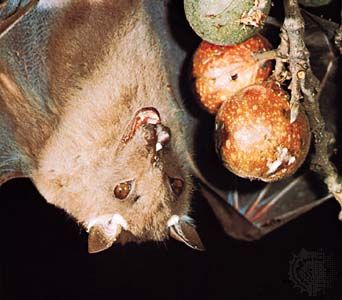
What adaptations do frugivorous animals have to help them eat and digest fruits?
Sorry, the Britannica knowledge base does not contain specific information regarding the physiological or anatomical adaptations that frugivorous animals have to eat and digest fruits. The available information focuses on the ecological role of frugivores in seed dispersal and the mutualistic nature of their relationship with plants.
What role do frugivores play in shaping plant evolution?
Frugivores play a fundamental role in plant evolution by acting as agents of seed dispersal, a process known as endozoochory. This interaction is widely considered a mutualism that evolved to benefit both parties: the animal receives nutrition from the fruit, while the plant gains a mechanism to spread its progeny to new environments.21
Many scientists believe this relationship was a primary driver in the diversification of flowering plants (angiosperms) following their emergence during the Cretaceous Period. By facilitating the movement of seeds away from the parent plant, frugivores help reduce competition for resources and sunlight, increase the likelihood of successful germination, and allow species to colonize new areas.214
This coevolutionary process is extensive, with nearly half of all terrestrial flowering plant families producing fleshy fruits to attract dispersers. These interactions are often complex, spanning broad geographic ranges and linking numerous species across different ecosystems, particularly in the tropics.52
What is a frugivore and how does it differ from other dietary classifications?
A frugivore is an animal that subsists totally or primarily on fruit. While many animals consume fruit as part of a broader diet, true frugivores rely on it as their main source of sustenance. Examples include various bats, such as flying foxes, many passerine birds, and certain fish in the family Characidae.1
Frugivory differs from other dietary classifications in its ecological purpose and digestive requirements:
- Mutualism vs. Predation: Unlike granivory (seed predation), where an animal digests and destroys seeds, frugivory is predicated on the assumption that seeds will pass through the digestive system intact. This facilitates seed dispersal, a mutualistic relationship where the plant gains propagation services while the animal receives nutrition.1
- Niche Specialization: Dietary classifications often reflect specific trophic level adaptations. While carnivores hunt other animals and herbivores consume plant matter like grasses or leaves, frugivores occupy a specialized niche focused on the reproductive parts of plants. Within groups like bats, lineages have diverged into distinct insectivorous and frugivorous lines to exploit these different food sources.17
Sources
- frugivore — Encyclopædia Britannica
- seed dispersal - Zoochory: animal dispersal — Encyclopædia Britannica
- kleptoparasitism: Top Questions — Encyclopædia Britannica
- seed dispersal — Encyclopædia Britannica
- fruit - Importance — Encyclopædia Britannica
- community ecology - Coevolution among many species — Encyclopædia Britannica
- mammal - Food habits — Encyclopædia Britannica
- Feed - Basic types of feeds — Encyclopædia Britannica
Published on · 2 min read