Olt Defile
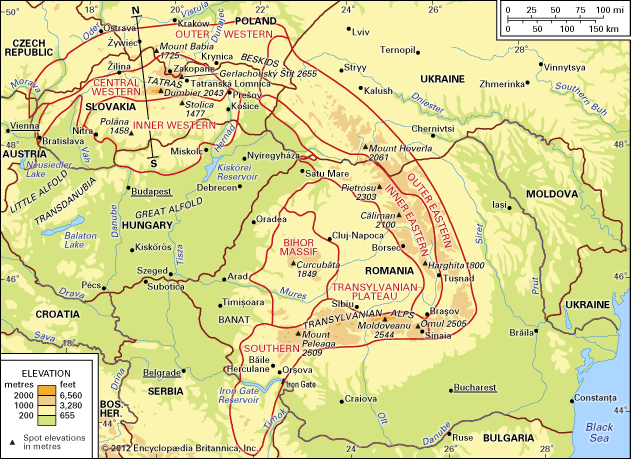
The Olt Defile is a narrow passage or gorge located in south-central Romania. It was carved into the Transylvanian Alps (Southern Carpathians) by the Olt…
What is the Olt Defile and where is it located in Romania?
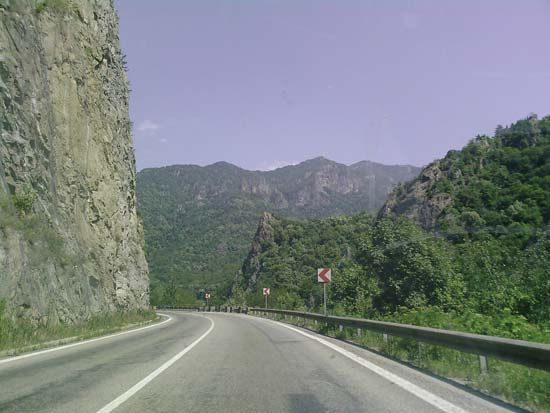
The Olt Defile is a narrow passage or gorge located in south-central Romania. It was carved into the Transylvanian Alps (Southern Carpathians) by the Olt River as it flows toward the Danube River.12
Historically significant, the area served as a frontier during the Roman occupation, featuring the Limes Alutanus line of fortifications. The defile is also home to several historic religious sites, including the 14th-century Cozia Monastery and the 17th-century Turnul Monastery, as well as various hot-springs resorts. Today, the region remains a vital transit corridor, with highway and railway connections running through the defile between Râmnicu Vâlcea and Sibiu.1
How does the Olt Defile contribute to Romania’s biodiversity and ecosystem?
The Olt Defile contributes to Romania’s biodiversity primarily by serving as a natural corridor within the Transylvanian Alps, where diverse vegetation stages thrive across varying altitudes. The surrounding mountain slopes support a variety of flora, including oak and walnut trees, wild roses, and white ivy.16
As part of the broader Carpathian Mountains, the region reflects the ecological richness of the Southern Carpathians. The altitudinal zonation of the area allows for distinct plant communities, ranging from oak-dominated forests at lower elevations to beech and coniferous forests at higher levels. These forested environments provide essential habitats for a wide array of wildlife, including brown bears, lynx, red deer, wolves, and wild pigs. Furthermore, the southeastern portion of the Carpathians is noted for containing unique plant species that survived climatic cooling during the Quaternary Period, adding to the region’s ecological significance.76
What role has the Olt Defile played in Romanian history and transportation?
The Olt Defile has served as a critical strategic and transit corridor in Romania for centuries. During the Roman occupation, spanning the 1st century BCE to the 2nd century CE, the area was vital for military defense. The Romans constructed a road and a defensive line known as the Limes Alutanus along the Olt River, which functioned as the eastern frontier of Roman Dacia. Archaeological evidence of this era remains, with ruins of Roman castra found in villages such as Boița, Călineni, and Călimănești.1
Beyond its military past, the defile became a center for religious and cultural life between the 14th and 18th centuries, evidenced by the construction of various monasteries and hermitages, including the 14th-century Cozia Monastery and the 17th-century Turnul Monastery. Today, the Olt Defile remains a vital artery for modern infrastructure, facilitating essential highway and railway connections between Râmnicu Vâlcea and Sibiu.1
What are the main features and attractions of the Olt Defile?
The Olt Defile, carved by the Olt River through the Transylvanian Alps, is a region defined by its rich historical legacy and natural beauty. Its main features and attractions include:
Historical and Cultural Landmarks
- Roman Heritage: The area served as a strategic frontier for Roman Dacia, known as the Limes Alutanus. Visitors can find remnants of ancient Roman castra in villages such as Boița, Călineni, and Călimănești.1
- Religious Sites: The defile is home to several historic monasteries and hermitages, including the 14th-century Cozia Monastery, famous for its interior frescoes, and the 17th-century Turnul Monastery, which features cells carved directly into the cliffs.1
- Fortifications: 16th-century fortresses are located in the towns of Turnu Roșu and Boița.1
Natural and Recreational Features
- Flora: The surrounding mountain slopes are characterized by diverse vegetation, including oak and walnut trees, wild roses, and white ivy.1
- Thermal Resorts: The Brezoi-Titești Depression within the defile is well-known for its hot-springs resorts.1
The defile also serves as a vital modern transit corridor, with highway and railway lines connecting Râmnicu Vâlcea and Sibiu1.
Sources
- Olt Defile — Encyclopædia Britannica
- Olt River — Encyclopædia Britannica
- defile — Merriam-Webster
- defiles — Merriam-Webster
- Olt — Merriam-Webster
- Romania - Plant and animal life — Encyclopædia Britannica
- Carpathian Mountains - Plant and animal life — Encyclopædia Britannica
Published on · 3 min read