Orangutan or Gorilla: Which Is Bigger?
When comparing the two, the gorilla is significantly larger than the orangutan. While the orangutan is the largest arboreal animal, the ground-dwelling…
Orangutan or gorilla: Which is bigger?
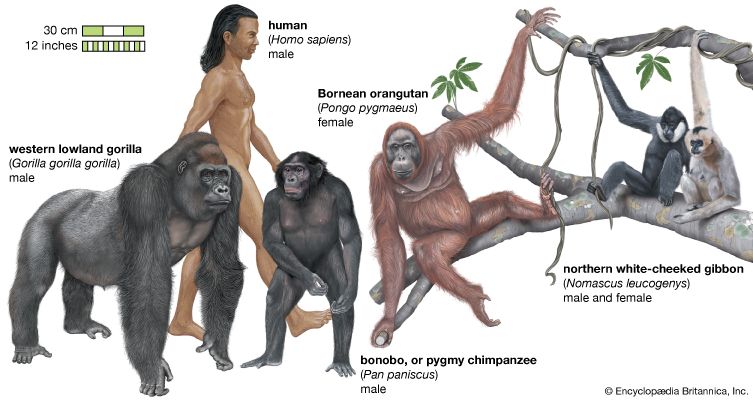
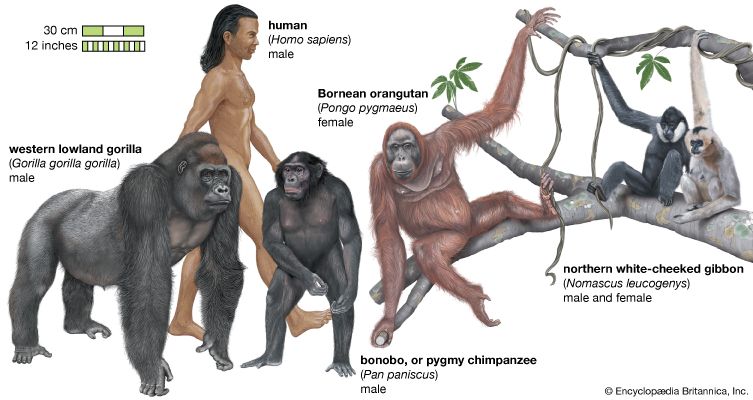
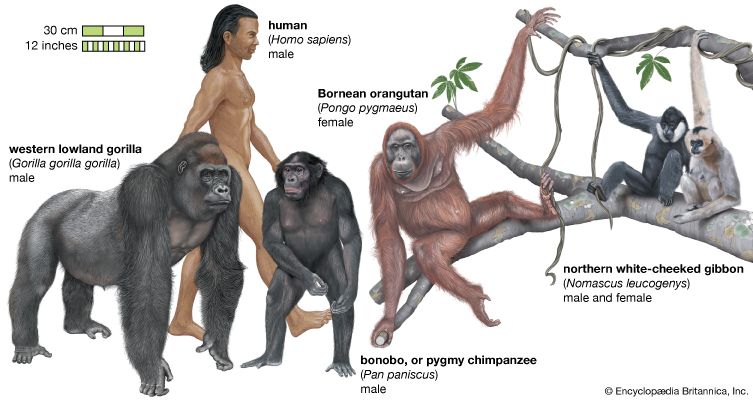
When comparing the two, the gorilla is significantly larger than the orangutan. While the orangutan is the largest arboreal animal, the ground-dwelling gorilla holds the title of the largest ape overall.1
When comparing adults of the same sex, gorillas are consistently heavier and taller. The average size differences in the wild are as follows:
- Male Gorilla: 1.7 meters (5.6 feet) and 135–220 kg (300–485 pounds)1
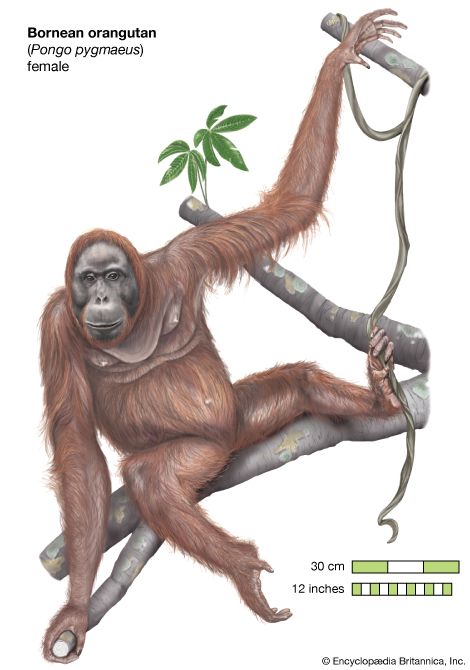
- Male Orangutan: 1.3 meters (4.3 feet) and 130 kg (285 pounds)1
- Female Gorilla: 1.5 meters (4.9 feet) and 70–90 kg (155–200 pounds)1
- Female Orangutan: 1.1 meters (3.6 feet) and 37 kg (82 pounds)1
Although female gorillas are slightly taller than male orangutans, they are typically lighter in weight.1
What are the main differences between arboreal and ground-dwelling apes?
The primary distinction between arboreal and ground-dwelling apes lies in their locomotor adaptations, sensory priorities, and environmental niches. While all primates share an evolutionary history rooted in the trees, their physical structures have diverged based on whether they spend their time in the canopy or on the ground.34
Arboreal Apes
Arboreal apes, such as gibbons and orangutans, are specialized for life in the canopy.5
- Locomotion: They often utilize brachiation—swinging by their arms—which requires highly mobile shoulder joints, flexible wrists, and long forelimbs.35
- Sensory Adaptations: Because navigating high, slender branches requires precise depth perception, these apes rely heavily on stereoscopic vision.4
- Anatomy: They possess grasping hands and feet with opposable thumbs and big toes to ensure stability.4
Ground-Dwelling Apes
Apes like gorillas, chimpanzees, and bonobos spend significant time on the ground and bonobos spend significant time on the ground.4
- Locomotion: African apes utilize knuckle walking, a quadrupedal gait where the fingers are folded to support the body.5
- Anatomy: Over time, ground-dwelling species have adapted to terrestrial life, though they retain anatomical features—such as flexible shoulders—that reflect their arboreal ancestry.35
- Evolutionary Shift: As environments shifted from dense forests to open woodlands during the Miocene Epoch, these apes adapted to new niches, eventually leading to the development of bipedalism in the human lineage.6
How do orangutans and gorillas differ in their social behaviors?
Orangutans and gorillas exhibit fundamentally different social structures, primarily defined by their environmental niches and foraging needs.
Orangutan Social Behavior
Orangutans are unique among great apes for their semisolitary social organization. Because they are large-bodied animals living in the forest canopy, they must forage widely for fruit, which makes maintaining large, stable groups energetically inefficient.7
- Solitary Nature: Adult males are the most solitary, generally avoiding one another and associating only with sexually receptive females.7
- Home Ranges: Males maintain larger home ranges than females to maximize their access to potential mates.7
- Mating: Mating typically occurs during 3-to-10-day consortships. While adult males are generally silent, they use a “long call”—a sequence of roars—to space themselves out from other males and attract females.7
- Development: Subadult males may remain in a state of arrested development for 10 to 20 years, likely due to the stress of an adult male’s presence.7
Gorilla Social Behavior
In contrast, gorillas live in stable, cohesive family groups that typically number between 6 and 30 individuals.2
- Group Structure: These groups are led by one or more dominant silverback males, who act as the hub of the group. The group includes females, infants, and juveniles, with females often transferring to new groups upon reaching maturity.28
- Communication and Display: Gorillas are generally shy and unaggressive, but they use ritualized displays—such as chest beating, vocalizations, and slapping the ground—to intimidate outsiders and maintain the dominance hierarchy within the group.2
- Cohesion: Unlike the solitary orangutan, gorillas spend their days foraging and resting together, traveling as a unit through their home range.2
What are some unique physical features of male orangutans?
Male orangutans possess several unique physical features that distinguish them from females and other great apes, primarily developing as they reach full maturity.
- Cheek Pads: Adult males develop wide, flat, and prominent cheek pads along the sides of their faces. These pads are a unique feature among primates and are linked to increased levels of testosterone.102
- Throat Pouch: Mature males possess a large throat pouch that functions as a resonating chamber. This allows them to produce the “long call,” a sequence of roars that can be heard for up to 2 km (1.2 miles) and serves to attract females and space out other males.2
- Size and Growth: Adult males are typically twice the size of females, weighing up to 130 kg (285 pounds). They exhibit a remarkable pattern of postmature growth; a subadult male may remain in a smaller state for 10 to 20 years before undergoing a rapid transformation—often triggered by the absence of a dominant male—where they nearly double their weight and develop their characteristic adult features within a year.102
- Hair: While orangutans are covered in sparse red hair, the hair on adult males can grow exceptionally long, creating a cape-like appearance when they move their arms.2
Sources
- Orangutan or gorilla: Which is bigger? — Encyclopædia Britannica
- orangutan — Encyclopædia Britannica
- primate - Four types of locomotion — Encyclopædia Britannica
- ape — Encyclopædia Britannica
- primate - General structure — Encyclopædia Britannica
- human evolution - Background and beginnings in the Miocene — Encyclopædia Britannica
- chimpanzee - Social behaviour — Encyclopædia Britannica
- gorilla — Encyclopædia Britannica
- human evolution - Learning from the apes — Encyclopædia Britannica
- primate - Growth and longevity — Encyclopædia Britannica
- primate - Male and female genitalia — Encyclopædia Britannica
Published on · 4 min read