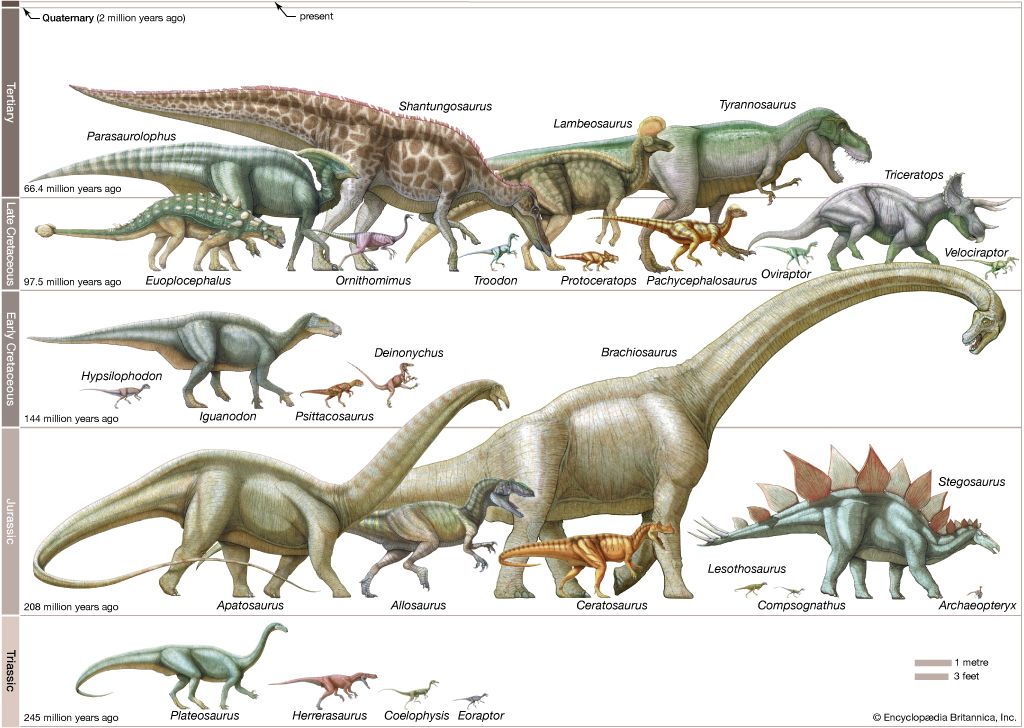
Ornithischian
Ornithischian dinosaurs, a diverse group of herbivorous dinosaurs, evolved a wide array of defensive features to protect themselves from predators. These…
What defensive features were common among ornithischian dinosaurs?
Ornithischian dinosaurs, a diverse group of herbivorous dinosaurs, evolved a wide array of defensive features to protect themselves from predators. These adaptations varied significantly across different lineages:
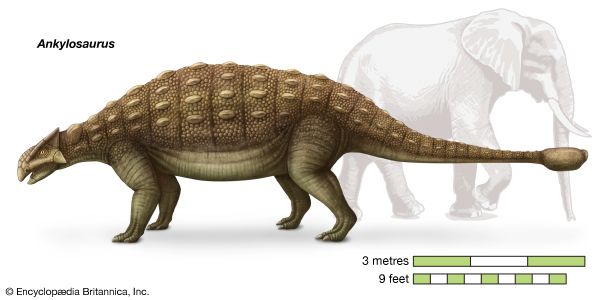
- Armour and Spikes: Members of the Ankylosauria were heavily protected by thick bands of bony plates on their backs and flanks, often supplemented by bony spikes. Some, such as the genus Ankylosaurus, possessed a massive bony tail club used for defense.1
- Horns and Frills: Ceratopsians were characterized by large heads featuring horns and a bony neck shield, or frill heads featuring horns and a bony neck shield, or frill. These structures likely served as defensive weapons or intimidating displays against attackers.32
- Behavioral Strategies: Many ornithischians, such as hadrosaurs, are known to have traveled in large herds, a social behavior that likely provided collective protection.3
- Anatomical Adaptations: While not strictly defensive, the specialized jaw structures—including the predentary bone and powerful grinding teeth—allowed these animals to thrive as herbivores, supporting the energy requirements needed to grow large and develop these defensive traits.43
What were the major subgroups within the ornithischian order?
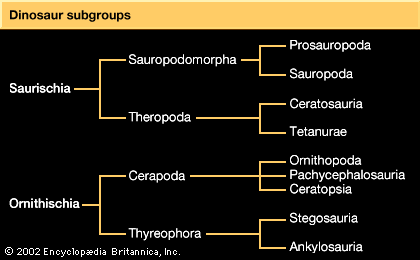
The order Ornithischia is divided into two primary lineages: Cerapoda and Thyreophora.12
Cerapoda
The Cerapoda subgroup is further classified into three distinct groups:15
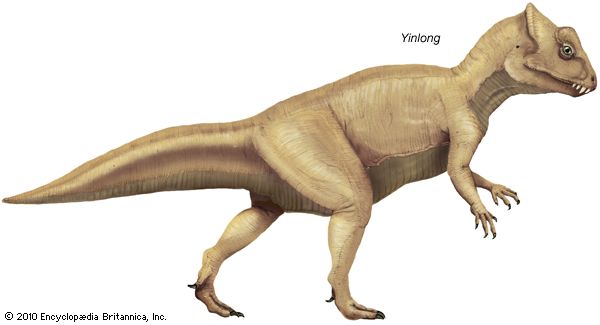
- Ornithopoda: Often described as the dinosaur equivalent of modern ruminants, these bipedal herbivores included families such as the hadrosaurs (duck-billed dinosaurs) and iguanodontids.6
- Pachycephalosauria: Known for their thickened skull roofs.16
- Ceratopsia: Characterized by their horns and bony neck frills.16
Some authorities group Pachycephalosauria and Ceratopsia together under the name Marginocephalia due to a shared bony shelf on the back of the skull.15
Thyreophora
The Thyreophora, or “armoured dinosaurs,” are defined by the presence of bony plates or scutes along their bodies. This group includes:71
- Stegosauria: Plated dinosaurs featuring rows of plates and spikes along the backbone.17
- Ankylosauria: Heavily armoured dinosaurs with scutes covering much of their bodies.17
What unique pelvic structure did ornithischian dinosaurs possess?
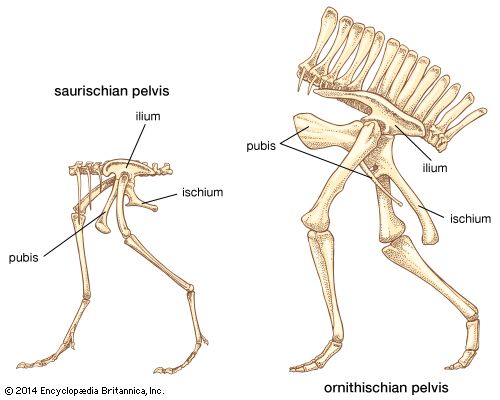
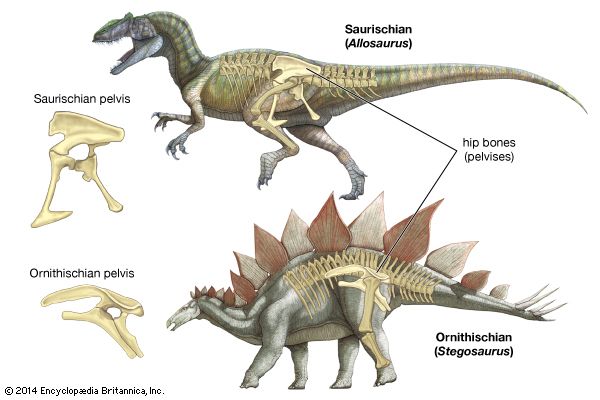
The defining characteristic of the Ornithischia order is its unique pelvic structure, which historically earned them the name “bird-hipped” dinosaurs.2
In these dinosaurs, the pubis bone underwent a significant evolutionary shift, migrating backward to lie parallel to the ischium. This configuration resulted in a long, thin postpubic process that extended backward beneath the ischium, a layout that superficially resembles the pelvic structure found in modern birds.9102
This anatomical arrangement stands in contrast to the Saurischia (“lizard-hipped”) order, where the pubis typically projects forward and downward. While this pelvic orientation is a hallmark of the group, later ornithischians—particularly within the Ornithopoda lineage—also developed a new “prepubic process” that extended forward from the pubis, likely to support abdominal muscles and internal organs. These structural differences are thought to reflect distinct arrangements of the muscles in the hips and hind legs, though the specific functional implications remain a subject of ongoing study.210
How did ornithischians contribute to the plant-eating dinosaur diversity during the Mesozoic era?
Ornithischians were the first major group of terrestrial vertebrates to be dominated by plant eaters, playing a pivotal role in the diversification of herbivorous dinosaurs throughout the Mesozoic era. Their success was largely driven by specialized anatomical adaptations that allowed them to efficiently process low-calorie, cellulose-heavy vegetation.511
Key contributions to their diversity and ecological success included:
- Advanced Feeding Mechanisms: Ornithischians developed a unique predentary bone at the tip of the lower jaw and toothless horny beaks for cropping vegetation. Their jaw joints were positioned to allow for effective grinding, and many lineages evolved complex dental batteries—tightly compressed rows of teeth—that functioned as powerful crushing or shearing surfaces.511
- Diverse Body Plans: The order branched into two primary lineages, Cerapoda and Thyreophora, which occupied various ecological niches.5
- Ornithopods evolved from bipedal runners into diverse forms, including the highly successful hadrosaurs, which traveled in herds and exhibited complex social behaviors.12
- Thyreophorans (armoured dinosaurs like stegosaurs and ankylosaurs) and Marginocephalians (such as ceratopsians) developed specialized defenses and feeding strategies to exploit different plant resources.12115
These adaptations allowed ornithischians to thrive as the Earth’s vegetation shifted from gymnosperm-dominated forests to angiosperm-rich environments.11
Sources
- ornithischian — Encyclopædia Britannica
- dinosaur - Ornithischia — Encyclopædia Britannica
- dinosaur - Ceratopsia — Encyclopædia Britannica
- Ankylosaurus — Encyclopædia Britannica
- ornithopod — Encyclopædia Britannica
- crustacean - Annotated classification — Encyclopædia Britannica
- dinosaur - Thyreophora — Encyclopædia Britannica
- dinosaur - Cerapoda — Encyclopædia Britannica
- dinosaur - Classification — Encyclopædia Britannica
- dinosaur - Ornithopoda — Encyclopædia Britannica
- dinosaur - The plant eaters — Encyclopædia Britannica
- Jurassic Period - Vertebrates — Encyclopædia Britannica
Published on · 3 min read