Ornithopod
Fossil records provide compelling evidence that ornithopods exhibited complex social behaviors, including herding and parental care.
What evidence do we have about ornithopod behavior and social structures from fossil records?
Fossil records provide compelling evidence that ornithopods exhibited complex social behaviors, including herding and parental care.
Herding and Social Structure
Evidence for gregarious behavior in ornithopods is found in both skeletal assemblages and trace fossils:
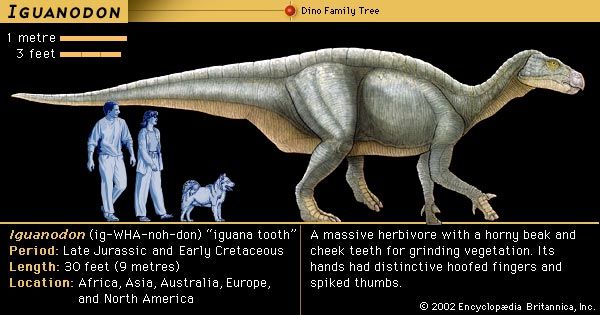
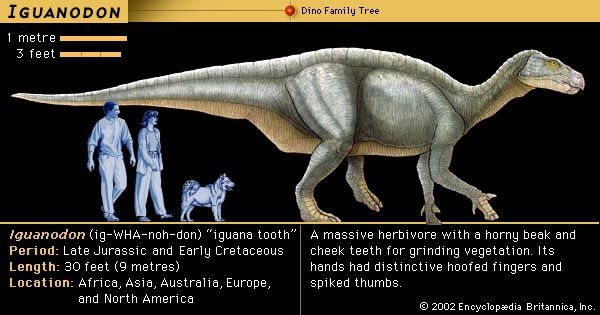
- Mass Assemblages: Discoveries such as the mass burial in Bernissart, Belgium, contain at least three groups of Iguanodon, suggesting these animals lived and traveled in groups.1
- Trackways: Fossilized footprints, which show numerous individuals moving in parallel directions, indicate that many ornithopods traveled in large herds. These trackways suggest that such herds were likely migratory, moving across landscapes in search of food.1
Reproductive Behavior
Research into hadrosaurs, or duck-billed dinosaurs, has revealed sophisticated reproductive strategies:
- Parental Care: Hadrosaurs are known to have cared for their young, which hatched in an immature state.2
- Site Fidelity: Discoveries at sites like Egg Mountain in Montana demonstrate that these dinosaurs returned to the same nesting grounds year after year, exhibiting “site fidelity” as part of their reproductive strategy.3
- Nesting Colonies: The presence of numerous nests and eggs at specific sites suggests that these dinosaurs nested in large, social colonies.13
What are the main characteristics that define ornithopod dinosaurs?
Ornithopods were a highly successful and enduring lineage of ornithischian dinosaurs that flourished from the Late Triassic to the Late Cretaceous periods. They are defined by several key anatomical and behavioral characteristics:
Physical Stance and Anatomy
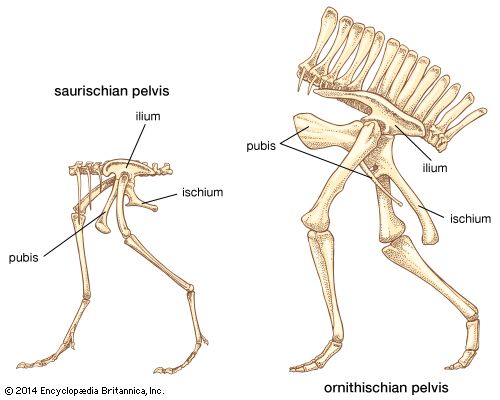
- Bipedal Ancestry: The name “ornithopod” means “bird-foot,” reflecting their ancestral two-legged (bipedal) stance. While early forms were strictly bipedal, more advanced groups like iguanodontids and hadrosaurs were often comfortable on all fours.14
- Limb Structure: Their hind legs were significantly longer and sturdier than their forelegs. The feet typically featured three functional middle toes, often ending in broad, hooflike bones rather than sharp claws.4
- Tail and Backbone: The tail was long and often deep, reinforced by a lattice of ossified tendons that provided structural stiffness to the backbone.4
Feeding Adaptations
Ornithopods were the dinosaur equivalent of modern ruminants, highly adapted for processing tough, cellulose-rich vegetation.15
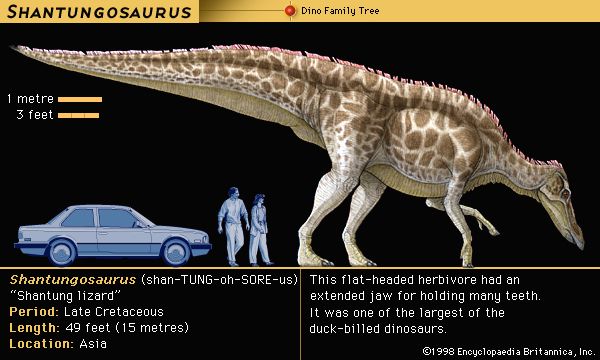
- Beaks and Teeth: They possessed horny beaks for cropping vegetation and specialized cheek teeth for grinding. Advanced forms, particularly hadrosaurs, developed complex “dental batteries”—tightly packed rows of hundreds of teeth—that acted as efficient crushing surfaces.154
- Cheek Pouches: Many ornithopods had teeth set inward from the outer cheek surface, suggesting the presence of cheeks that held food in the mouth for extended processing.4
- Skull Mobility: Advanced ornithopods exhibited increased kinesis (mobility) in their facial bones, which likely helped cushion the stress of chewing tough plant material.4
What was the typical diet of ornithopod dinosaurs, and how did their anatomy reflect their feeding habits?
Ornithopod dinosaurs were highly specialized herbivores that evolved sophisticated anatomical features to process a diet consisting of tough, cellulose-rich vegetation, such as conifers and palm-like plants. Their feeding habits are reflected in several key evolutionary adaptations:4
Dental and Jaw Adaptations
- Beaks and Grinding Teeth: Ornithopods possessed horny, toothless beaks for cropping vegetation. Behind these, they developed specialized cheek teeth for grinding.15
- Dental Batteries: In advanced forms like hadrosaurs, these teeth evolved into complex “dental batteries”—tightly packed rows of hundreds of teeth that created a long, efficient crushing and grinding surface.45
- Cheek Pouches: Many ornithopods had teeth set inward from the outer cheek surface, suggesting the presence of cheeks that held food in the mouth for extended processing.15
- Skull Mobility: Advanced ornithopods exhibited increased kinesis (mobility) in their facial bones, which likely helped cushion the stress of chewing tough plant material.5
Feeding Posture and Strategy
- Browsing Heights: While smaller, primitive ornithopods were strictly bipedal, larger forms like iguanodontids and hadrosaurs were often comfortable on all fours, allowing them to browse on both low-lying shrubs and higher tree branches.45
- Dietary Evidence: Fossilized stomach contents from a Wyoming specimen indicate that at least some hadrosaurs consumed pine needles, highlighting their ability to process fibrous, low-calorie plant matter.45
Which were some of the most famous ornithopod species, and what made them unique?
Ornithopods were one of the most successful and enduring dinosaur lineages, evolving a variety of unique adaptations to thrive as herbivores. Some of the most famous species include:
- Iguanodon: One of the best-known ornithopods, this nine-meter-long dinosaur was historically significant as one of the first species scientifically described as a dinosaur. It is unique for its specialized hands, which featured a blocky, fused wrist and a distinct, conelike thumb spike likely used for defense or manipulating vegetation.175
- Maiasaura: Known as the “good mother lizard,” this duck-billed hadrosaur provided groundbreaking evidence for parental care in dinosaurs. Fossil discoveries in Montana revealed nesting sites with juveniles and hatchlings, suggesting these social animals lived in herds and nurtured their young, which were born in an immature state.18
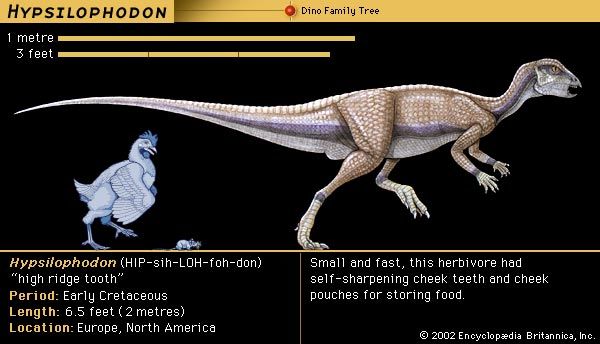
- Hypsilophodon: A widespread and long-surviving genus, these dinosaurs were relatively small (1.5 to 7 meters) and are noted for being exceptionally speedy runners. They represent a more primitive, bipedal stage of ornithopod evolution compared to the later, larger quadrupedal forms.15
- Parasaurolophus: A member of the lambeosaurine hadrosaurs, this species is famous for the spectacular, hollow bony crest on its head. These crests were connected to the nasal passages and are thought to have functioned as tools for sound production (honking) or visual species recognition.15
Sources
- ornithopod — Encyclopædia Britannica
- dinosaur - Herding behaviour — Encyclopædia Britannica
- dinosaur - Reproduction — Encyclopædia Britannica
- dinosaur - The plant eaters — Encyclopædia Britannica
- dinosaur - Ornithopoda — Encyclopædia Britannica
- Beak — Encyclopædia Britannica
- Maiasaura — Encyclopædia Britannica
- ornithischian — Encyclopædia Britannica
- Iguanodon — Encyclopædia Britannica
- Ornithomimus — Encyclopædia Britannica
- Are iguanodons and iguanas related? — Encyclopædia Britannica
Published on · 4 min read