Pediment
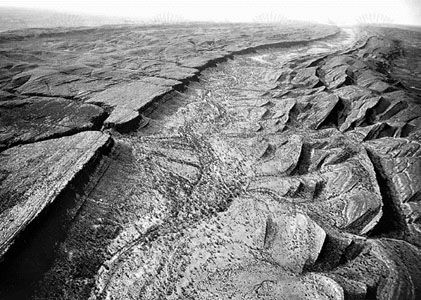
A pediment is a relatively flat surface of bedrock typically found at the base of a mountain or as a plain without an associated mountain. Its surface…
What are the typical characteristics of a pediment’s surface?
A pediment is a relatively flat surface of bedrock typically found at the base of a mountain or as a plain without an associated mountain. Its surface characteristics include the following:
- Slope and Form: The surface is generally slightly concave, with a slope angle typically ranging from 0.5° to 7°.1
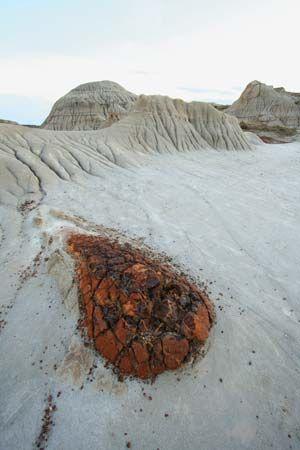
- Composition: It consists of exposed bedrock or bedrock veneered with a thin layer of alluvial soil or gravel. In areas with massive rocks like granite, these surfaces can appear as spectacular bare-rock features.12
- Surface Dynamics: Water typically moves across the surface via laminar sheet flow. If this flow is disturbed, it can become turbulent, leading to the development of gullies.1
- Juncture: There is often a sharp break in the slope where the pediment meets the steeper hillside above it.1
- Environmental Variation: While most conspicuous in arid regions, these surfaces also exist in humid areas, where they are often obscured by vegetation and soil mantles.1
What are some famous examples of pediments found around the world?
The term “pediment” refers to two distinct concepts: a geological landform and an architectural feature.
Geological Pediments
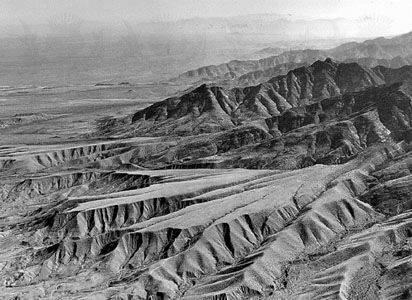
Geological pediments are bedrock surfaces found at the base of mountains or as plains. They are most conspicuous in basin-and-range desert regions worldwide, where they develop under arid conditions with intense, spasmodic rainfall. While they are widespread in these environments, they are often identified by their characteristic slope and form rather than by specific named locations.
Architectural Pediments
Architectural pediments are triangular gables or decorative forms used over entrances, windows, and niches. Famous examples include:
- Parthenon (Athens, 447–432 BCE): A quintessential example of the Greek temple front, featuring a tympanum decorated with sculpture.
- Palazzo Farnese (Rome, begun 1517): Features fine examples of window pediments on the piano nobile, showcasing the Renaissance revival of classical motifs.
- Church of San Andrea al Quirinale (Rome, 1658–70): Designed by Gian Lorenzo Bernini, this structure displays the elaborate broken and scrolled pediments characteristic of the Baroque period.
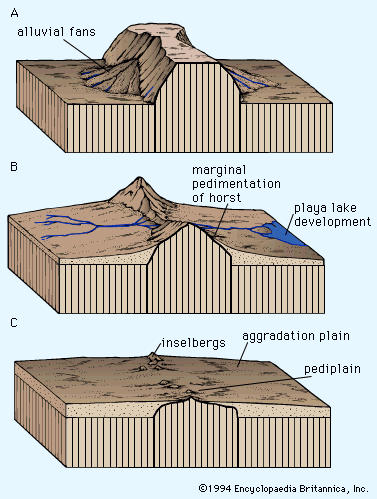
Can you explain the concept of pediment retreat and its significance in landscape evolution?
Pediment retreat is a fundamental geomorphic process involving the lateral backwearing of mountain front slopes, which results in the expansion of a pediment at the expense of the adjacent mountain mass.1
Significance in Landscape Evolution
The significance of this process lies in its role as a primary mechanism for creating low-relief planation surfaces. Unlike models that emphasize the gradual wearing down of entire landscapes, pediment retreat focuses on the lateral migration of escarpments.2
- Mountain Reduction: As slopes retreat, the mountain mass is progressively consumed. In tectonically stable areas, this can lead to the complete erosion of a mountain range, leaving behind a dome-like surface of coalesced pediments, such as the Cima Dome in the Mojave Desert.1
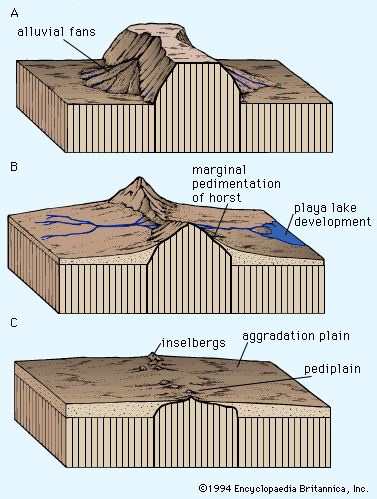
- Pediplains: When pedimentation occurs over broad regions, the resulting coalesced surface is known as a pediplain. These surfaces are often punctuated by inselbergs—isolated, relict hills that remain as the surrounding landscape is lowered.12
- Mechanism: This process is driven by runoff in non-vegetated environments. When runoff loses transport energy due to infiltration and evaporation, it cannot erode below the base level of deposition; consequently, it expends its energy against the mountain slopes, forcing them to retreat.2
What is the relationship between pediments and mountain front development?
Pediments and mountain fronts are intrinsically linked through a process of landscape evolution where the mountain front serves as the source of material and the pediment acts as the erosional surface at its base.12
The Relationship
The relationship is defined by the piedmont angle, a sharp juncture that typically separates the steep mountain hillside from the gentler slope of the pediment. This connection is dynamic:12
- Backwearing and Retreat: Pediments develop largely through the lateral backwearing of mountain front slopes. As runoff in arid environments loses transport energy due to infiltration and evaporation, it cannot erode below the base level of deposition. Consequently, this energy is directed against the adjacent mountain slopes, forcing them to retreat.26
- Mountain Consumption: This process of retreat effectively consumes the mountain mass over time. In tectonically stable regions, this can lead to the complete erosion of a mountain range, leaving behind a dome-like surface of coalesced pediments, such as the Cima Dome in the Mojave Desert.21
- Erosional vs. Depositional: While the distinction can be unclear, pediments are primarily erosional features that truncate bedrock, whereas alluvial fans are depositional. Ancient pediments may sometimes be found mantled with fluvial deposits, marking them as relict forms from previous climatic or tectonic conditions.12
Sources
- pediment — Encyclopædia Britannica
- planation surface — Encyclopædia Britannica
- bajada — Encyclopædia Britannica
- Pediment — Encyclopædia Britannica
- inselberg — Encyclopædia Britannica
- continental landform - The geomorphic concepts of Penck and King — Encyclopædia Britannica
Published on · 4 min read