Mojave Desert
The Mojave Desert is defined by a characteristic mountain-and-basin topography that shapes its arid landscape. This geological structure consists of sand and…
How has the geology of the Mojave Desert influenced its formation and current landscape?
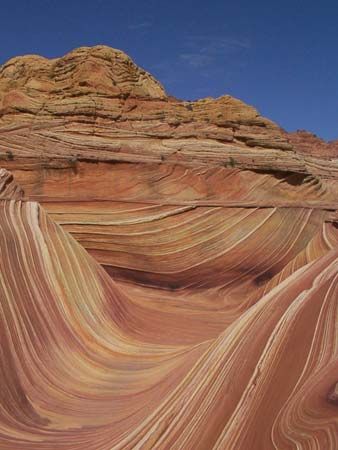
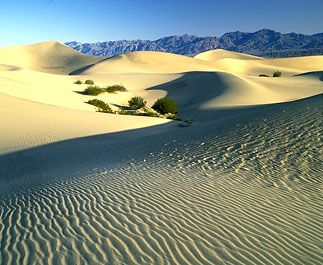
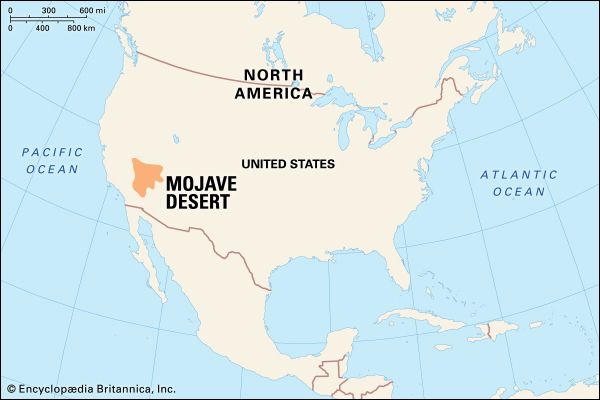
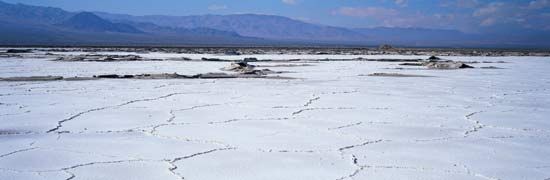
The Mojave Desert is defined by a characteristic mountain-and-basin topography that shapes its arid landscape. This geological structure consists of sand and gravel basins that drain into central salt flats, which serve as significant sources for minerals such as borax, potash, and salt. The region also contains economically valuable deposits of silver, tungsten, gold, and iron.1
The desert’s physical boundaries are set by major geological features, extending from the Sierra Nevada range to the Colorado Plateau, and abutting the San Gabriel and San Bernardino mountains. Notably, the region includes Death Valley, which is the lowest point in North America. Hydrologically, the landscape is influenced by the intermittent Mojave River, which flows primarily underground toward Soda Lake, while the Colorado River borders the desert’s eastern edge.1
What types of plants and animals have adapted to survive in the Mojave Desert?
To survive in the arid environment of the Mojave Desert, both plants and animals have evolved specialized adaptations to manage limited moisture and extreme temperature fluctuations.3
Plant Adaptations
Plants in the Mojave are primarily xerophytes, which are adapted to survive in dry conditions. Characteristic vegetation includes:4
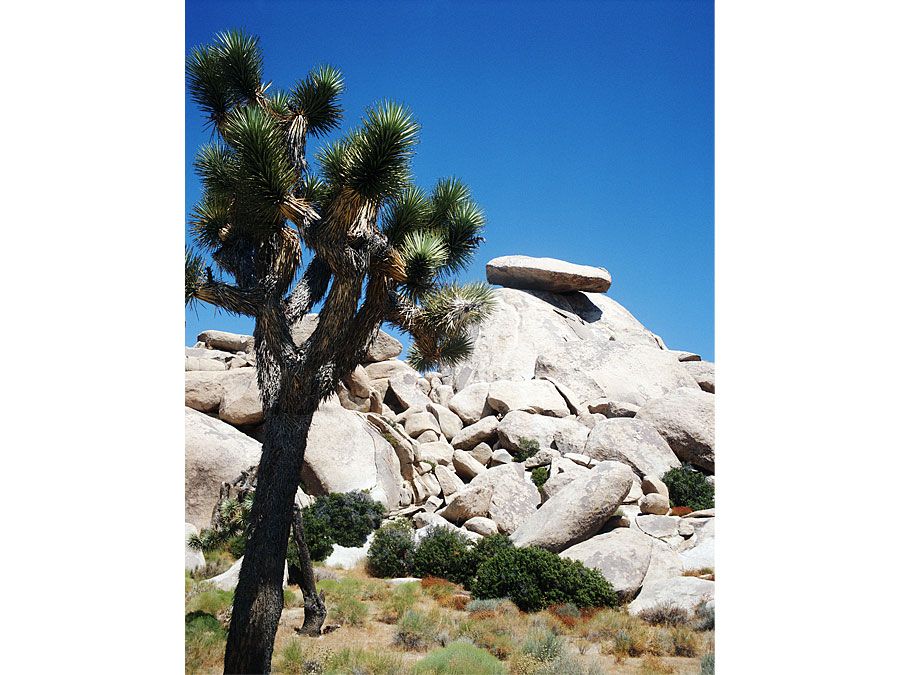
- Joshua trees (Yucca brevifolia and Y. jaegeriana): These iconic, slow-growing succulents are dominant in the landscape. They rely on a unique mutualism with yucca moths for pollination, ensuring their reproductive success.1
- Creosote bush (Larrea tridentata): A common shrub highly adapted to the desert’s low precipitation.35
- Other species: The landscape also features burroweed and various species of cholla cacti.3
Animal Adaptations
Desert animals have developed behavioral and physiological strategies to conserve water and avoid the heat.6
- Nocturnal Behavior: Many mammals, such as rodents (mice, rats, and squirrels), rabbits, and bats, are primarily nocturnal. They remain in cool, underground burrows during the day to escape the heat.6
- Moisture Sources: Many reptiles and birds derive necessary moisture directly from their food, such as insects, spiders, or plant fluids, making them largely independent of standing water.6
- Specialized Habitats: The desert night lizard (X. vigilis) survives by living under the decaying remains of Joshua trees, which provide shelter and food sources like termites.7
- Predators: Higher-level carnivores, including coyotes, bobcats, foxes, and skunks, occupy the upper levels of the food chain, while bighorn sheep are found at higher elevations.6
How has the Mojave Desert been portrayed in popular culture and media?
Sorry, the Britannica knowledge base does not contain information regarding the portrayal of the Mojave Desert in popular culture and media. The available records focus on the region’s geography, natural resources, and the history and culture of the Mojave people.
How does the climate of the Mojave Desert differ from other deserts in the United States?
The Mojave Desert is distinguished from other North American deserts by its specific climatic profile, which serves as a transition between the cooler, temperate Great Basin Desert to the north and the hotter, subtropical Sonoran Desert to the south.1910
Key climatic differences include:
- Precipitation Levels: The Mojave is exceptionally arid, receiving an average annual precipitation of only 2 to 6 inches (50 to 150 mm). This is generally lower than the Great Basin (6–12 inches), the Sonoran (8–18 inches), and the Chihuahuan (12–14 inches) deserts.110
- Temperature Extremes: While the Mojave shares the harsh temperature regimes common to the North American Desert, it is characterized by extreme daily temperature variations and frequent winter frosts. Its temperatures are generally warmer than the northern deserts but can reach intense highs, such as those recorded in Death Valley, which experiences some of the highest average annual temperatures in the region.110
- Climatic Transition: Unlike the more temperate Great Basin or the tropical-influenced Sonoran gulf coast, the Mojave acts as a climatic bridge, merging the characteristics of these surrounding zones while maintaining its own distinct, low-moisture environment.910
Sources
- Mojave Desert — Encyclopædia Britannica
- Mojave — Encyclopædia Britannica
- North American Desert - Plant life — Encyclopædia Britannica
- Joshua tree — Encyclopædia Britannica
- Desert - Flora — Encyclopædia Britannica
- North American Desert - Animal life — Encyclopædia Britannica
- 8 Animals That Live in Extreme Environments — Encyclopædia Britannica
- night lizard — Encyclopædia Britannica
- North American Desert - Physiography — Encyclopædia Britannica
- North American Desert - Climate — Encyclopædia Britannica
- United States - Climatic controls — Encyclopædia Britannica
Published on · 3 min read