Continental Landform
Continental landforms significantly influence regional climates and biodiversity by altering atmospheric flow, temperature, and moisture distribution.
How do continental landforms affect climate and biodiversity in different regions?
Continental landforms significantly influence regional climates and biodiversity by altering atmospheric flow, temperature, and moisture distribution.
Influence on Climate
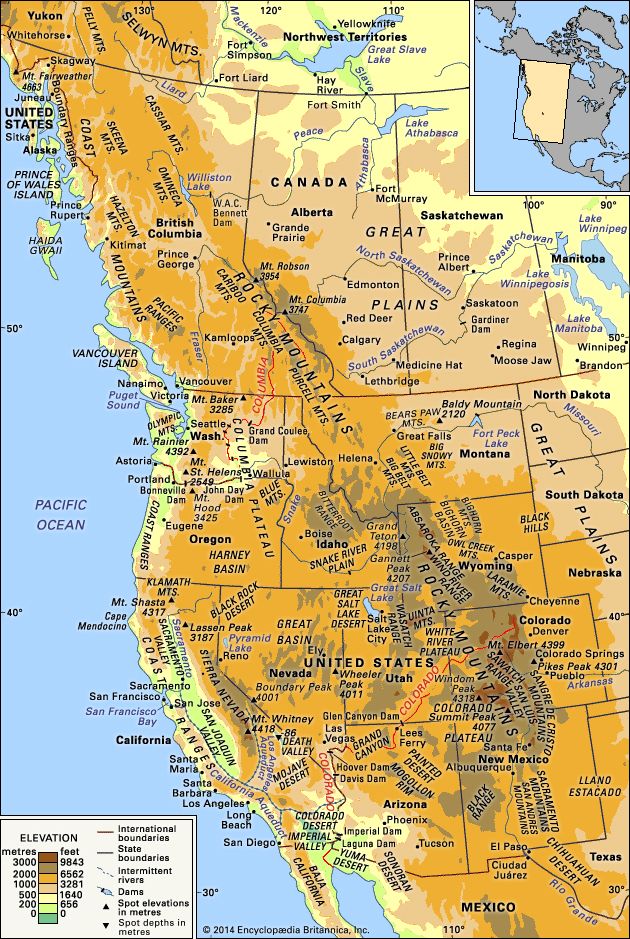
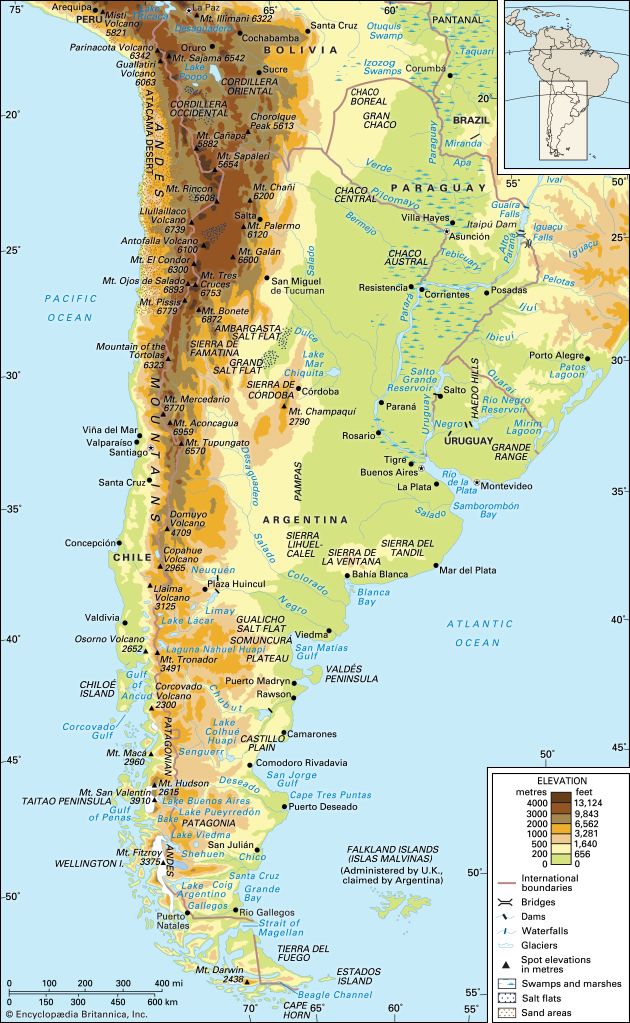
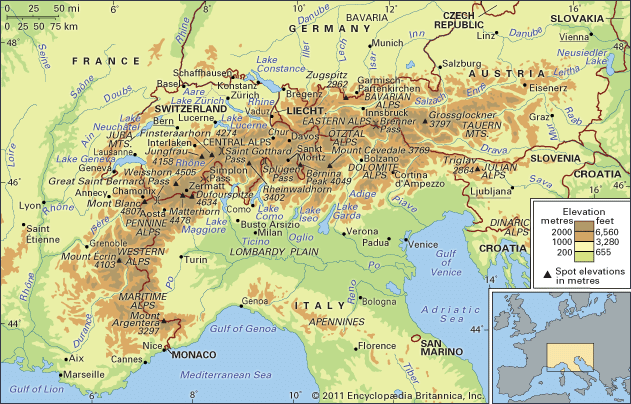
Large-scale mountain barriers, such as the Rockies and the Andes, act as physical obstacles to air masses. When moist air is forced up windward slopes, it cools and releases precipitation, while the subsiding air on leeward slopes creates arid rain shadow conditions. Furthermore, these barriers can block cold continental air, leading to milder climates on western coasts compared to continental interiors. In contrast, east-west ranges like the Alps offer less resistance to westerly winds, allowing maritime conditions to penetrate further inland.12
Impact on Biodiversity
Topography creates diverse microclimates, which are essential for supporting a wide array of life-forms. Because different species have specific environmental tolerances, the existence of strongly contrasting microclimates in close proximity—driven by variations in elevation, slope orientation, and soil characteristics—allows many species of flora and fauna to coexist and interact within a single region.3
How do plate tectonics contribute to the formation of continental landforms?
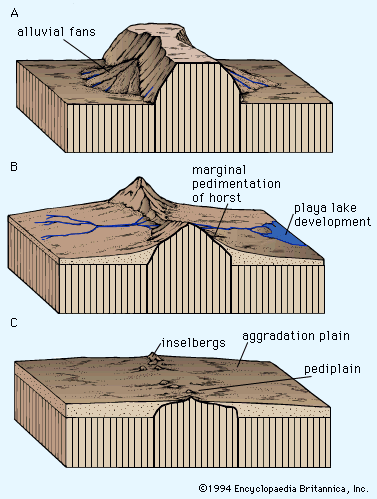
Plate tectonics is the primary driver of major continental landforms, shaping the Earth’s surface through the movement, collision, and separation of lithospheric plates. These processes build the “stage set” upon which erosional forces later act.67
Mountain Building and Plate Convergence
Mountains are primarily formed at convergent margins where tectonic plates collide. This occurs through several mechanisms:86
- Subduction: As an oceanic plate descends beneath a continental plate, it triggers magmatism, creating volcanic arcs like the Andes.910
- Terrane Accretion: Small crustal fragments are scraped off subducting plates and welded onto continental margins, contributing to mountain belts like the North American Cordillera.8
- Continental Collision: When two continents collide, subduction terminates and the crust is compressed and thickened, resulting in massive mountain ranges such as the Himalayas and the Alps.8
Plateaus and Rifting
Plateaus and valleys are also products of tectonic activity:
- Plateau Formation: These can arise from crustal shortening (thickening), thermal expansion of the lithosphere, or extensive volcanic outpourings (flood basalts).116
- Rift Valleys: Formed at divergent margins where plates pull apart, these elongated troughs—such as the East African Rift System—occur as the crust thins and subsides.1213
How do volcanic activities contribute to the creation of continental landforms?
Volcanic activity is a powerful force in shaping continental landforms, acting as a syn-tectonic phenomenon that can modify landscapes through both localized vent eruptions and widespread fissure flows.18
Major Volcanic Landforms
- Individual Volcanoes: Vent eruptions produce distinct volcanic edifices. For example, shield volcanoes like Mauna Loa are built by long records of fluid lava flows, while stratovolcanoes like Mount Fuji form from alternating layers of ash and lava due to moderately explosive eruptions.10
- Lava Plateaus: Fissure eruptions can release voluminous amounts of fluid lava, creating extensive lava plateaus or flood basalts, such as the Columbia Plateau. These features often bury preexisting terrain, resulting in flat surfaces frequently incised by canyons.1013
- Volcanic Arcs: At subduction zones, the melting of the mantle wedge generates magma that rises to form chains of volcanoes. When these occur on continental margins, they create volcanic mountain ranges like the Andes.1611
Influencing Factors
The resulting landform is determined by the composition of the magma, the geometry of the vent, and the environment of the eruption (subaerial, submarine, or subglacial). For instance, subglacial eruptions can create unique structures like table mountains, while the silica content of the magma influences whether a volcano is gently sloping or highly explosive.10
What role do erosion and weathering play in shaping continental landforms?
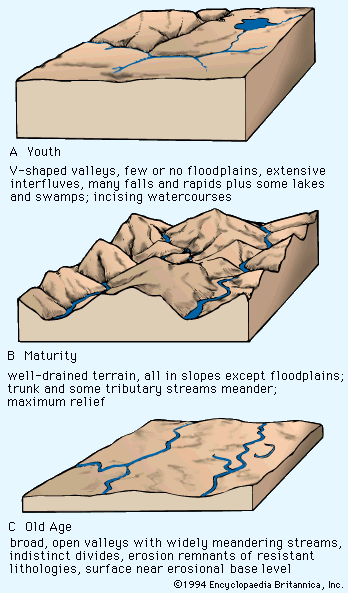
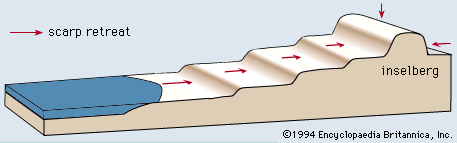
Erosion and weathering are the primary denudational processes that sculpt the Earth’s surface, transforming the “stage set” created by tectonic activity into the diverse landscapes we observe today. While tectonic processes build major structures like mountains and plateaus through uplift, erosion and weathering work to reduce these elevations and shape their specific profiles.112122
The Role of Weathering
Weathering is the in-situ disintegration or alteration of rock through physical, chemical, and biological processes. It prepares rock material for removal by breaking it down into smaller particles or altering its mineral composition.23
- Physical weathering: Driven by forces like thermal expansion, freeze-thaw cycles, and pressure release, it mechanically breaks rock into smaller fragments.23
- Chemical weathering: Involves processes such as oxidation, hydration, and carbonation, which decompose minerals, particularly in humid or tropical climates.23
The Role of Erosion
Erosion involves the transportation of weathered debris away from its original site. It acts as the primary agent of landscape evolution, carving out valleys, ridges, and basins.231121
- Glacial erosion: Glaciers reshape V-shaped river valleys into U-shaped valleys and carve out features like cirques and horns.24
- Fluvial erosion: Rivers transport sediment and carve narrow channels, eventually depositing material to form deltas at their mouths.16
Together, these processes act to level the Earth’s surface, though they can take hundreds of millions of years to fully erase tectonic features.11
Sources
- Highland climate — Encyclopædia Britannica
- Microclimate — Encyclopædia Britannica
- Atmosphere - Mountain barriers — Encyclopædia Britannica
- Atmosphere - Effect of continents on air movement — Encyclopædia Britannica
- United States - The bioclimatic regions — Encyclopædia Britannica
- plate tectonics - Mountain building — Encyclopædia Britannica
- plate tectonics - Mountains by subduction — Encyclopædia Britannica
- rift valley — Encyclopædia Britannica
- volcano - Volcanism and tectonic activity — Encyclopædia Britannica
- plateau - Formative processes — Encyclopædia Britannica
- tectonic landform — Encyclopædia Britannica
- plate tectonics - Island arcs — Encyclopædia Britannica
- continental crust — Encyclopædia Britannica
- plate tectonics - Continental rifting — Encyclopædia Britannica
- plate tectonics - Alfred Wegener and the concept of continental drift — Encyclopædia Britannica
- continental landform — Encyclopædia Britannica
- How do tectonic plates move? — Encyclopædia Britannica
- volcano - Determinants of size and shape — Encyclopædia Britannica
- island arc — Encyclopædia Britannica
- volcano - Other volcanic structures and features — Encyclopædia Britannica
- glacial landform - Cirques , tarns, U-shaped valleys, arêtes, and horns — Encyclopædia Britannica
- river - Deltas — Encyclopædia Britannica
- weathering — Encyclopædia Britannica
- glacial landform - Meltwater deposits — Encyclopædia Britannica
- soil - Rates of soil erosion — Encyclopædia Britannica
- continental landform - Theoretical overview — Encyclopædia Britannica
- uplift — Encyclopædia Britannica
- mountain - Tectonic processes that destroy elevated terrains — Encyclopædia Britannica
Published on · 4 min read