Alluvial Fan
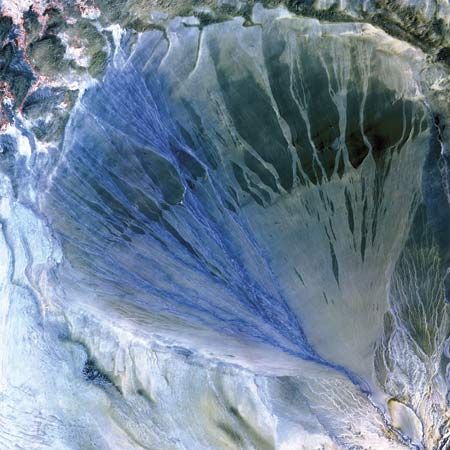
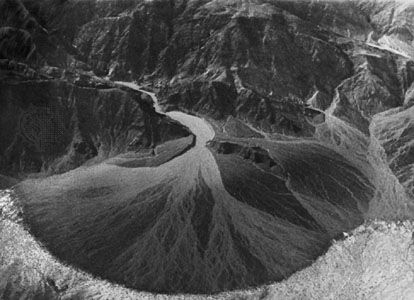
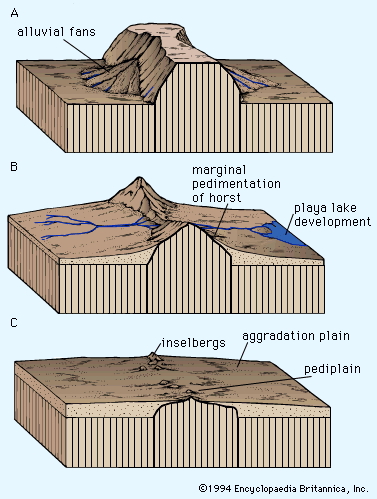
Alluvial fans are fan-shaped sedimentary deposits that form where a stream emerges from a mountain canyon onto a plain or basin. While they occur globally…
What are some notable examples of alluvial fans around the world?
Alluvial fans are fan-shaped sedimentary deposits that form where a stream emerges from a mountain canyon onto a plain or basin. While they occur globally, they are most prominent in arid and semiarid regions where mountains meet adjacent basins.123
Notable examples and regions include:
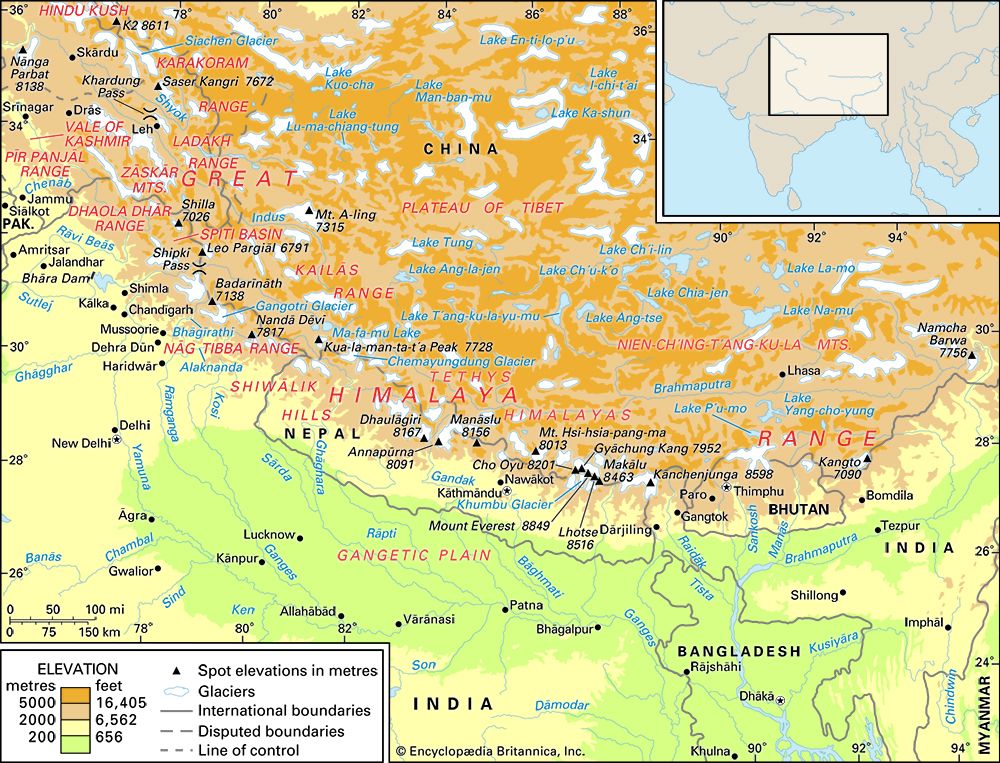
- The Kosi River Basin (India): A classic example of a “wet” fan, where perennial flow from the Himalayas has created a large, active depositional system.4
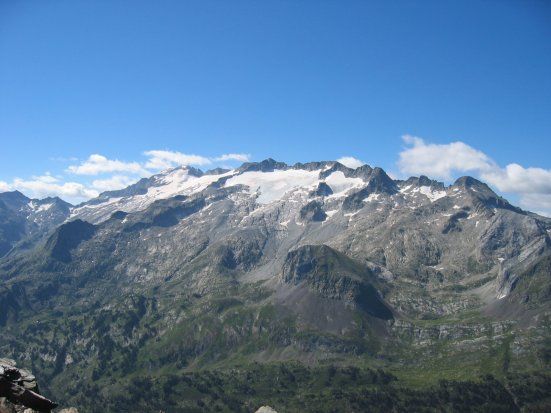
- Plateau de Lannemezan (France): Located on the northern side of the Pyrenees, this is a large, ancient piedmont alluvial fan formed during the Cenozoic Era.1
- Western United States: Many fans are found in the basin-and-range regions of California and Nevada, including those in the White Mountains of California, which have been accumulating debris for over 700,000 years.143
- Global Regions: Prominent fans are also documented in Central Asia, Afghanistan, Pakistan, Chile, Peru, and the Sinai Peninsula.13
What role do climate and weathering play in the formation of alluvial fans?
Climate and weathering are fundamental drivers in the formation of alluvial fans, acting as key components of the erosional-depositional systems that shape landscapes over geologic time.14
The Role of Climate
Climate dictates the nature of streamflow, which directly influences fan morphology. In arid and semiarid regions, fans are often larger and more prominent due to sporadic, intense rainfall or rapid snowmelt. These events trigger flash floods and mudflows that transport significant sediment loads from mountain canyons to adjacent basins.14
Conversely, in humid climates, fans are typically formed by perennial streams. This distinction has led to the classification of fans into two types:
- Dry fans: Formed by ephemeral flow associated with the spasmodic rainfall of arid climates.4
- Wet fans: Created by constant streamflow, more common in humid environments.4
The Role of Weathering and Erosion
Weathering provides the raw material for these deposits. Mountains undergo constant erosion, breaking down rock into sediment that is transported by drainage systems. As streams emerge from confined mountain canyons, the sudden loss of confinement causes a decrease in transport capacity, leading to the deposition of this weathered material. The resulting fan exhibits a high degree of sorting, with coarser debris typically deposited near the apex and finer sands and silts toward the base.14
How can alluvial fans be used to study past climate and environmental changes?
Alluvial fans serve as valuable archives for reconstructing past climate and environmental conditions because their development is intrinsically linked to external factors, including climatic change, tectonic uplift, and variations in sediment supply1.
Researchers use these landforms to study historical shifts in the following ways:
- Identifying Fossil Features: Many fans in humid regions are “fossil” features, meaning they were formed during past periods of intense erosion and deposition that no longer match the current climate. For example, the Plateau de Lannemezan in France is a massive fan too large to have been created by modern rivers; it provides evidence of environmental conditions during the Pliocene Epoch1.
- Analyzing Depositional Cycles: The alternating episodes of trenching and filling (entrenchment and backfilling) observed on fan surfaces can indicate historical fluctuations in rainfall, discharge, and sediment load. When these changes are driven by external forces rather than internal system dynamics, they serve as a record of past climatic shifts.1
- Chronological Records: Because some fans have been accumulating sediment for hundreds of thousands of years—such as those in the White Mountains of California—they contain long-term, stratified records of debris-flow events and environmental history.1
How do geologists study and analyze alluvial fans?
Geologists study and analyze alluvial fans by examining their physical morphology, sediment composition, and stratigraphic history to understand the environmental and tectonic processes that formed them.41
Morphological and Field Analysis
Geologists map the plan-view geometry of fans, which typically radiate from a single point source at a canyon mouth. They analyze the distribution of sediment, noting that fans generally exhibit a high degree of sorting, with coarser gravels and sands deposited near the apex and finer sands and silts toward the base. Field studies often involve identifying:41
- Distributary channels: Braided networks that redistribute sediment across the fan surface.1
- Trenching and backfilling: Evidence of historical episodes where streams have cut into or filled the fan surface, which helps geologists interpret past changes in discharge and sediment load.4
- Coalescence: In areas where multiple fans merge, geologists study the resulting bajada or alluvial plain to understand broader landscape evolution.4
Sedimentological and Chronological Techniques
To decipher the history of a fan, geologists analyze the grain size of the deposits. This involves:
- Sieving and settling: Measuring particle distribution to identify the “textural fingerprint” of the transporting agent, such as flash floods or mudflows.17
- Statistical characterization: Using measures like mean, sorting, and skewness to compare sediment populations.7
- Geochronology: Geologists use dating techniques to establish the age of fan deposits. By studying strata and using radiometric dating, they can correlate fan formation with specific geologic events or climate shifts over geologic time.89
Sources
- alluvial fan — Encyclopædia Britannica
- river - Fan deposits and depositional processes — Encyclopædia Britannica
- alluvial fan — Merriam-Webster
- river - Alluvial fans — Encyclopædia Britannica
- Death Valley - Death Valley National Park — Encyclopædia Britannica
- Death Valley National Park — Encyclopædia Britannica
- sedimentary rock - Grain size — Encyclopædia Britannica
- dating — Encyclopædia Britannica
- dating: Top Questions — Encyclopædia Britannica
Published on · 4 min read