Pike Perch
Pike perch are often confused with true pikes due to their name, but they are distinct members of the family Percidae (order Perciformes), whereas true pikes…
What are the main characteristics of pike perch that distinguish them from other fish species?
Pike perch are often confused with true pikes due to their name, but they are distinct members of the family Percidae (order Perciformes), whereas true pikes belong to the family Esocidae (order Salmoniformes).12
The main characteristics that distinguish pike perch include:
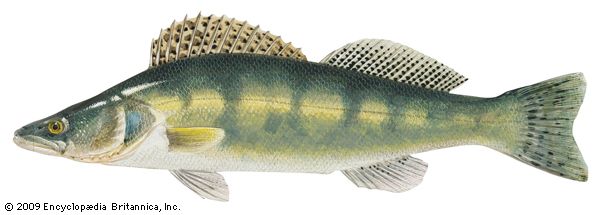
- Dorsal Fins: Unlike the single, posteriorly placed dorsal fin of a true pike, pike perch possess two dorsal fins, a trait characteristic of the perch family.132
- Body Shape: While they are more elongated and slender than typical perches, they maintain the structural profile of the Percidae family.1
- Dietary Habits: As adults, they are specialized carnivores that feed largely on other fishes.1
- Species Diversity: The group includes the European zander, as well as North American species such as the walleye and the sauger, which are adapted to various lake and river environments.1
In contrast, true pikes are defined by a shovellike snout, a long head, and dorsal and anal fins positioned far back on the tail.2
Where are pike perch commonly found, and what types of habitats do they prefer?
Pike perch are freshwater fishes found across Europe and North America. Their habitat preferences vary by species and region:1
- European Pike Perch (Zander): This species is native to the lakes and rivers of eastern and central Europe, though it has also been introduced to western European waters.1
- Walleye: These fish are native to eastern North America and typically inhabit clear, cool lakes and rivers.1
- Sauger: Also native to eastern North America, the sauger is commonly found in lakes and rivers that are characterized by silty water.1
While these fish share a carnivorous diet and belong to the family Percidae, their specific environmental requirements—ranging from clear, cool waters to more silty river systems—allow them to thrive in diverse freshwater ecosystems.1
What is the average size and weight of an adult pike perch?
The size and weight of an adult pike perch vary significantly depending on the specific species. Here are the typical measurements for the most common varieties:
Species
Average Length
Average Weight
European Pike Perch (Zander)
50–66 cm (20–26 inches)
3 kg (6.6 pounds)
Walleye
Up to 90 cm (35 inches)
Up to 4.5 kg (average); 11 kg (maximum)
Sauger
Up to 30 cm (12 inches)
Up to 1 kg (2.2 pounds)
The European pike perch generally reaches a standard size of about 3 kg, while the North American walleye is the largest of the group, capable of reaching weights up to 11 kg. The sauger is the smallest of these species, typically not exceeding 30 cm in length or 1 kg in weight.1
How do the hunting behaviors of pike perch differ from those of true pikes?
It is important to clarify that while the term “pike” is often used colloquially for various species, true pikes belong to the family Esocidae, whereas pike perch are members of the family Percidae and are not true pikes.13
Their hunting behaviors reflect these distinct biological classifications:
- True Pikes: These are solitary, ambush predators that rely on stealth. They remain motionless in the water or lurk within vegetation, waiting for prey to approach. Once a target is within range, they execute a sudden, rapid lunge to seize it. Their morphology is highly specialized for this “darting” movement, with a posterior dorsal fin and binocular vision that allows them to track and aim at moving prey with precision.32
- Pike Perch: As members of the perch order, these fish are also carnivorous and feed largely on other fishes as adults. However, they lack the specialized ambush-specific morphology of the Esocidae family, such as the posteriorly placed fins and binocular vision optimized for sighting down the snout.132
Sources
- pike perch — Encyclopædia Britannica
- protacanthopterygian - Departures from the generalized body plan — Encyclopædia Britannica
- pike — Encyclopædia Britannica
- perch — Encyclopædia Britannica
Published on · 3 min read