Surfperch
A surfperch is any of the 23 species of fish belonging to the family Embiotocidae (order Perciformes). They are primarily found in the North Pacific Ocean…
What is surfperch?
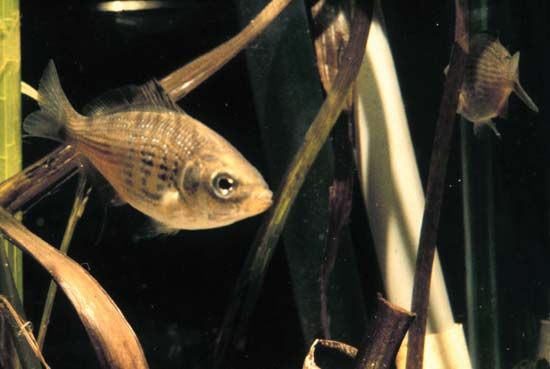
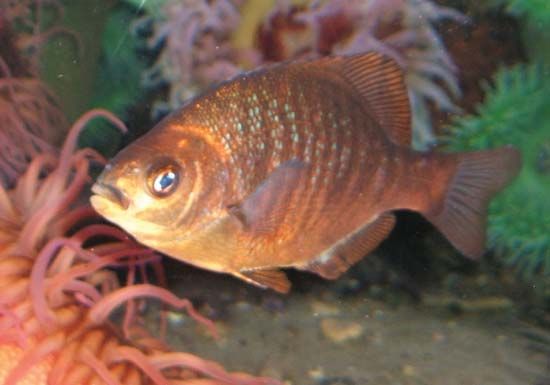
A surfperch is any of the 23 species of fish belonging to the family Embiotocidae (order Perciformes). They are primarily found in the North Pacific Ocean, with most species inhabiting the North American coast, particularly off California, while three or four species are native to Japanese waters. One notable exception is the tule perch (Hysterocarpus traski), which lives in freshwater.1
Surfperches are characterized by their relatively deep bodies, small mouths, large scales, and a single, long dorsal fin. They typically range from 13 to 45 cm (5 to 18 inches) in length. Unlike most marine fishes that lay eggs, all surfperch species are viviparous, meaning they give birth to live young. In at least one species, males are born sexually mature, even though they have not reached their full adult size. Because of their appearance and behavior, they are often favored by anglers, such as the yellow-striped barred surfperch (Amphistichus argenteus).12
How does giving birth to live young differ from the typical egg-laying process in most fish?
The primary difference between egg-laying and live-bearing in fish lies in where the embryo develops and how it receives nourishment.
Oviparous (Egg-Laying) Reproduction
Most bony fishes are oviparous, meaning they rely on external fertilization. Females release a large number of small eggs into the water, which are then fertilized by the male’s milt. Because these eggs develop externally, they are highly vulnerable to predators and environmental factors, resulting in a high mortality rate. To compensate, these species often produce thousands or even millions of eggs at once.52
Live-Bearing Reproduction
In contrast, live-bearing species utilize internal fertilization. After fertilization, the female retains the developing embryos within her body. This process takes two main forms:
- Ovoviviparity: The embryos develop inside the female but are nourished primarily by the egg yolk.52
- Viviparity: The embryos are nourished directly by the female’s body tissues.52
Live-bearing species produce fewer offspring than egg-layers, but the young are born at a larger, more developed size, which provides a significant survival advantage by reducing their vulnerability to predators.52
What makes the tule perch unique compared to other surfperch species?
The tule perch (Hysterocarpus traski) is unique among the 23 species of the family Embiotocidae because it is the only member of the group that inhabits freshwater environments. While all other surfperch species are found in the North Pacific Ocean—primarily along the North American coast or in Japanese waters—the tule perch is the sole exception to this marine distribution.16
Like its marine relatives, the tule perch is viviparous, meaning it gives birth to live young rather than laying eggs, a trait that distinguishes the entire family from most other fish.17
Are there other types of fish that are commonly confused with the surfperch?
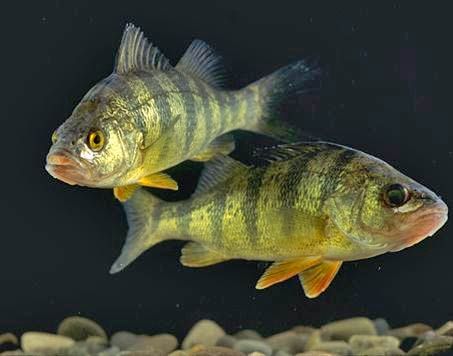
It is common for the term “perch” to be applied to a wide variety of fishes, which often leads to confusion between the surfperch (family Embiotocidae) and true perch (family Percidae).1
While surfperches are named for their resemblance to perches, they are distinct in several ways:
- Reproduction: Surfperches are viviparous, meaning they give birth to live young. In contrast, true perches are egg-layers that spawn in the spring, depositing strings of eggs in shallow water.871
- Physical Structure: Surfperches possess a single, long dorsal fin and are typically found in the North Pacific Ocean. True perches are characterized by having two distinct dorsal fins—one spiny and one soft-rayed—and are primarily freshwater fish.81
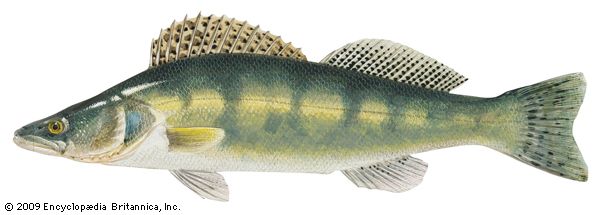
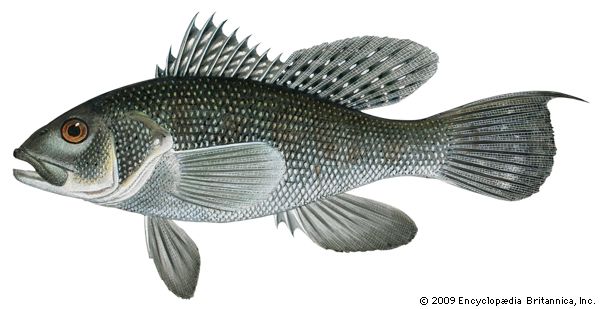
- Naming Confusion: The name “perch” is widely and sometimes confusingly applied to many other species, including the pikeperch and the white perch, which is actually a relative of the sea bass.1
Sources
- surfperch — Encyclopædia Britannica
- fish - Reproduction — Encyclopædia Britannica
- perch — Encyclopædia Britannica
- perciform - Use as food — Encyclopædia Britannica
- How do fish reproduce? — Encyclopædia Britannica
- tule perch — Encyclopædia Britannica
- Embiotocidae — Merriam-Webster
- surfperch — Merriam-Webster
Published on · 3 min read