Tropism
Tropism is the orientation or growth-curvature response of a plant (or certain lower animals) to an external stimulus that acts with greater intensity from…
What is tropism in biology and how does it differ from other plant responses?
Tropism is the orientation or growth-curvature response of a plant (or certain lower animals) to an external stimulus that acts with greater intensity from one direction than another. These movements are typically directed toward or away from the source of the stimulus, such as light (phototropism), gravity (geotropism), water (hydrotropism), or mechanical stimulation (thigmotropism). These responses are often regulated by plant hormones like auxin, which cause cells to elongate on one side of a stem or root, resulting in a bend.123
Tropism differs from other plant responses in its directional nature relative to the stimulus. In contrast, nastic movements are responses of plant parts that are oriented based on the plant’s own structure rather than the direction of the external stimulus. Additionally, while plants exhibit various “stereotyped responses”—genetically determined, unlearned reactions—tropisms are specifically defined by their growth-curvature mechanism in sessile organisms. Unlike animal behaviors that may involve complex nervous systems, plant responses are driven by cellular signaling, turgor pressure changes, or hormonal distribution.14563
What are the main types of tropisms observed in plants?
Plants exhibit various types of tropisms, which are growth responses to external stimuli acting from a specific direction. These responses are categorized based on the nature of the stimulus:
- Phototropism: A response to light, typically causing plants to grow toward a light source to maximize energy absorption.16
- Geotropism (or Gravitropism): A response to the force of gravity. For example, roots exhibit positive gravitropism by growing downward into the soil, regardless of the seed’s orientation.17
- Hydrotropism: A response to water, where roots grow in the direction of increasing moisture to secure hydration.16
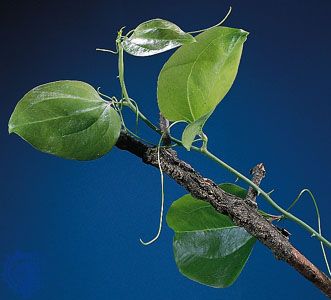
- Thigmotropism: A response to mechanical stimulation or touch. This is commonly observed in climbing plants that use tendrils to sense and wrap around solid objects.16
- Chemotropism: A response to specific chemical substances.18
- Traumatotropism: A response triggered by a wound or lesion.1
- Galvanotropism (or Electrotropism): A response to an electric current.1
These movements are further classified by their orientation: orthotropic movements are directed toward the stimulus, plagiotropic movements are oblique, and diatropic movements occur at right angles to the stimulus.1
Can you explain the role of auxins in plant tropisms?
Auxins, most notably indoleacetic acid, are essential plant hormones that regulate growth and development by promoting cell elongation. Synthesized primarily in young, growing tissues like shoot tips, they move downward to stimulate cells to elongate and divide.94
In plant tropisms, auxins facilitate directional growth through uneven distribution:
- Phototropism: When a plant is exposed to light, auxins accumulate on the shaded side of the stem. This higher concentration causes cells on the shaded side to elongate more rapidly than those on the illuminated side, resulting in the plant bending toward the light.94
- Geotropism: In stems, gravity causes more auxin to accumulate on the lower side, stimulating elongation and causing the stem to grow upward. Conversely, in roots, high concentrations of auxin inhibit growth; therefore, the accumulation of auxin on the lower side of a root slows growth there, causing the root to curve downward.94
While the exact mechanisms of root inhibition remain a subject of study, the polar transport of auxins remains a fundamental driver of a plant’s ability to orient itself within its environment.94
What are some examples of tropisms in everyday plant life?
Plants exhibit various tropisms—directional growth responses to environmental stimuli—that are essential for their survival and development. Here are common examples observed in everyday plant life:
- Phototropism: This is the tendency of a plant to grow toward a light source, such as the sun. By orienting their stems and leaves toward light, plants maximize their ability to perform photosynthesis.6101
- Geotropism (or Gravitropism): Plants respond to gravity to ensure proper root and shoot orientation. Roots exhibit positive geotropism by growing downward into the soil, while shoots exhibit negative geotropism by growing upward, away from the soil.1018
- Thigmotropism: This is a response to mechanical stimulation or touch. It is frequently seen in climbing plants and vines, which use specialized structures called tendrils to sense solid objects and curl around them for support.61
- Hydrotropism: Roots demonstrate this response by growing in the direction of increasing moisture, which helps the plant secure the water necessary for its survival.61
Sources
- Tropism — Encyclopædia Britannica
- Do Plants Feel Pain? — Encyclopædia Britannica
- Stereotyped response — Encyclopædia Britannica
- Angiosperm - Transport and plant growth — Encyclopædia Britannica
- nastic movement — Merriam-Webster
- Did you know? — Merriam-Webster
- chemotropism — Merriam-Webster
- gravitropism — Merriam-Webster
- Hormone - Auxins — Encyclopædia Britannica
- Plant development - The emergence of the seedling — Encyclopædia Britannica
- gardening - Shrubs and vines (climbers) — Encyclopædia Britannica
- Plant development - Environmental control of development — Encyclopædia Britannica
Published on · 3 min read