Wind-blown Moss
Wind-blown moss refers to any plant within the genus Dicranum, a group comprising approximately 94 species distributed primarily throughout the Northern…
What is Wind-blown moss?
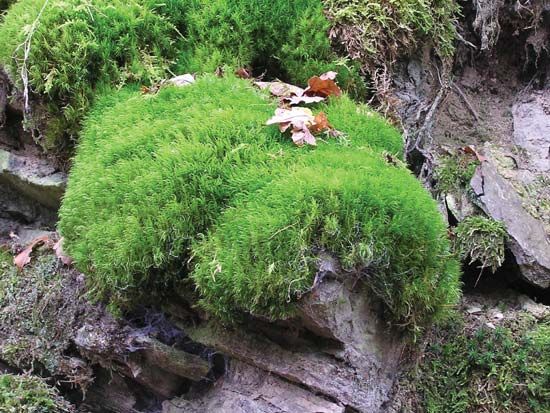
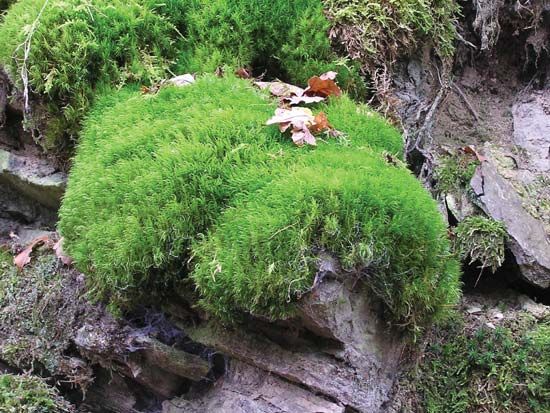
Wind-blown moss refers to any plant within the genus Dicranum, a group comprising approximately 94 species distributed primarily throughout the Northern Hemisphere. These plants are characterized by their ability to form dense cushions on various substrates, including soil, logs, and rocks.1
More than 20 species of Dicranum are native to North America. The most common variety is D. scoparium, which is frequently referred to as broom moss due to its distinctive broomlike or brushlike tufts. This species features erect, often forked stems that can reach heights of 5 to 12 cm (2 to 5 inches), with glossy, yellow-green leaves and long-beaked spore cases that typically point in a single direction. Because of its aesthetic qualities, broom moss is sometimes utilized by florists for window displays.12
How do mosses reproduce using spores?
Mosses reproduce through an alternation of generations, cycling between a sexual gametophyte phase and an asexual sporophyte phase.4
The cycle begins when a spore lands in a favorable environment and germinates, growing into a filamentous, green structure called a protonema. From this protonema, buds develop into the leafy gametophores that we recognize as moss plants. These gametophores produce sex organs: antheridia (male) and archegonia (female). Fertilization typically requires water, such as rain or heavy dew, to allow the biflagellate sperm to reach the egg.645
Following fertilization, a sporophyte grows, remaining attached to and dependent on the gametophyte for nutrients. The sporophyte consists of a stalk (seta) topped by a capsule (sporangium), where spores are produced via meiosis. Once mature, the capsule opens—often regulated by a ring of teeth called the peristome that responds to moisture—to release the spores into the air, beginning the cycle anew.645
What are the main differences between vascular and nonvascular plants?
The primary distinction between vascular and nonvascular plants lies in the presence of specialized tissues for transport and structural support.
Vascular Plants (Tracheophytes)
Vascular plants possess vascular tissue, which consists of two main components:
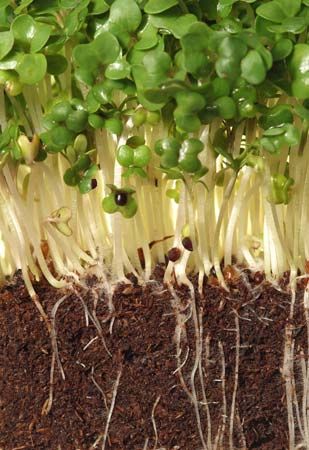
- Xylem: Conducts water and minerals from the roots upward and provides physical support through the use of lignin, a hardening substance in cell walls.910
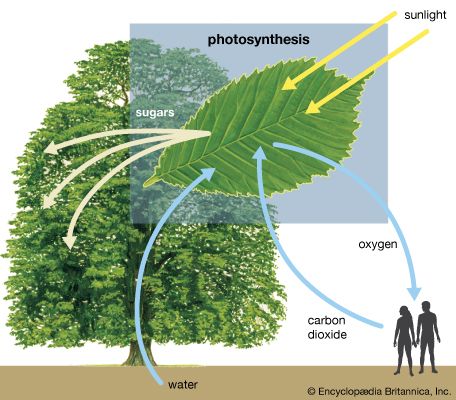
- Phloem: Transports carbohydrates and food manufactured during photosynthesis throughout the plant.910
Because of these tissues, vascular plants can develop true roots, stems, and leaves, allowing them to grow larger and inhabit diverse terrestrial environments. Additionally, the dominant phase of their life cycle is the sporophyte.9
Nonvascular Plants (Bryophytes)
In contrast, nonvascular plants lack these specialized conducting tissues. Consequently, they are generally restricted to moist environments where water can be absorbed directly by the plant body. They lack true roots, stems, and leaves, and their life cycle is dominated by the gametophyte generation.9
Why are some mosses called epiphytes?
Some mosses are classified as epiphytes because they grow upon other plants or objects, such as trees or rocks, solely for physical support rather than for nourishment. Unlike parasitic plants, these mosses do not derive nutrients from their host.122
By growing above the ground, these mosses can access sunlight in dense forests and capture nutrients from organic debris that collects on the supporting surface. While many epiphytes are found in moist tropical regions, mosses also commonly grow as epiphytes in temperate environments. It is important to note that while many organisms found on trees are called “moss,” some are actually lichens, algae, or other non-moss species that also exhibit this epiphytic growth habit.125
Sources
- ball moss — Merriam-Webster
- list of mosses — Encyclopædia Britannica
- wind-blown moss — Encyclopædia Britannica
- Plant reproductive system - Mosses — Encyclopædia Britannica
- moss — Encyclopædia Britannica
- bryophyte - Form and function — Encyclopædia Britannica
- Pollination - Water — Encyclopædia Britannica
- Seed dispersal - Hydrochory: dispersal by water — Encyclopædia Britannica
- Plant - Definition of the category — Encyclopædia Britannica
- Xylem — Encyclopædia Britannica
- magnoliid clade - Vegetative structures — Encyclopædia Britannica
- Epiphyte — Encyclopædia Britannica
- tree moss — Merriam-Webster
- Did you know? — Merriam-Webster
Published on · 3 min read