Pipefish
Pipefish play several functional roles within their marine ecosystems, primarily as predators and as symbiotic partners to other marine life. As carnivores…
What role do pipefish play in their marine ecosystems?
Pipefish play several functional roles within their marine ecosystems, primarily as predators and as symbiotic partners to other marine life. As carnivores, they help regulate populations of small aquatic organisms by using their tubular snouts to rapidly suck in prey.1
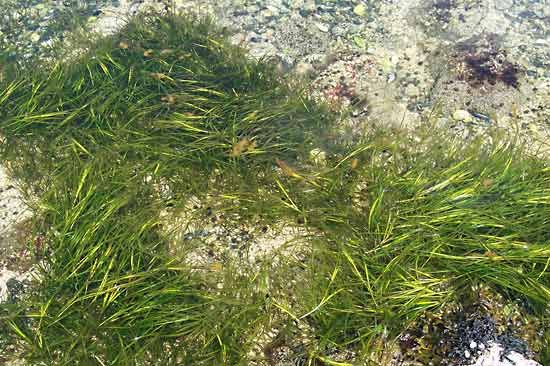
Their presence is closely tied to coastal habitats, such as coral reefs and eelgrasses, where they utilize their slender, armored bodies to hide and hunt. Beyond their role as predators, some species, such as the bluestripe pipefish, engage in cleaning symbiosis by removing parasites from the bodies of other fish, which supports the health of the broader reef community. By inhabiting these diverse niches, pipefish contribute to the biological balance of the tropical and subtropical environments they occupy.1
In what types of marine environments are pipefish commonly found?
Pipefish are primarily found in tropical and subtropical regions, occupying a diverse range of aquatic habitats. While they are predominantly marine, their environments vary significantly:
- Coastal Areas: Many species inhabit coastal zones, where they rely on eelgrasses and other sea grasses for shelter and hunting grounds.1
- Coral Reefs: These environments are common habitats where pipefish utilize the complex structure of coral reefs to hide and feed.1
- Open Ocean: Certain species are found in the open ocean, reaching depths of up to 400 meters (approximately 1,300 feet).1
- Fresh and Brackish Water: Although primarily marine, some pipefish are capable of entering and living in freshwater or brackish environments.1
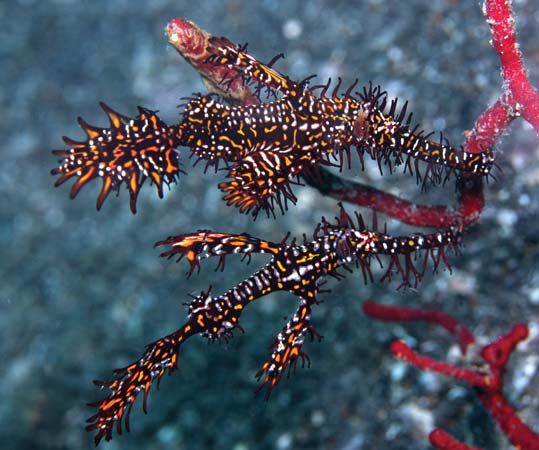
It is important to note that while ghost pipefish are related, they belong to a different family (Solenostomidae) and are distinct from the pipefish of the family Syngnathidae.13
What are the main characteristics that distinguish pipefish from other fish species?
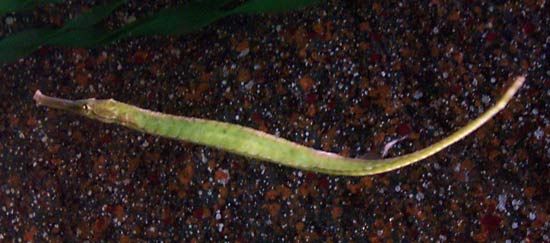
Pipefish are distinguished from other fish species by several unique physical and behavioral characteristics:
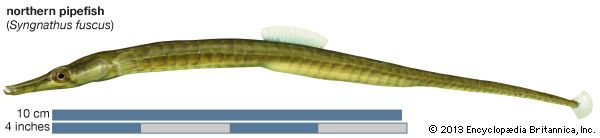
- Body Structure: Pipefish are characterized by an extremely slender, elongated body covered in rings of bony armor rather than traditional scales. Unlike many other fish, they lack ventral fins, and their dorsal and pectoral fins are spineless.14
- Head and Mouth: Their head axis is aligned with their body, featuring a long, tubular snout tipped with a small mouth. They feed by rapidly sucking small aquatic organisms into this specialized mouth.41
- Distinction from Relatives: While they are closely related to seahorses, pipefish differ because their heads are in line with their bodies, whereas seahorses have heads angled at a distinct, horselike position. Furthermore, unlike ghost pipefish, which are covered in large bony plates and feature enlarged fins, true pipefish (family Syngnathidae) utilize bony rings for protection.413
- Reproductive Behavior: A primary distinguishing feature is their reproductive strategy, where the male carries fertilized eggs until they hatch, either attached to his ventral surface or within a specialized brood pouch.1
How do pipefish move through the water, and what makes their swimming style unique?
Pipefish move through the water using a specialized swimming style that relies on their fins rather than the powerful lateral body undulations seen in many other fish species. Because their bodies are encased in rigid rings of bony armor, they lack the flexibility required for the typical side-to-side swimming motion used by most fish.61
Instead, pipefish utilize their fins for propulsion. While their dorsal and pectoral fins are spineless, they are effective for maneuvering, and their rounded, reduced caudal fin allows them to move through the water with surprising speed when necessary. Their elongated, slender body shape is well-adapted to their environment, allowing them to navigate through complex habitats like sea grasses and coral reefs where they often hide.16
Unlike their close relatives, the seahorses—which have prehensile tails and lack caudal fins—pipefish retain a tail fin that serves as a functional tool for locomotion. While their body structure is highly specialized and rigid, these adaptations allow them to maintain their position and move effectively within their specific ecological niches.16
Sources
- pipefish — Encyclopædia Britannica
- gasterosteiform - Reproduction and life cycle — Encyclopædia Britannica
- ghost pipefish — Encyclopædia Britannica
- gasterosteiform - Form and function — Encyclopædia Britannica
- protacanthopterygian - Departures from the generalized body plan — Encyclopædia Britannica
- fish - Locomotion — Encyclopædia Britannica
- ostariophysan - Swimming — Encyclopædia Britannica
Published on · 3 min read