Pinfish
The term pinfish refers to two species of fish in the family Sparidae: Lagodon rhomboides (the common pinfish) and Diplodus holbrooki (the spottail pinfish).…
What is pinfish?
The term pinfish refers to two species of fish in the family Sparidae: Lagodon rhomboides (the common pinfish) and Diplodus holbrooki (the spottail pinfish). The name is derived from the numerous sharp spines located on the front portion of the dorsal fin.12
These fish are typically found in the Atlantic Ocean and the Gulf of Mexico, particularly around Florida. The common pinfish is characterized by its yellow fins, gold stripes along its body, and a dark spot on the upper rear margin of the operculum. In contrast, the spottail pinfish features a broad black band near its tail and a black margin around the operculum. Neither species typically exceeds 25 centimeters (10 inches) in length, and they are not considered popular sport fish.1
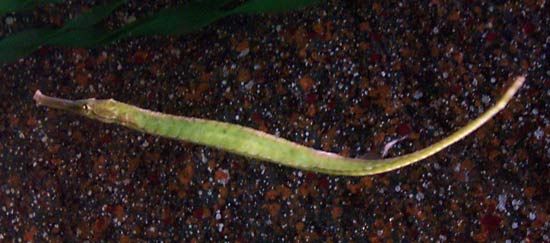
It is important to distinguish the pinfish from the pipefish, which is a separate, elongated fish in the family Syngnathidae that is closely related to sea horses.3
What other fish belong to the Sparidae family?
The Sparidae family, commonly known as porgies or sea breams, comprises approximately 100 species of marine fishes. These fish are typically deep-bodied and are closely related to grunts and snappers, though they are distinguished by having some jaw teeth transformed into large, blunt molars.56
Notable members of the Sparidae family include:
- Scup (Stenotomus chrysops): Also known as the northern porgy, this small, brownish-silvery fish is found in the western Atlantic and is valued for food and sport.5
- Sheepshead (Archosargus probatocephalus): A black-banded, grayish fish that can grow up to 75 cm and 9 kg, also prized in the western Atlantic.5
- Red sea bream (Pagellus centrodontus): A valuable, reddish or golden-silvery species found in deeper European waters.5
- Musselcrackers: A group of popular sport fishes found in South Africa that can weigh as much as 45 kg.5
- Snappers (Chrysophrys genus): Important food species found in Australia.5
- Red tai (Chrysophrys major): An important food fish in Japan.5
Please note that the spadefish belongs to a different family, Ephippidae, and is not part of the Sparidae family.7
How do dorsal spines help protect small fish?
Dorsal spines serve as a vital defensive mechanism for many small fish, providing protection through both physical and chemical means. These hardened fin rays act as a passive deterrent, making it difficult or painful for a predator to capture or swallow the fish.9
In addition to their physical presence, some species have evolved more sophisticated defenses. For instance, certain groups—such as bullheads, madtoms, and various sea catfishes—possess venom glands located at the base of these spines. When a predator attempts to attack, the spines can puncture the skin and inject toxins, causing significant pain that discourages further aggression. While these spines are highly effective for defense, they can also cause painful injuries to humans if handled improperly.910
Beyond simple protection, some fish have evolved more complex armor, such as the bony plates found on trunkfish, or specialized cranial structures that incorporate spines to form a protective shield.1011
What role do seagrass beds play in marine habitats?
Seagrass beds serve as vital components of marine environments, functioning as essential nursery habitats that support a diverse array of marine life, including fish, crabs, and shrimp. By providing shelter and food, these ecosystems play a critical role in maintaining regional biodiversity and supporting local fisheries.12
Furthermore, seagrass beds are often found in proximity to other important coastal ecosystems, such as mangroves and coral reefs. The health of these interconnected habitats is mutually dependent; for example, the root systems of nearby mangroves help trap sediments and pollutants, which improves water quality and ensures the continued vitality of the seagrass beds.12
While the provided search results focus on the ecological support provided by these beds, it is worth noting that marine vegetation also contributes to the global ocean carbon sink, helping to regulate the climate by sequestering carbon.13
Sources
- pinfish — Encyclopædia Britannica
- pinfish — Merriam-Webster
- pipefish — Encyclopædia Britannica
- protacanthopterygian - Importance — Encyclopædia Britannica
- porgy — Encyclopædia Britannica
- Sparidae — Merriam-Webster
- Sparus — Merriam-Webster
- spadefish — Encyclopædia Britannica
- Avoidance behaviour - Protection reflexes, armour, and spines — Encyclopædia Britannica
- ostariophysan - Defense — Encyclopædia Britannica
- scorpaeniform - General features — Encyclopædia Britannica
- mangrove: Top Questions — Encyclopædia Britannica
- Carbon sequestration — Encyclopædia Britannica
Published on · 3 min read