Ponza Islands
The "Ponza Islands" are more commonly referred to as the Pontine Islands. They are a volcanic island group situated in the Tyrrhenian Sea off the west coast…
What is Ponza Islands?
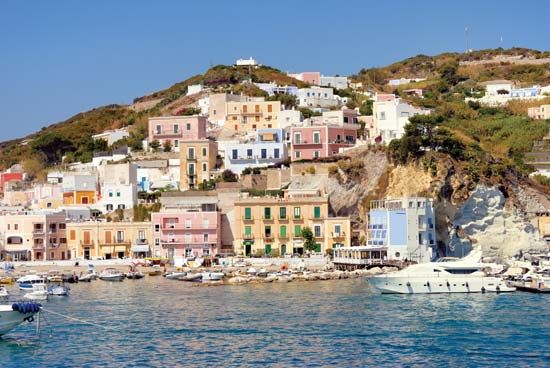
The “Ponza Islands” are more commonly referred to as the Pontine Islands. They are a volcanic island group situated in the Tyrrhenian Sea off the west coast of south-central Italy1.1
The archipelago is divided into two clusters:
- Western group: Includes Ponza (the largest island), Palmarola, and Zannone.2
- Eastern group: Includes Ventotene and Santo Stefano.2
Historically, these islands were utilized as places of exile, including the banishment of political prisoners during Italy’s fascist regime. Today, the islands are popular summer resorts, and their economy includes the mining of kaolin and bentonite. Regular steamer services connect the islands to Naples, as well as Anzio and Formia during the summer months.2
How are volcanic islands formed?
Volcanic islands are formed through various geological processes, primarily occurring where tectonic plates interact or where magma penetrates the crust far from plate margins.4
Primary Formation Processes
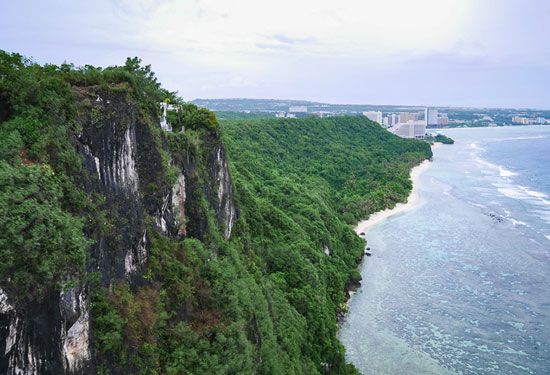
- Subduction Zones: When two tectonic plates converge, one is forced beneath the other into the mantle. This process generates magma that rises to the surface, creating long, curved chains of islands known as island arcs, such as the Mariana Islands.45
- Hotspots: Some islands form within a plate when it moves over a “hot spot”—a region of the mantle that upwells to melt through the crust. As the plate shifts, the hotspot creates a chain of volcanoes, with the oldest islands located furthest from the active site, as seen in the Hawaiian Islands.46
- Oceanic Ridges: Along oceanic ridge systems, plates move apart and magma wells up to create new ocean floor. While most of this activity is underwater, some ridges are elevated enough to emerge as islands, with Iceland being the most prominent example.4
Over time, these volcanic structures may subside or erode. In tropical regions, this can lead to the formation of atolls, where coral reefs continue to grow upward around a sinking, extinct volcanic island.7
Why were islands historically used as places of exile?
Historically, islands were utilized as places of exile primarily to ensure the effective isolation of individuals from society. By removing offenders to distant or overseas locations, authorities could enforce punishment through physical separation, often combined with forced labour.10
The use of such sites, known as penal colonies, served several strategic purposes:
- Isolation: Islands provided natural barriers that made escape difficult, ensuring that the exiled remained cut off from their original communities and political influence.10
- Alternative to Capital Punishment: In many legal systems, including Roman law, banishment served as a way to avoid the death penalty, offering a permanent or temporary alternative for those deemed undesirable by the state.11
- Labor Utilization: Many colonial powers used these remote locations to exploit the labor of prisoners for infrastructure or resource development, as seen in the harsh conditions of sites like French Guiana.10
While the practice of exile and banishment has largely been replaced by modern penal systems, it remains a significant historical example of how states used geography to exert control over political dissidents and criminals.1110
What are some other famous island groups in Italy?
Italy features several notable island groups, many of which are located in the Tyrrhenian Sea. These groups vary in their geological origins, historical significance, and current use:
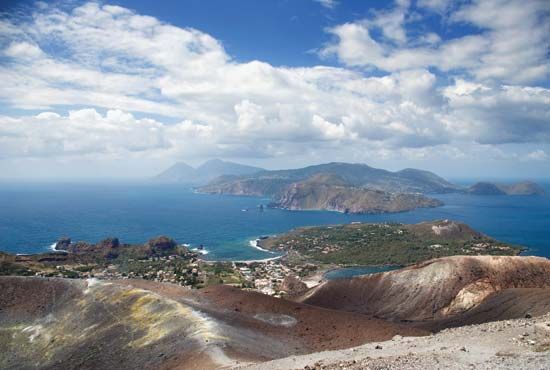
- Eolie Islands: A volcanic group off the north coast of Sicily consisting of seven major islands, including Stromboli and Vulcano. They are known for their ongoing volcanic activity and long history of human habitation dating back to the Neolithic Period.12
- Egadi Islands: Located off the western coast of Sicily, this mountainous group includes Favignana, Levanzo, and Marettimo. They are historically significant for the Battle of the Aegates in 241 BCE and contain important Paleolithic cave paintings.3
- Pontine Islands: Situated in the Tyrrhenian Sea west of Naples, this group includes the island of Ponza.2
- Tuscan Archipelago: This group includes islands such as Elba, Giglio, and Pianosa. These islands have served various roles throughout history, ranging from agricultural sites to locations for penal colonies.1314
Sources
- Ponza Islands — Encyclopædia Britannica
- Pontine Islands — Merriam-Webster
- list of islands - Italy — Encyclopædia Britannica
- volcanism — Encyclopædia Britannica
- hotspot — Encyclopædia Britannica
- plate tectonics - Island arcs — Encyclopædia Britannica
- atoll — Encyclopædia Britannica
- volcano - Submarine volcanoes — Encyclopædia Britannica
- volcano - Determinants of size and shape — Encyclopædia Britannica
- exile and banishment — Encyclopædia Britannica
- penal colony — Encyclopædia Britannica
- Egadi Islands — Encyclopædia Britannica
- Italy - Relief — Encyclopædia Britannica
- Pianosa Island — Encyclopædia Britannica
- Giglio Island — Encyclopædia Britannica
- Eolie Islands — Encyclopædia Britannica
Published on · 3 min read