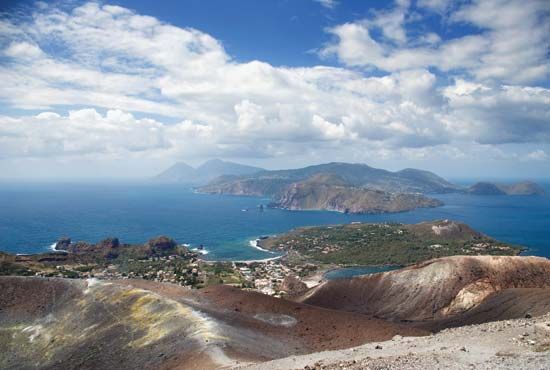
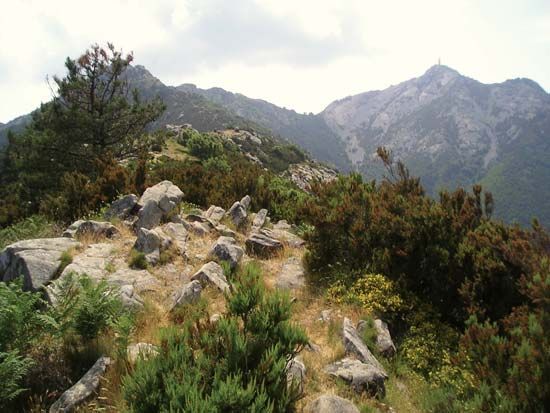
Pianosa Island
Pianosa Island is a low-lying island located in the Tyrrhenian Sea as part of the Tuscany region of Italy. Situated approximately 8 miles southwest of Elba…
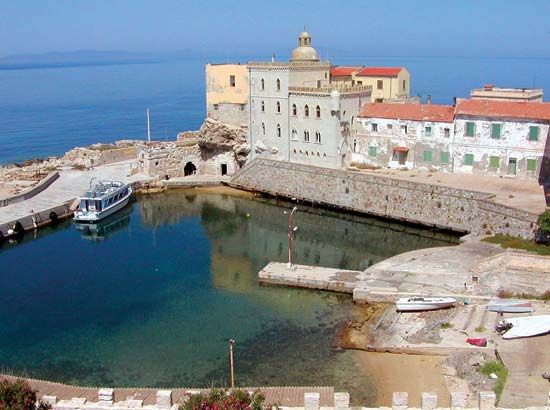
What is Pianosa Island?
Pianosa Island is a low-lying island located in the Tyrrhenian Sea as part of the Tuscany region of Italy1. Situated approximately 8 miles southwest of Elba, the island spans 4 square miles and reaches a maximum elevation of only 90 feet above sea level, a feature reflected in its name, which derives from the Italian word for “flat”.1
Historically, the island served as a site of exile, most notably for Agrippa Postumus, the grandson of the Roman emperor Augustus. Following centuries of vulnerability to 16th-century Turkish raids, the island was repurposed in 1856 when an agricultural penal colony was established there.1
What is the history of the Tuscan Archipelago?
The Tuscan Archipelago is a group of islands in the Tyrrhenian Sea with a history defined by strategic importance, resource extraction, and use as a place of exile.12
Key Historical Developments
- Ancient Era: The islands were significant to early civilizations. The Etruscans mined iron ore on Elba, which the Greeks later called Aethalia. The Romans utilized the islands for naval bases and as sites of banishment, such as the exile of Agrippa Postumus on Pianosa Island.12
- Middle Ages to Renaissance: Control shifted frequently between powers like Pisa, Genoa, and the dukes of Piombino. In 1548, Cosimo I de Medici of Florence gained control of Elba2.
- Modern Era: The islands became famous for the exile of Napoleon I, who ruled Elba as an independent principality from 1814 to 1815. Following his departure, the islands were restored to Tuscany and eventually joined unified Italy in 1860.2
How did the Roman Empire use islands for banishment?
In Roman law, the practice of banishment was a formal punitive measure used to remove individuals from society, often as an alternative to the death penalty. A specific form of this, known as deportatio, involved permanent exile to a foreign location, most commonly an island.34
Islands served as effective sites for banishment because they provided natural isolation, making it difficult for the exiled to return or maintain their influence. While initially reserved for political criminals, the practice expanded over time to target individuals whose wealth or popularity made them objects of suspicion to the state, as well as those convicted of crimes such as adultery, murder, forgery, and embezzlement.4
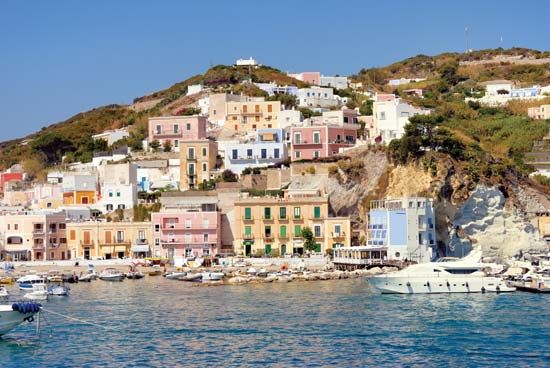
The consequences of this banishment were severe, typically including the total confiscation of property, the loss of civil rights, and the forfeiture of citizenship. Historical examples of this practice include the exile of Agrippa Postumus, the grandson of the emperor Augustus, to Pianosa Island. Similarly, the Ponza Islands were utilized as places of banishment since ancient times.415
What makes an island ecosystem unique for protection?
Island ecosystems are uniquely important for protection primarily because they are hotspots for endemic species—organisms found nowhere else on Earth. Because these species are restricted to small geographic ranges, they lack the “reserve” populations that mainland species possess, making them exceptionally vulnerable to extinction them exceptionally vulnerable to extinction.6710
Several factors contribute to this heightened vulnerability:
- Ecological Naivete: Many island species evolved in isolation without certain predators or competitors. Consequently, they often lack the defensive adaptations necessary to survive the introduction of non-native species, such as domestic cats or invasive snakes, which can devastate local populations.89
- Susceptibility to Disturbance: Because island species often have specialized adaptations for their unique habitats, they are highly sensitive to environmental changes, including habitat loss, pollution, and global warming.61011
- Limited Range: The combination of endemism and rarity means that even minor local disturbances can lead to the total loss of a species.7
Protecting these ecosystems is essential to preserving global biodiversity, as islands serve as critical, controlled environments for understanding species distribution and community ecology.1213
Sources
- Pianosa Island — Encyclopædia Britannica
- Elba — Encyclopædia Britannica
- exile and banishment — Encyclopædia Britannica
- Ponza Islands — Encyclopædia Britannica
- deportation — Encyclopædia Britannica
- endemic species — Encyclopædia Britannica
- conservation - Introduced species — Encyclopædia Britannica
- community ecology - Biogeographic aspects of diversity — Encyclopædia Britannica
- endangered species - Human beings and endangered species — Encyclopædia Britannica
- conservation - Endemism and rarity — Encyclopædia Britannica
- endangered species - Habitat loss, degradation, and fragmentation — Encyclopædia Britannica
- biogeography — Encyclopædia Britannica
- conservation - Insularity — Encyclopædia Britannica
Published on · 3 min read