Primavera
The term primavera has two primary meanings depending on the context:
What is Primavera?
The term primavera has two primary meanings depending on the context:
- Art: Primavera (c. 1480) is a celebrated painting by the Italian Renaissance artist Sandro Botticelli. Housed in the Uffizi Gallery, this masterpiece depicts a complex mythological scene featuring figures such as Venus, the Three Graces, and Mercury. It is widely considered a symbol of the Florentine Renaissance and was commissioned by the influential Medici family.1
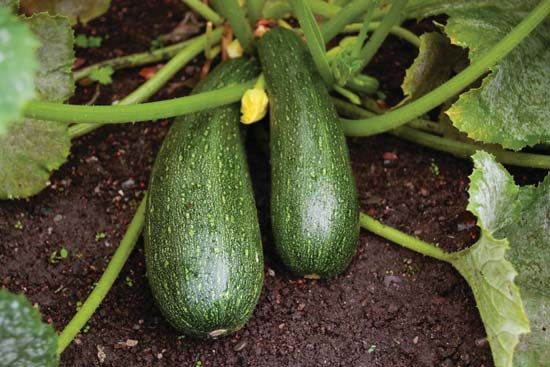
- Culinary: In a culinary context, primavera refers to a dish—most commonly pasta—served with a mixture of fresh vegetables, such as broccoli, snow peas, and zucchini. The term is derived from the Italian phrase alla primavera, meaning “in the style of springtime”.2
The word itself originates from the Latin prīmō vēre, meaning “in the early spring”.2
Who was the artist Sandro Botticelli?
Sandro Botticelli (1445–1510) was a preeminent painter of the Florentine Renaissance. Born in Florence, he was initially apprenticed to a goldsmith before training under the master Filippo Lippi, who profoundly influenced his early style, use of linear perspective, and graceful figural compositions.34
Botticelli is celebrated for his mastery of both religious and secular subjects. He gained significant patronage from the Medici family, which allowed him to explore classical mythology to illustrate themes of courtly love and humanist ideals. His most iconic works, such as La Primavera and the Birth of Venus, are considered quintessential expressions of the Renaissance spirit.563
Throughout his career, Botticelli evolved from the delicate, soft style of his teacher to a more robust, sculptural approach influenced by contemporaries like Antonio Pollaiuolo. By 1470, he was an established independent master, renowned for his eloquent ability to translate narrative texts—including those by Dante and Boccaccio—into vivid, masterful paintings.4
What is the significance of the Medici family in the Renaissance?
The Medici family played a central role in the Renaissance, serving as arguably the most significant patrons of arts and letters in Western history. Dominating Florence from 1434 to 1492, they subsidized a vast range of humanistic and artistic endeavors that defined the era.74
Cultural and Intellectual Influence
The family’s influence was rooted in their wealth as bankers, which they used to foster an environment of intellectual inquiry. Cosimo de’ Medici founded a Neoplatonic academy and gathered leading scholars, such as Marsilio Ficino, to study classical texts. His grandson, Lorenzo de’ Medici, furthered this legacy by becoming the center of a circle of poets, musicians, and artists who embraced Neoplatonic ideals, emphasizing a mystical union with God through the contemplation of beauty.4
Artistic Patronage
The Medici were instrumental in shaping the careers of iconic artists, most notably Sandro Botticelli. Through their patronage, Botticelli was able to explore secular historical subjects and classical mythology, which he used to illustrate themes of courtly love and humanist philosophy. Beyond their support for individual artists, the family’s passion for building and collecting transformed Florence into a hub of cultural innovation.487
What are some other famous paintings from the Italian Renaissance?
The Italian Renaissance produced a wealth of iconic paintings that emphasized humanism, scientific naturalism, and the mastery of perspective. Beyond the works of Leonardo da Vinci, such as the Mona Lisa and the Last Supper, several other masterpieces define the period:9
- School of Athens (c. 1508–11) by Raphael: A celebration of intellectual history, this fresco uses linear perspective to depict a grand hall populated by notable Western thinkers.910
- Sistine Chapel Ceiling (1508–12) and The Last Judgment (1536–41) by Michelangelo: These monumental works showcase the artist’s intense focus on the human figure, utilizing complex poses and dramatic movement to convey deep religious and emotional intensity.910
- Venus of Urbino (1538) by Titian: This painting exemplifies the Venetian school’s mastery of vibrant color and the representation of soft light.9
- Disputa (1510–11) by Raphael: Often paired with the School of Athens, this work demonstrates the artist’s perfect balance of form, space, and decorative unity.10
Sources
- primavera — Merriam-Webster
- 25 Famous Paintings to See the Next Time You’re in Florence - Primavera (c. 1480) — Encyclopædia Britannica
- Sandro Botticelli — Encyclopædia Britannica
- Sandro Botticelli - Secular patronage and works of Sandro Botticelli — Encyclopædia Britannica
- Sandro Botticelli - Early life and career — Encyclopædia Britannica
- Sandro Botticelli - Mythological paintings — Encyclopædia Britannica
- Renaissance art - The Medici — Encyclopædia Britannica
- Medici family — Encyclopædia Britannica
- Renaissance art: Top Questions — Encyclopædia Britannica
- Renaissance art - High Renaissance — Encyclopædia Britannica
- Mural - The High Renaissance — Encyclopædia Britannica
- Renaissance - Artistic developments and the emergence of Florence — Encyclopædia Britannica
- Last Supper: Top Questions — Encyclopædia Britannica
- 10 Famous Artworks by Leonardo da Vinci - Last Supper (c. 1495–98) — Encyclopædia Britannica
Published on · 3 min read