Flora
In Roman religion, Flora was the goddess of the flowering of plants. Her cult was reportedly introduced to Rome by the Sabine king Titus Tatius, and her…
Who was Flora in Roman mythology, and what was her role as a goddess?
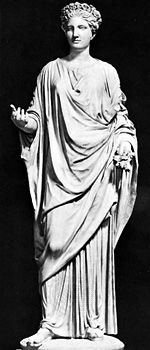
In Roman religion, Flora was the goddess of the flowering of plants. Her cult was reportedly introduced to Rome by the Sabine king Titus Tatius, and her temple was located near the Circus Maximus. Her festival, the Floralia, was established in 238 BCE.1
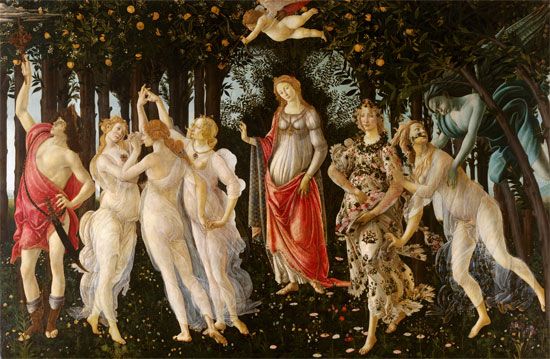
According to Ovid’s Fasti, Flora was originally a nymph named Chloris who was transformed into the goddess after being kissed by the West Wind, Zephyrus. This transformation is famously depicted in Sandro Botticelli’s painting Primavera. In another myth, Flora assisted Juno in becoming pregnant with Mars by providing a magic flower.1
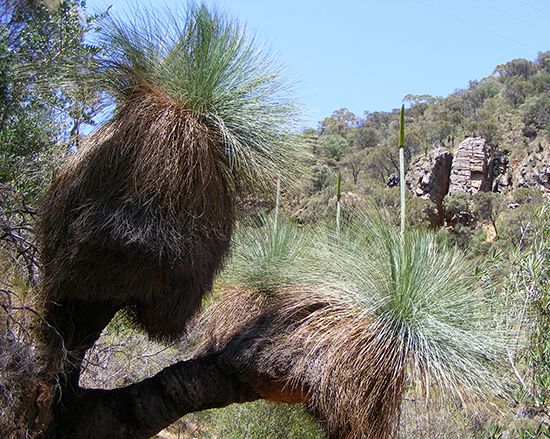
The name Flora has since become a metonym for the plant life of a specific region or environment, a usage that evolved from the practice of naming botanical treatises after the goddess.12
What role did Flora play in Roman literature and poetry?
In Roman literature, Flora is most prominently featured in Ovid’s Fasti, a poem detailing the Roman calendar and its associated festivals. In Book V, Ovid records the mythological origins of the goddess, describing her transformation from the nymph Chloris after she was kissed by the West Wind, Zephyrus.1
Beyond her origin story, Ovid highlights Flora’s role in divine affairs by recounting how she assisted Juno. Angered that Jupiter had produced Minerva on his own, Juno sought a way to conceive without him. Flora provided her with a magic flower that enabled Juno to become pregnant with Mars.1
In later centuries, the literary use of her name evolved. During the early modern period, authors used “Flora” as a metonym for plant life in titles and poems. For example, a Latin poem introducing the Flora Danica (1648) personified “Balthica Flora” as a figure bringing forth sprouts from her bosom, cementing her status as a literary symbol for the natural world.2
What connections exist between Flora and other deities in Roman mythology?
In Roman mythology, Flora is connected to several other deities through her mythological origins and her role in divine narratives. These connections are primarily recorded in Ovid’s Fasti:1
- Zephyrus: According to myth, the nymph Chloris was transformed into the goddess Flora after being kissed by Zephyrus, the West Wind.1
- Juno and Jupiter: Flora played a significant role in the birth of the god Mars. When Juno became angry that Jupiter had produced Minerva from his own head, she sought a way to conceive a child independently. Flora assisted Juno by providing her with a magic flower that enabled her to become pregnant with Mars.1
While Flora is recognized as the goddess of the flowering of plants, she is distinct from other agricultural deities like Ceres, who was the goddess of the growth of food plants, and Pomona, the goddess of fruit trees and orchards.3
How did the worship of Flora change over time in ancient Rome?
The worship of Flora in ancient Rome evolved from its early origins into a formalized state-sanctioned practice. According to tradition, her cult was introduced to Rome by the Sabine king Titus Tatius, who ruled alongside Romulus, establishing her early presence in Roman religious life.1
The public recognition of the goddess grew significantly over time, culminating in the institution of her festival, the Floralia, in 238 BCE. This festival celebrated the flowering season and the blooming of plants. Her importance was further reflected in the physical landscape of the city, as her temple was situated near the Circus Maximus, a central location for Roman public life.12
By the period of the Roman Republic, Flora’s status was solidified in civic iconography, as evidenced by the appearance of her image—distinguished by a floral crown—on Roman coins. While she remained a goddess associated with wildflowers and plants not cultivated for food, her legacy persisted through the Latin language, eventually influencing modern botanical terminology.12
Sources
- Flora — Encyclopædia Britannica
- flora — Merriam-Webster
- major figures in Roman mythology — Encyclopædia Britannica
Published on · 3 min read