Lungwort
Lungwort generally refers to any plant belonging to the genus Pulmonaria within the Boraginaceae family. These are hairy, herbaceous perennials native to…
What is Lungwort?
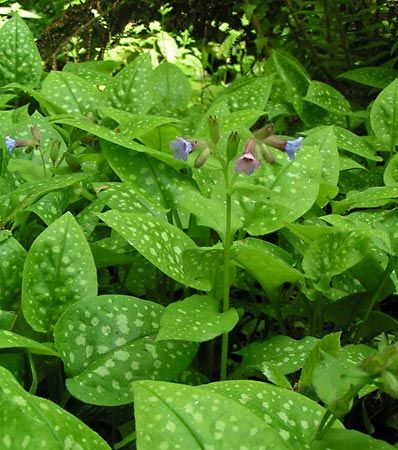
Lungwort generally refers to any plant belonging to the genus Pulmonaria within the Boraginaceae family1. These are hairy, herbaceous perennials native to European woods and thickets, characterized by heart-shaped basal leaves and drooping flowers that shift in color from pink to blue.12
The term is also historically associated with various plants and organisms once used in folk medicine to treat respiratory conditions due to their physical resemblance to lung tissue. This includes:2
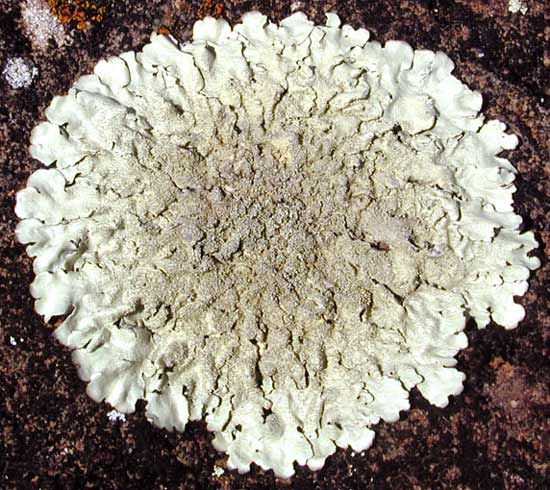
- Tree lungwort (Lobaria pulmonaria): A lichen that grows on trees and rocks, featuring a papery, forked thallus.34
- Other species: The name has occasionally been applied to plants like the bluebell (Mertensia virginica) or mullein.24
Historically, these organisms were utilized in traditional treatments for ailments such as pneumonia and tuberculosis, though such practices are largely considered historical rather than modern medical standards.234
Why were plants like lungwort historically used to treat respiratory issues?
Plants and lichens like lungwort and tree lungwort were historically used to treat respiratory issues primarily due to their physical resemblance to human lungs. This practice was rooted in the “doctrine of signatures,” a historical belief that a plant’s appearance—such as the shape or color of its leaves—indicated the specific organ or ailment it was intended to treat.42
Because the thallus of the lichen Lobaria pulmonaria and the leaves of the herb Pulmonaria officinalis were perceived to look like lung tissue, they were traditionally employed as remedies for conditions such as pneumonia, tuberculosis, and other respiratory diseases. While ancient civilizations, including the Chinese and Egyptians, developed extensive knowledge of medicinal plants through observation and trial, these specific applications were based on visual association rather than modern pharmacological evidence. Today, such historical practices are recognized as part of the evolution of medicine rather than standard clinical treatment.4267
What are some other plants in the Boraginaceae family?
The Boraginaceae family, also known as the borage or forget-me-not family, is a diverse group of flowering plants comprising over 2,700 species. Beyond lungwort (Pulmonaria), the family includes a wide variety of garden ornamentals, medicinal plants, and even specialized root parasites.
Notable plants within this family include:
- Garden Ornamentals:
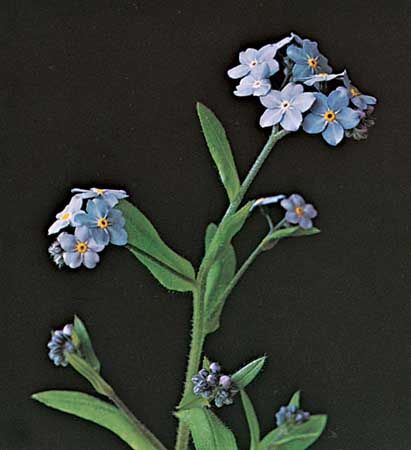
- Myosotis (forget-me-not)
- Heliotropium (heliotrope)
- Mertensia virginica (Virginia bluebell)
- Phacelia (scorpion weed)
- Medicinal Plants:
- Borago officinalis (borage)
- Symphytum officinale (comfrey)
- Lithospermum (puccoon or stoneseed)
- Other Notable Groups:
How do plants change the color of their flowers as they bloom?
Plants can change the color of their flowers as they bloom primarily through biochemical shifts within their cells. A major factor in this process is the presence of anthocyanins, a class of water-soluble pigments found in the vacuoles of plant cells.
The specific color displayed by these pigments is highly dependent on the acidity or alkalinity of the cell sap:
- Acidic conditions typically result in red hues.
- Neutral conditions often appear violet.
- Alkaline conditions shift the color toward blue.
As a flower matures, changes in the chemical environment of the cell sap can alter the degree of acidity or alkalinity, causing the visible color of the petals to shift. Additionally, some plants gain or lose pigment content as they develop, and the final appearance of a flower may be influenced by the presence of other pigments, such as those found in plastids. These color changes often serve an adaptive purpose, acting as signals to attract specific pollinators like bees or butterflies, which are highly responsive to particular patterns and hues.12131415
Sources
- Lungwort — Encyclopædia Britannica
- lungwort — Merriam-Webster
- Pulmonaria — Merriam-Webster
- tree lungwort — Encyclopædia Britannica
- tree lungwort — Merriam-Webster
- taxonomy - Historical background — Encyclopædia Britannica
- pharmaceutical industry - Medicines of ancient civilizations — Encyclopædia Britannica
- Pulmonaria — Merriam-Webster
- Boraginaceae — Encyclopædia Britannica
- Boraginaceae — Merriam-Webster
- Pulmonaria — Merriam-Webster
- Anthocyanin — Encyclopædia Britannica
- coloration - Anthocyanins — Encyclopædia Britannica
- coloration - Interspecific signals — Encyclopædia Britannica
- coloration - The selective agent — Encyclopædia Britannica
Published on · 3 min read