Puli
The puli is a small sheepdog breed that was introduced to Hungary approximately 1,000 years ago by the Magyars. Known for being agile and vigorous, the breed…
What is puli?
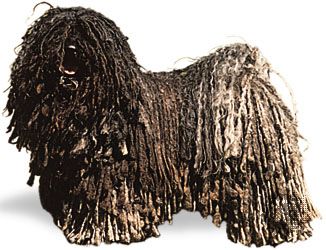
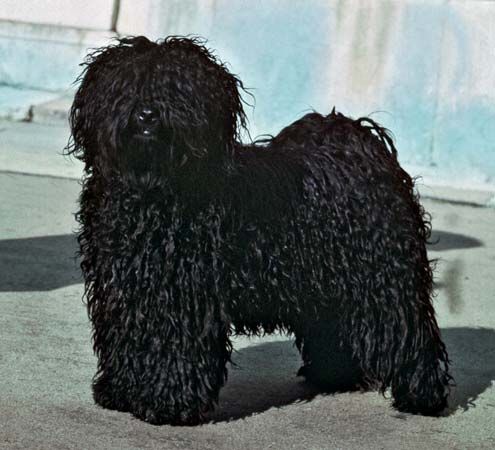
The puli is a small sheepdog breed that was introduced to Hungary approximately 1,000 years ago by the Magyars. Known for being agile and vigorous, the breed is most distinctively recognized by its long, dense coat, which naturally forms mats or cords as the soft, woolly undercoat tangles with the long outer coat. These cords can grow long enough to reach the ground on an adult dog.1
The puli typically stands 16 to 17 inches (41 to 43 cm) tall and weighs about 30 pounds (13.5 kg). While the most characteristic color is a dull black—sometimes tinged with gray or bronze—the coat can also be solid white or gray.1
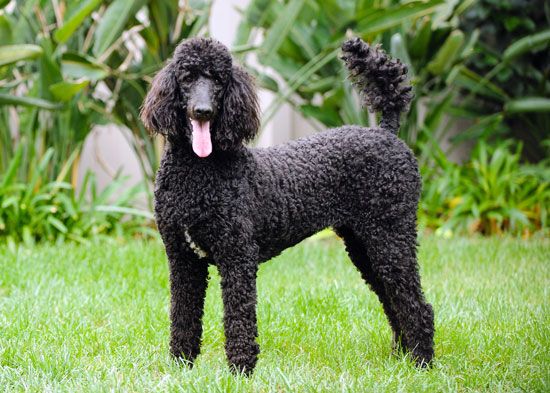
It is important to note that while some poodles can also develop corded coats, the puli is a distinct breed with its own unique history and purpose as a Hungarian herding dog.12
How do Puli dogs use their unique coat for herding?
The premise that the Puli’s unique corded coat is used as a functional tool for herding is not supported by the available information. While the puli is a sheepdog breed known for being agile and vigorous, its characteristic coat—formed by the natural tangling of a soft, woolly undercoat with a long outer coat—is a physical trait rather than a functional herding mechanism.13
The breed was introduced to Hungary by the Magyars approximately 1,000 years ago, and its reputation as a capable herder is attributed to its agility and vigor rather than the specific structure of its fur.13
What other dog breeds were developed in Hungary?
In addition to the puli, several other dog breeds were developed or historically established in Hungary, each serving distinct roles:
- Kuvasz: A large, sturdily built guard and shepherd dog. During the Middle Ages, it was highly valued by royalty and nobility for its protective instincts. It is known for its pure-white, slightly wavy coat and its ability to act independently without instruction.
- Komondor: A powerful, heavy-boned sheepdog brought to Europe by the Magyars in the 9th century. Unlike the puli, the komondor was primarily used to protect flocks rather than herd them. Its coat consists of heavy, tassel-like white cords, which historically provided the dog with protection against the fangs of wolves and other predators.
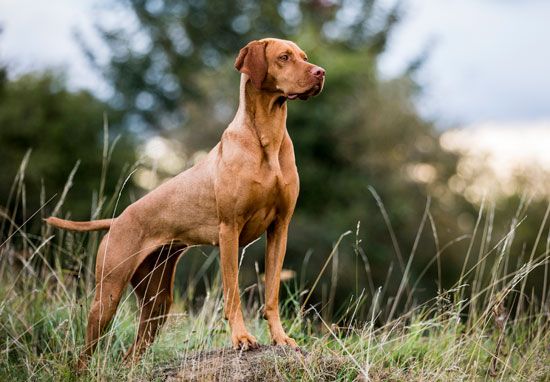
- Vizsla: A versatile sporting dog bred for hunting on the open plains. It functions as both a pointer and a retriever and is known for being a close-working, attentive companion. While the traditional version has a short, smooth reddish-gold coat, a wirehaired version was developed in the 1930s.
What are the main differences between a corded coat and a standard dog coat?
The primary difference between a standard dog coat and a corded coat lies in the structural arrangement of the hair. Standard coats are categorized by length—short, medium, or long—and texture, such as coarse or fine, with most breeds undergoing seasonal shedding influenced by daylight and temperature.7
In contrast, a corded coat is a specialized formation where the soft, woolly undercoat and the longer outer coat naturally interweave and mat together. Rather than shedding in the traditional sense, these hairs lock into distinct, rope-like cords. While a standard coat serves as a general barrier between the environment and the skin, the corded structure provides a unique, dense layer of protection that requires specific grooming techniques to maintain the cords and ensure the dog’s well-being.7
Sources
- puli — Encyclopædia Britannica
- Poodle — Encyclopædia Britannica
- puli — Merriam-Webster
- kuvasz — Encyclopædia Britannica
- komondor — Encyclopædia Britannica
- Vizsla — Encyclopædia Britannica
- dog - Coats — Encyclopædia Britannica
Published on · 3 min read