Pulmonate
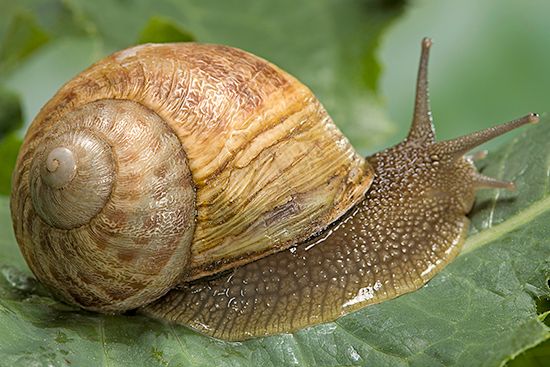
A pulmonate (subclass Pulmonata) refers to any of various land, freshwater, or marine snails and slugs belonging to the class Gastropoda.
What is pulmonate?
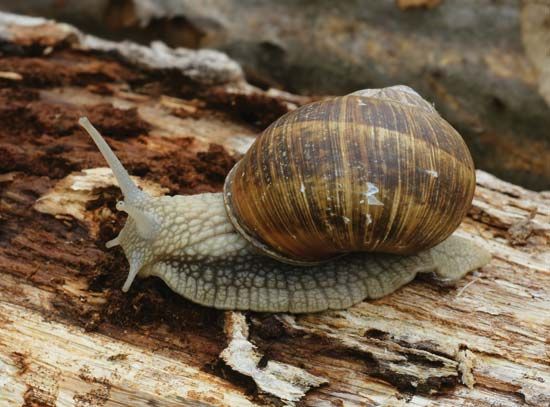
A pulmonate (subclass Pulmonata) refers to any of various land, freshwater, or marine snails and slugs belonging to the class Gastropoda.12
These mollusks are distinguished by the loss of ancestral gills, having evolved a “lung”—a highly vascularized, saclike modification of the mantle cavity—to breathe. Anatomically, they are considered more advanced than other snails; they are typically detorted as adults, meaning they exhibit bilateral symmetry with an unlooped nerve cord, and their hearts feature an anterior auricle.13
Most pulmonates are hermaphrodites, possessing both male and female reproductive organs within a single individual. While they are predominantly herbivores, predatory and scavenging species have evolved within the group at least 12 times. Because they are hermaphroditic and often capable of self-fertilization, they are highly efficient at colonizing new habitats, such as isolated ponds.145
How do pulmonates protect themselves from drying out on land?
Pulmonates have evolved several behavioral and physiological strategies to prevent desiccation (drying out) while living on land:
- Behavioral Adjustments: Most land snails primarily rely on behavior to manage moisture. They typically remain in areas with high humidity, retreat into damp niches during dry spells, or burrow into the soil to escape harsh conditions.3
- Protective Seals: Unlike prosobranchs, which use an operculum to seal their shells, pulmonates lack this structure. Instead, they secrete protective coverings across the shell aperture. In simple cases, this is a mucous covering known as an epiphragm. In more arid environments, they may secrete a thicker, calcium-impregnated seal that can be as substantial as the shell itself.3
- Dormancy: Some species, such as those in the genus Sonorella, survive extended dry periods by remaining dormant for years between rains.3
- Shell Reduction: In humid mountain regions where moisture is constant, some pulmonates have evolved toward shell reduction, eventually leading to the evolution of slugs. Because the shell’s primary function is protection against desiccation, it is no longer necessary in consistently moist environments.3
- Reproductive Strategies: To minimize water loss and protect offspring, some land snails have adopted ovoviviparity, where eggs hatch within the parent’s body rather than being exposed to the environment.7
What are the main differences between snails and slugs?
The primary difference between snails and slugs lies in the presence and development of their shells. Both are members of the class Gastropoda, but they are distinguished by the following characteristics:
- Shell Presence: Snails typically possess a well-developed, often calcareous shell into which the animal can withdraw for protection against predators and desiccation. In contrast, slugs have evolved through shell reduction, resulting in a shell that is either completely absent, reduced to an internal plate, or represented by a series of granules.12313
- Evolutionary Adaptation: The transition toward a sluglike form has occurred independently multiple times across various gastropod groups. This evolution is often driven by environmental factors; for instance, in humid mountain regions where moisture is constant, the protective benefits of a shell are less critical, and the energy required to construct one (often involving scarce calcium) makes shell reduction an advantageous adaptation.1415
- Protective Mechanisms: Because they lack a shell, slugs rely heavily on their slimy mucus for hydration, movement, and protection. While many land snails use an operculum to seal their shells, pulmonate snails and slugs lack this structure and instead use mucous coverings or calcium-impregnated seals to prevent drying out.1413
Why is being a hermaphrodite an advantage for freshwater pulmonates?
Being a hermaphrodite—possessing both male and female reproductive organs in a single individual—is a significant evolutionary advantage for freshwater pulmonates. This reproductive strategy is particularly beneficial in environments where population density may be low, such as isolated stream or tide pools.1
In such habitats, the probability of encountering another sexually active member of the same species can be low. Hermaphroditism ensures that any two individuals that meet are potential mates, effectively doubling the chances for successful reproduction compared to species with separate sexes. While these animals are capable of self-fertilization in extreme circumstances, they generally engage in mutual copulation, where each individual acts as both a male and a female, exchanging sperm to ensure genetic recombination and variation.110
This “double-sexed” condition is common among more sluggish or sedentary animals, allowing them to maximize reproductive success despite the challenges of their specific ecological niches.10
Sources
- pulmonate — Encyclopædia Britannica
- pulmonate — Merriam-Webster
- gastropod - Ecology and habitats — Encyclopædia Britannica
- gastropod - Food and feeding — Encyclopædia Britannica
- Respiratory system - Gills of invertebrates — Encyclopædia Britannica
- pulmonate — Merriam-Webster
- Biosphere - Humidity — Encyclopædia Britannica
- Biosphere - Atmospheric pressure — Encyclopædia Britannica
- arthropod - Excretory system and water balance — Encyclopædia Britannica
- gastropod - Reproduction and life cycles — Encyclopædia Britannica
- climatic adaptation — Encyclopædia Britannica
- slug — Encyclopædia Britannica
- gastropod - Evolution and paleontology — Encyclopædia Britannica
- 10 Reasons to Love Slugs — Encyclopædia Britannica
- gastropod - Classification — Encyclopædia Britannica
- gastropod - Size range and diversity of structure — Encyclopædia Britannica
- Reproductive behaviour - Fishes — Encyclopædia Britannica
- Sex - Sex patterns — Encyclopædia Britannica
- Animal reproductive system - Annelids and mollusks — Encyclopædia Britannica
Published on · 3 min read