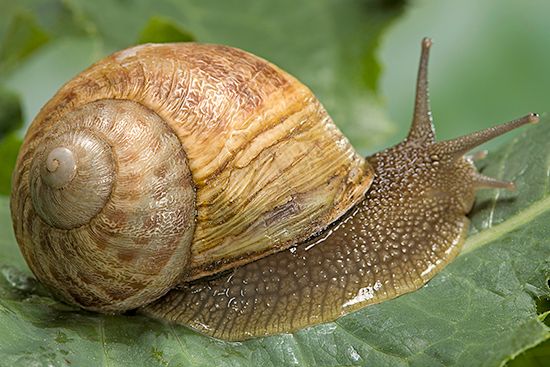
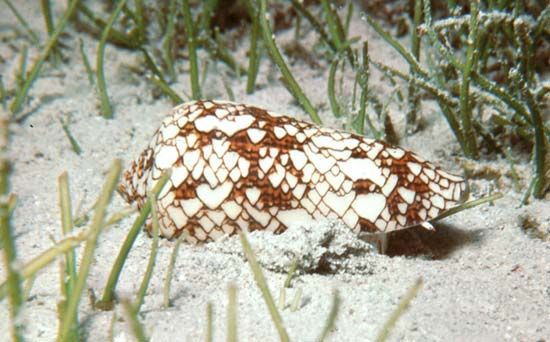
Prosobranch
Prosobranch gastropods, which include approximately 20,000 species of snails, occupy diverse roles within the food chain due to their varied dietary habits.…
What role do prosobranch gastropods play in the food chain?
Prosobranch gastropods, which include approximately 20,000 species of snails, occupy diverse roles within the food chain due to their varied dietary habits. Their position in the ecosystem is largely defined by their specialized radula, a ribbon-like organ covered in teeth used for feeding.12
Their roles include:
- Herbivores: Many primitive prosobranchs function as grazers, scraping algae and fungi from rocks and other surfaces.23
- Predators: Evolution has led many prosobranchs, particularly within the order Neogastropoda, to become specialized predators. These species consume larger sessile organisms and other invertebrates. Some have developed highly modified radular teeth and poison glands to capture prey, including other gastropods, bivalves, echinoderms, and even fish.23
- Omnivores and Parasites: The group also includes species that function as omnivores or parasites, further diversifying their impact on their respective habitats.2
By exploiting a wide range of food sources—from microscopic algae to complex animal prey—prosobranchs serve as both primary consumers and significant predators in marine, freshwater, and terrestrial ecosystems.23
What are the feeding habits and dietary preferences of prosobranch gastropods?
Prosobranch gastropods exhibit a wide range of feeding habits, which are primarily facilitated by the radula—a specialized, ribbon-like organ equipped with rows of teeth used to scrape, cut, or capture food. Their dietary preferences are highly diverse, reflecting significant evolutionary specializations.2
Feeding Categories
- Herbivores: Many prosobranchs are grazers that use their radulae to scrape algae and fungi from surfaces like rocks. Some larger species are selective herbivores, cutting off strips of seaweed to consume off strips of seaweed to consume.25
- Carnivores: This group includes active predators that hunt other mollusks, echinoderms, and fish. Some carnivorous prosobranchs, such as moon snails and dog whelks, utilize specialized glands to secrete acids and enzymes that allow them to bore through the shells of their prey. Others, like certain cone shells, use a modified, harpoon-like radular tooth to inject potent toxins into their prey.25
- Scavengers and Omnivores: Many prosobranchs found on sand and mud flats act as scavengers, indiscriminately consuming surface debris. The group also includes various species that function as omnivores or parasites.52
These dietary adaptations have allowed prosobranchs to successfully exploit a vast array of food sources across marine, freshwater, and terrestrial environments.25
What are some examples of well-known prosobranch gastropod species?
Prosobranch gastropods represent a diverse group of approximately 20,000 species, most of which are marine. These snails are characterized by their gills, a protective lid called an operculum, and a 180-degree body twist known as larval torsion.12
Well-known examples of prosobranch gastropods include:
- Abalone: Notable for their ear-shaped shells, these are found in shallow rocky waters.12
- Conch: Large, tropical marine snails often recognized for their elaborate shells.12
- Cone shell: Predatory snails that use a specialized, harpoon-like radula to inject potent toxins.162
- Cowrie: Known for their highly polished, brilliantly colored shells.12
- Periwinkle: Common small snails found on rocky shores worldwide.12
- Whelk: Marine snails of the family Buccinidae, often found in cold waters, which feed on other mollusks, crustaceans, and fish.127
- Murex: Predatory snails often characterized by elaborate shell ornamentation.12
- Limpet: Conical-shelled snails that cling to rocks in intertidal zones.12
What are the main characteristics of prosobranch gastropods?
Prosobranch gastropods, belonging to the class Gastropoda, are a diverse group of approximately 20,000 species, the majority of which are marine, though some inhabit freshwater or terrestrial environments.1
Key Characteristics
- Anatomical Structure: A defining feature is larval torsion, a 180-degree twisting of the body during development that results in a figure-eight arrangement of the viscera and nerve cord, which persists throughout the animal’s life.1
- Respiratory System: Most prosobranchs breathe using gills located in the mantle cavity, positioned in front of the heart. Some land-dwelling species have evolved a simple pulmonary cavity for respiration.1
- Shell and Protection: They generally secrete a substantial shell into which they can retract. A key protective feature is the operculum—a proteinaceous or calcareous lid located on the back of the foot—which seals the shell aperture when the animal retracts to protect against predation and desiccation.182
- Circulatory System: The auricle of the heart is situated in front of the ventricle.1
- Reproduction: Unlike many other gastropod groups, the sexes in prosobranchs are separate. While primitive species release gametes into the water for external fertilization, more advanced groups have evolved complex internal fertilization methods, including the use of copulatory organs.19
Sources
- prosobranch — Encyclopædia Britannica
- gastropod - Food and feeding — Encyclopædia Britannica
- gastropod - Evolution and paleontology — Encyclopædia Britannica
- bivalve - Food and feeding — Encyclopædia Britannica
- gastropod - Ecology and habitats — Encyclopædia Britannica
- gastropod - Classification — Encyclopædia Britannica
- whelk — Encyclopædia Britannica
- gastropod - The visceral hump — Encyclopædia Britannica
- gastropod - Size range and diversity of structure — Encyclopædia Britannica
- gastropod - Reproduction and life cycles — Encyclopædia Britannica
Published on · 3 min read