Rampion
The term "rampion" refers to two distinct types of plants within the bellflower family:
What is Rampion?
The term “rampion” refers to two distinct types of plants within the bellflower family:
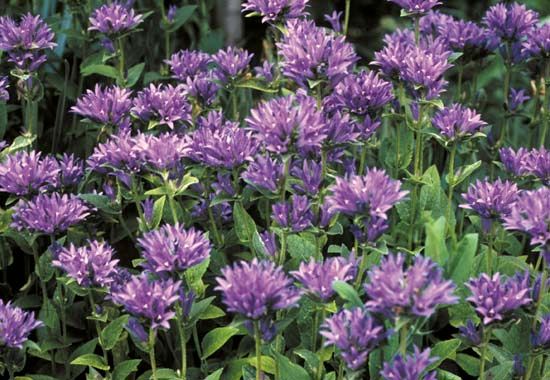
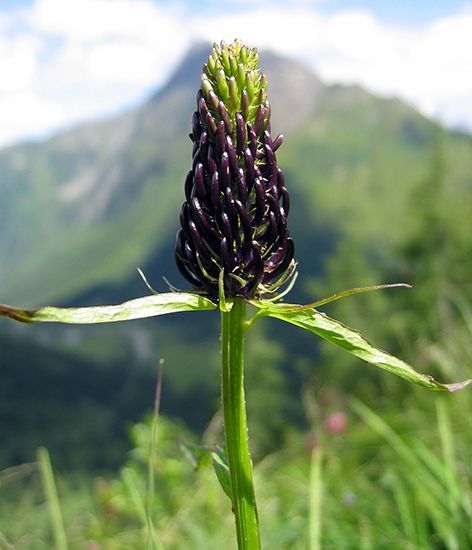
- Genus Phyteuma: This group consists of approximately 40 species of perennial plants native to the Mediterranean. They are characterized by long, hornlike buds and clustered flowers. Notable examples include the round-headed rampion (P. orbiculare) and the spike rampion (P. spicatum), some of which are cultivated as garden ornamentals.1
- Species Campanula rapunculus: This is a biennial plant native to Eurasia and North Africa. It is primarily known for its edible, turniplike roots and leaves, which are often consumed in salads for their distinct, biting flavor.123
While both are members of the same family, the former is typically grown for its aesthetic value, whereas the latter is historically valued as a food crop.12
What are the main characteristics of the bellflower family?
The Campanulaceae family, commonly known as the bellflower family, comprises approximately 84 genera and 2,400 species of mostly herbaceous, nonwoody plants. While they are primarily native to cool, temperate regions, they are also found on tropical mountains and include some shrubs and trees.42
Key characteristics of the family include:
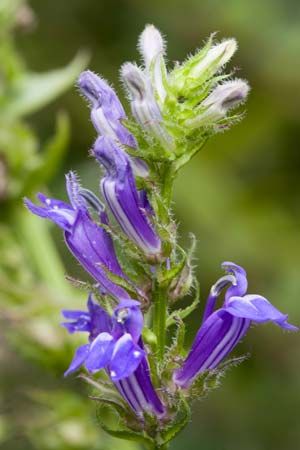
- Floral Structure: Most species feature five-part flowers with united petals. In typical bellflowers, the flowers are bell-shaped and radially symmetrical, with an inferior ovary (positioned below the floral parts).42
- Pollination: Many members utilize a specialized “plunger pollination” mechanism, where pollen is held by hairs along the style.2
- Vegetative Features: Plants often possess white latex in their stems and leaves, and they typically have alternate, simple leaves.42
- Diversity: The family includes the former Lobeliaceae subfamily, which often features strongly monosymmetric flowers and joined anthers.4
- Fruit: The plants produce fruits in the form of dry capsules or fleshy berries, which contain numerous small seeds.2
These plants are widely valued as garden ornamentals due to their showy, often blue, bell-like blooms.45
How is rampion used in traditional cooking?
In traditional cooking, the term “rampion” specifically refers to the species Campanula rapunculus, rather than the ornamental plants of the genus Phyteuma.1
This plant has historically been valued as a food crop due to its edible parts:
- Roots: The plant produces a tuberous, turniplike root that is typically consumed for its distinct, slightly biting flavor.13
- Leaves: The foliage is also edible and is commonly prepared and served in salads.13
The culinary use of Campanula rapunculus is rooted in its classification as a root vegetable, with its name derived from the Latin word for turnip (rapa), reflecting its traditional role as a salad ingredient in European cuisine.3
What is the difference between Phyteuma and Campanula species?
While both Phyteuma and Campanula belong to the bellflower family (Campanulaceae), they are distinct genera with different floral characteristics and growth habits.
Phyteuma (Rampion)
- Floral Structure: Members of this genus are characterized by long, clustered, hornlike buds. The flowers are often arranged in dense, round heads or oblong spikes.1
- Diversity: The genus consists of approximately 40 species of perennial plants.1
- Native Range: They are primarily native to the sunny fields and meadows of the Mediterranean region.1
Campanula (Bellflower)
- Floral Structure: As the name suggests, these plants typically feature bell-shaped, saucer-shaped, or cup-shaped flowers, which are usually blue, white, or violet.2
- Diversity: This is a much larger genus, comprising around 420 species of annual, perennial, and biennial herbs.2
- Native Range: They are native mainly to northern temperate regions, Mediterranean areas, and tropical mountains.2
- Culinary Use: Unlike Phyteuma, certain Campanula species, such as C. rapunculus, are cultivated as root vegetables for their edible, turniplike roots and leaves.12
Sources
- Rampion — Encyclopædia Britannica
- Bellflower — Encyclopædia Britannica
- rampion — Merriam-Webster
- Campanulaceae — Encyclopædia Britannica
- Angiosperm - General features — Encyclopædia Britannica
- Asterales - Campanulaceae — Encyclopædia Britannica
Published on · 3 min read