Quack Grass
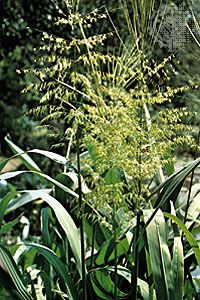
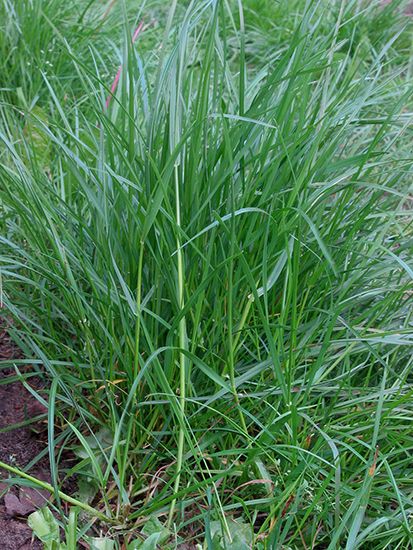
Quack grass (Elymus repens), also known as couch grass or witchgrass, is a rapidly spreading perennial plant belonging to the Poaceae family. Native to…
What is Quack grass?
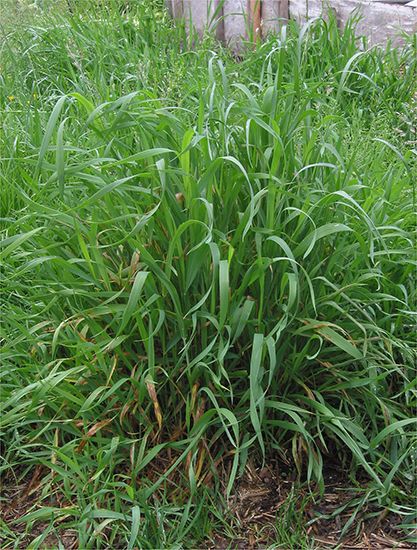
Quack grass (Elymus repens), also known as couch grass or witchgrass, is a rapidly spreading perennial plant belonging to the Poaceae family. Native to Europe, it has been introduced to other north temperate regions for use in erosion control and as forage.12
The plant typically grows between 30 and 100 cm tall and features flat, slightly hairy leaves with erect flower spikes. It is characterized by long, yellowish-white rhizomes—underground stems that allow it to spread aggressively. Because of this persistence, it is frequently classified as a weed in cultivated areas. Eradicating quack grass is notoriously difficult, as the entire root system must be removed to prevent any remaining rhizome fragments from generating new growth. Historically, the plant has been utilized in European home remedies and as a famine food.12
What are rhizomes and how do they help plants spread?
A rhizome is a horizontal, typically subterranean stem that serves as a vital organ for both food storage and plant propagation. Unlike roots, rhizomes possess nodes with reduced leaves and internodes, and they often produce adventitious roots on their underside.3
These modified stems enable plants to survive unfavorable seasons, such as droughts or extended winters, by storing essential starches and proteins. Their role in spreading a colony is significant:43
- Vegetative Reproduction: Rhizomes allow plants to propagate asexually. New shoots emerge from the nodes, effectively expanding the plant’s footprint.43
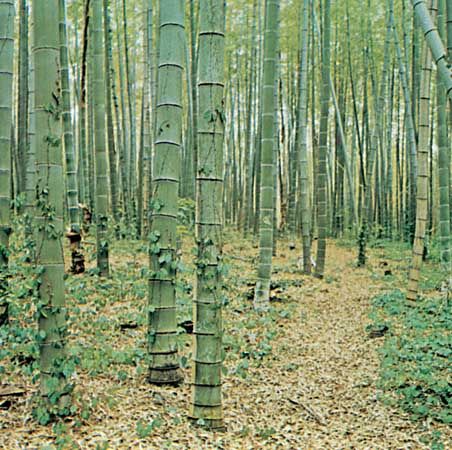
- Fragmentation: Many species, including grasses, bamboo, and sugarcane, rely on the fragmentation of these stems to generate new individual plants.3
- Persistence: Because rhizomes can remain underground and sprout new growth, they can make certain plants, such as quack grass, difficult to eradicate.31
Why are some plants classified as invasive species?
Plants are classified as invasive species when they are nonnative organisms that significantly modify or disrupt the ecosystems they colonize. While many introduced species fail to survive in new environments, some become invasive because they possess a competitive advantage over indigenous species, particularly when the new habitat lacks natural predators or pathogens to keep their populations in check.5
Several factors contribute to a plant’s classification as invasive:
- Resource Competition: Invasive plants often outcompete native species for essential resources such as food, water, sunlight, and living space. For example, the common buckthorn creates dense vegetation that blocks sunlight, effectively displacing native plants.56
- Rapid Spread: Many invasive plants, such as purple loosestrife, are capable of spreading rapidly across large areas, replacing diverse native vegetation.7
- Human Activity: Global commerce and travel are the primary drivers for the introduction of these species to new habitats, often through the accidental transport of seeds or plant materials.58
- Environmental Exploitation: Some invasive plants thrive due to changing environmental conditions, such as increased atmospheric carbon dioxide, which can boost their growth and reproductive success.8
Ultimately, these invasions reduce biodiversity and can cause significant economic and ecological harm.5
What are the differences between perennial and annual plants?
The primary difference between annual and perennial plants lies in the duration of their life cycles.
Annual Plants
An annual is a plant that completes its entire life cycle—from germination to flowering, seed production, and death—within a single growing season. Because the plant dies completely after one season, the only part that survives to the next year is the dormant seed. Common examples include many cereal grains, vegetables like corn and beans, and garden flowers such as marigolds and zinnias.101112
Perennial Plants
A perennial is a plant that lives for an indefinite number of years. While woody perennials like trees and shrubs remain visible year-round, many herbaceous perennials survive cold climates by dying back to the ground in autumn. These plants persist through the winter using specialized subterranean structures such as bulbs, corms, tubers, or rhizomes, which produce new growth the following season.101312
Sources
- quack grass — Encyclopædia Britannica
- quack grass — Merriam-Webster
- Rhizome — Encyclopædia Britannica
- Angiosperm - Shoot system modifications — Encyclopædia Britannica
- invasive species — Encyclopædia Britannica
- conservation - Removing invasive species — Encyclopædia Britannica
- habitat loss — Encyclopædia Britannica
- invasive species - Solutions — Encyclopædia Britannica
- Plant - Dispersal and colonization — Encyclopædia Britannica
- Is That Plant 'Perennial' or 'Annual'? — Merriam-Webster
- Perennial — Encyclopædia Britannica
- Annual — Encyclopædia Britannica
- Angiosperm - General features — Encyclopædia Britannica
Published on · 3 min read