Reedling
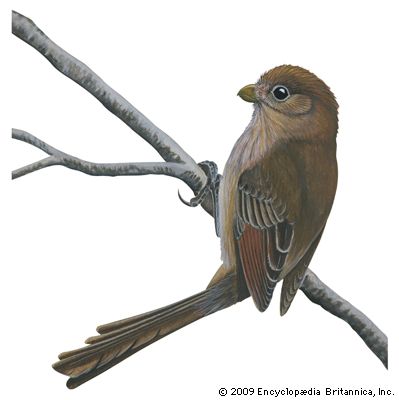
The reedling (Panurus biarmicus), also known as the bearded tit, is a songbird typically found in reedy marshes stretching from England to eastern Asia.

What is Reedling?
The reedling (Panurus biarmicus), also known as the bearded tit, is a songbird typically found in reedy marshes stretching from England to eastern Asia.1
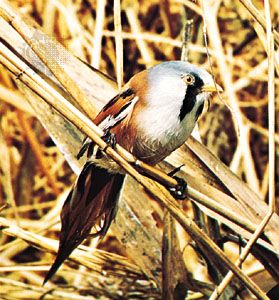
Measuring approximately 16 cm (6.5 inches) in length, the species exhibits sexual dimorphism. The male is characterized by subtle reddish, yellowish, and gray plumage and distinctive black, erectile moustaches—a feature that gives the bird its “bearded” appearance. In contrast, the female is duller in color and lacks these black markings. While the reedling is often placed in the family Panuridae, its classification has historically varied, with some taxonomists placing it within the Sylviidae or Timaliidae families. Notably, its small bill distinguishes it from the related parrotbills.1
What kind of habitat do bearded reedlings prefer?
The bearded reedling (Panurus biarmicus) is a specialized songbird that thrives exclusively in reedy marshland environments. Its natural range extends across a vast geographic area, spanning from England in the west to eastern Asia in the east.1
These birds are highly dependent on the dense vegetation found within these wetland ecosystems, which provide the necessary cover and resources for their survival. Their physical characteristics, such as their small bills, are well-adapted to navigating and foraging within these specific marsh habitats.1
How do bearded reedlings adapt to living in marshy environments?
The bearded reedling (Panurus biarmicus) is uniquely adapted to life within dense, reedy marshlands. Its primary physical adaptation is its small, specialized bill, which allows it to navigate and forage effectively within the thick vegetation of its wetland habitat.1
Beyond its morphology, the bird’s behavior is intrinsically linked to these environments. The male’s distinctive black, erectile moustaches serve as a key visual feature, likely playing a role in social signaling within the complex, cluttered environment of a reed bed. By residing in these specific ecosystems, the reedling utilizes the dense reeds for both shelter and protection from predators, maintaining a specialized niche that stretches from England across to eastern Asia.1
What are some other types of songbirds found in wetlands?
Several other songbirds are commonly found in wetland and marshy environments, often sharing similar habitats with the bearded reedling:
- Reed Warblers: These small, brown-plumaged birds of the genus Acrocephalus are frequently seen in reedbeds and marshy areas. They are known for their harsh voices and are part of the broader group of Old World warblers.23
- Reed Bunting (Emberiza schoeniclus): A chunky, seed-eating bird common to marshes across Europe and Asia.1
- Bobolink (Dolichonyx oryzivorus): Found in grasslands and wetlands throughout much of North America. During the fall and winter, when they flock in reedy marshes, they are sometimes referred to as “reedbirds”.45
- Sedge Warbler: Another species sometimes referred to as a “reedbird,” these birds are also associated with marshy habitats.5
These species have evolved various adaptations, such as slender bills for gleaning insects from foliage or specialized behaviors for navigating dense vegetation, to thrive in these productive but challenging ecosystems.3
Sources
- Reedling — Encyclopædia Britannica
- reed warbler — Merriam-Webster
- Taiga - Birds — Encyclopædia Britannica
- Warbler — Encyclopædia Britannica
- 15 of the Best Birdsongs (According to Britannica) — Encyclopædia Britannica
- Bunting — Encyclopædia Britannica
- reedbird — Merriam-Webster
Published on · 2 min read