Songbird
Songbirds, which belong to the suborder Passeri (or oscines) within the order Passeriformes, are primarily distinguished from other perching birds by the…
What distinguishes songbirds from other types of birds?
Songbirds, which belong to the suborder Passeri (or oscines) within the order Passeriformes, are primarily distinguished from other perching birds by the anatomy of their vocal organ, the syrinx.12
While all birds possess a syrinx—a unique structure located at the base of the trachea where it divides into the bronchi—it reaches its greatest complexity in songbirds. In these species, the organ consists of a firm bony framework and specialized, filmlike vibrating membranes controlled by up to six pairs of minute [muscles]. This advanced musculature allows songbirds to control the right and left halves of the syrinx independently, effectively enabling them to sing with two voices.342
It is important to note that possessing this complex syrinx does not guarantee a melodious song; some songbirds produce harsh sounds or sing very little, while some non-songbirds, such as suboscines, are also capable of producing a variety of vocalizations.52
What adaptations do songbirds have for flight and perching?
Songbirds have evolved specialized anatomical features that facilitate their distinct lifestyles of perching and flight.
Adaptations for Perching
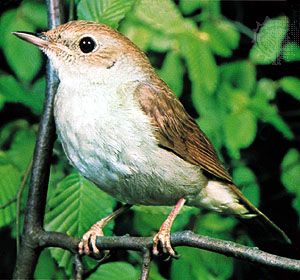
The defining characteristic of the passerine foot is its arrangement, which allows for secure gripping. All four toes are well-developed and free from one another, with the hind toe (the hallux) positioned at the same level as the front toes to oppose them. This structure is supported by a unique tendon mechanism: the tendons that bend the toes pass behind the ankle joint, meaning the weight of a crouched bird automatically keeps its toes clasped firmly around a perch. While most songbirds have moderately curved, sharp claws suited for gripping various surfaces, terrestrial species may have longer, straighter claws to aid in balance while walking or running.67
Adaptations for Flight
Songbirds possess several adaptations that support efficient locomotion:
- Wing Structure: Many songbirds utilize short, rounded wings, which allow for quick wing beats and maneuverability when moving between perches or from the ground to a perch.8
- Skeletal Strength: The avian skeleton is both strong and lightweight, featuring fused elements and pneumatization—the presence of air cavities—which reduces weight.7
- Musculature: Flight is powered by two large muscles: the pectoralis, which lowers the wing, and the supracoracoideus, which raises it.9
- Metabolic Efficiency: To support the high energy demands of flight, songbirds have an advanced circulatory system with a large heart and a specialized respiratory system involving nonvascular air sacs that extend into the skeleton.9
How have songbirds influenced human culture and art throughout history?
Since prehistoric times, songbirds have held a significant place in human culture, serving as sources of aesthetic inspiration, symbolic figures, and even economic resources.411
Cultural and Artistic Influence
The beauty, behavior, and vocalizations of songbirds have long appealed to human aesthetic tastes, leading to their integration into various forms of expression:
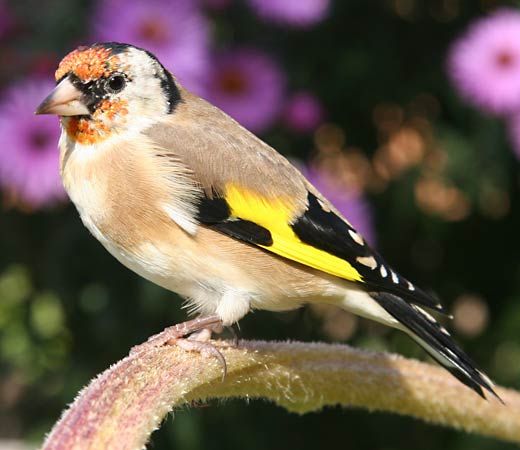
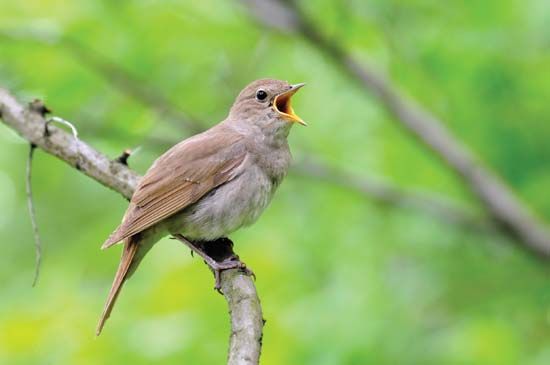
- Art and Literature: Songbirds have been featured in Renaissance art, where species like the goldfinch symbolized the Passion of Christ. They are also frequent subjects in poetry and literature, with the nightingale and skylark being celebrated by European poets.412
- Symbolism: Birds often carry deep symbolic meaning. While some, like the raven, have been associated with dark omens or messengers of the Devil, others have represented concepts such as the transcendent soul or wisdom.411
- Folklore and Mythology: From ancient Egyptian hieroglyphs to the fables of Aesop, songbirds have been central to storytelling and mythological traditions worldwide.11
Human Interaction
Beyond art, humans have engaged with songbirds through:
- Aviculture: The practice of keeping songbirds as cage birds dates back to at least the 5th century BCE in Greece. Today, this remains a significant global activity, though many nations now strictly regulate the trade of native species.4
- Recreation: Modern bird-watching has evolved from 19th-century hunting practices into a popular, conservation-minded hobby supported by field guides and technology.11
What are some unique courtship and mating behaviors observed in songbirds?
Songbirds exhibit a wide array of unique courtship and mating behaviors, often driven by the need to attract mates, establish pair bonds, or protect paternity.
Courtship Displays and Signals
Courtship in songbirds often involves elaborate displays that serve as honest indicators of male quality. These signals are frequently costly to produce, making them reliable markers that females use to select high-quality mates.1415
- Vocalizations: Complex birdsongs are a primary tool for attracting mates and defending territories. Males with the most elaborate songs are often the first to secure mates.141617
- Visual Displays: Many species use brilliant plumage, posturing, and even dancing to entice females. In some species, such as bowerbirds, males construct and decorate elaborate display arenas to attract partners.141816
- Lekking: In certain species, males congregate at communal display grounds known as leks. Here, they perform intense displays while females visit to choose a mate, after which the males provide no further parental care.141815
Mating Systems and Paternity Protection
While most songbirds are socially monogamous, they often engage in complex mating strategies:
- Extra-pair Copulations: DNA studies have revealed that many socially monogamous females accept copulations from males other than their social mate, potentially to secure “good genes” or additional resources.14
- Paternity Guards: To ensure their own reproductive success, males may engage in mate-guarding or other behaviors to prevent females from mating with rivals. In some species, such as the dunnock, males may even peck at a female’s cloaca to induce the release of sperm from previous mates before copulating themselves.14
- Appeasement: Because males can be aggressive during the breeding season, courtship often includes behaviors that reduce hostility, such as displays that mimic food-begging by young birds, which can lead to mutual feeding between partners.15
Sources
- Syrinx — Encyclopædia Britannica
- Passeriform - Sound production — Encyclopædia Britannica
- Passeriform — Encyclopædia Britannica
- Songbird — Encyclopædia Britannica
- Bird - Form and function — Encyclopædia Britannica
- Passeriform - Feet and legs — Encyclopædia Britannica
- Bird - Skeleton — Encyclopædia Britannica
- Bird - Flight — Encyclopædia Britannica
- Bird - Muscles and organs — Encyclopædia Britannica
- Psittaciform - Feet — Encyclopædia Britannica
- Passeriform - Aesthetic and economic importance — Encyclopædia Britannica
- Birdsong — Encyclopædia Britannica
- Bird — Encyclopædia Britannica
- Animal social behavior - Social interactions involving sex — Encyclopædia Britannica
- Passeriform - Territoriality and courtship — Encyclopædia Britannica
- Gruiform - Courtship — Encyclopædia Britannica
- Reproductive behaviour - Courtship — Encyclopædia Britannica
- Reproductive behaviour - Birds — Encyclopædia Britannica
- Bird - Sound — Encyclopædia Britannica
Published on · 5 min read