Parrotbill
Parrotbills (family Paradoxornithidae) are small to medium-sized birds primarily found in the brushy grasslands of Central and Eastern Asia. While the term…
What are the defining characteristics of parrotbills?
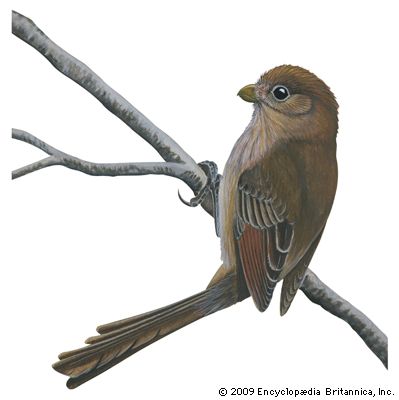
Parrotbills (family Paradoxornithidae) are small to medium-sized birds primarily found in the brushy grasslands of Central and Eastern Asia. While the term is sometimes confused with the distinct, hooked-bill anatomy of parrots—which are members of the order Psittaciformes—parrotbills are defined by their own unique set of characteristics:12
- Physical Appearance: They are generally brown and gray in color, featuring soft, loose plumage and distinctive, strongly arched, parrotlike bills.1
- Behavior: These birds are often social, moving in large flocks through undergrowth while maintaining contact through constant, sharp chirruping calls.1
- Habitat: They typically inhabit brushy areas, including bamboo groves, scrub, and tea plantations.1
- Classification: Most ornithologists group them within the family Paradoxornithidae, though some classify them under the songbird family Sylviidae.1
It is important to note that the rare Maui parrotbill is a separate species unrelated to the Asian parrotbills.1
Where are parrotbills typically found in the wild?
Parrotbills are primarily found in the brushy grasslands of Central and Eastern Asia. Their distribution varies by species:1
- Vinous-throated parrotbill: This species ranges from Manchuria south through China and Korea to Myanmar, where it inhabits bamboo groves, tea plantations, scrub, and gardens.1
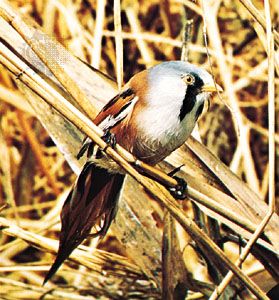
- Bearded reedling: This bird has a broader range, extending from western Europe, Turkey, and Iran across Asia to eastern Manchuria.1
It is important to clarify that the Maui parrotbill is an unrelated species found only in the forests on the upper slopes of a dormant volcano on the Hawaiian island of Maui.1
How many species of parrotbills are there, and what are some notable examples?
The family Paradoxornithidae, commonly known as parrotbills, comprises several species of small to medium-sized birds. While exact species counts can fluctuate due to ongoing taxonomic revisions—as some ornithologists classify them within the broader songbird family Sylviidae—they are generally recognized as a distinct group of titmouse-like birds characterized by their soft, loose plumage and strongly arched, parrotlike bills.1
Notable examples of parrotbills include:
- Vinous-throated parrotbill (Paradoxornis webbianus): A well-known garden bird in Chinese cities, this species ranges from Manchuria through China and Korea to Myanmar. They are highly social, moving in large flocks through bamboo groves and tea plantations while maintaining contact with sharp, constant chirruping calls.1
- Bearded reedling (Panurus biarmicus): Found from western Europe and the Middle East across Asia to Manchuria, this species is known for its acrobatic behavior, often straddling two reeds simultaneously. Males are easily identified by their blue-gray heads and black mustaches.1
It is important to note that the rare Maui parrotbill (Pseudonestor xanthophrys) is an unrelated species confined to the forests of a dormant volcano on Maui, Hawaii.1
How do parrotbills differ from other similar bird species?
Parrotbills (family Paradoxornithidae) are primarily distinguished from other similar songbirds by their unique morphology and behavior. While they are often compared to titmice due to their size and general appearance, they possess several defining characteristics:
- Distinctive Bill: Most parrotbills are set apart from other songbirds by a bill that is flattened sideways and strongly arched, giving it a parrotlike appearance. This structure differs significantly from the powerful, hooked, and highly kinetic bills of true parrots, which are specialized for cracking hard nuts and climbing.126
- Plumage: They are characterized by soft, loose plumage, typically colored in shades of brown and gray.1
- Social Behavior: These birds are highly active and social, frequently moving through brush, thickets, and bamboo groves in large flocks while maintaining contact through constant, sharp chirruping calls.12
- Acrobatic Adaptations: Some species, such as the bearded reedling, exhibit specialized physical behaviors, such as straddling two reeds simultaneously with their feet turned outward to grip the stems.1
Sources
- Parrotbill — Encyclopædia Britannica
- Psittaciform - Bill and skull — Encyclopædia Britannica
- Psittaciform - Habitat and food choice — Encyclopædia Britannica
- parrotbill — Merriam-Webster
- Passeriform - Annotated classification — Encyclopædia Britannica
- Panuridae — Encyclopædia Britannica
Published on · 3 min read