Rhaetian Alps
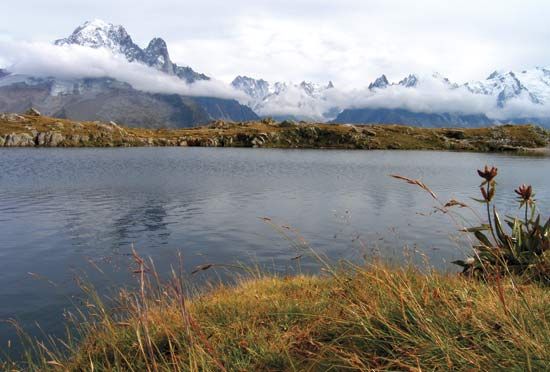
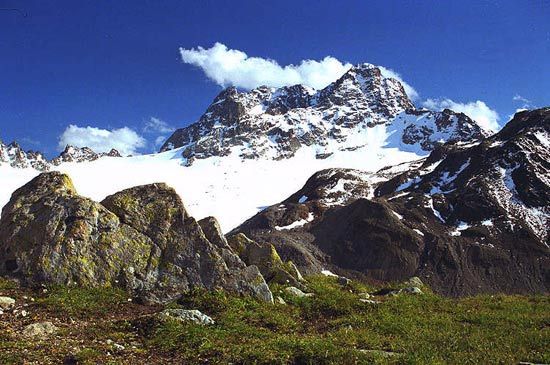
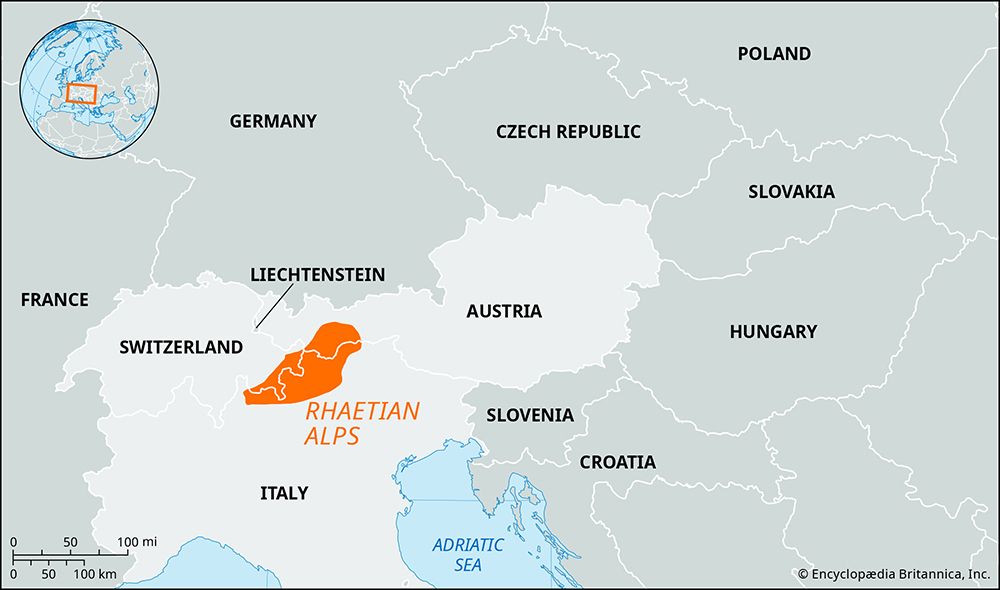
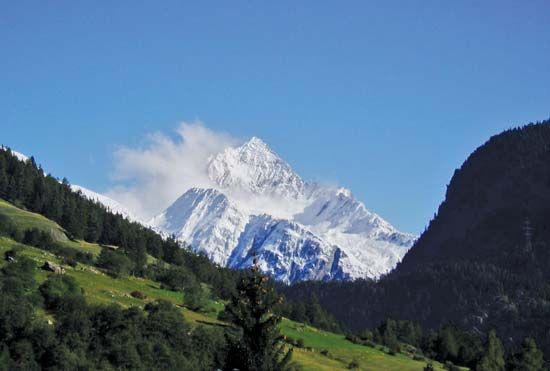
The Rhaetian Alps are a segment of the Eastern Alps located primarily in the Swiss canton of Graubünden, extending along the borders of Italy, Switzerland…
How do the Rhaetian Alps compare to other alpine ranges in Europe?
The Rhaetian Alps are a segment of the Eastern Alps located primarily in the Swiss canton of Graubünden, extending along the borders of Italy, Switzerland, and Austria.12
Compared to other ranges within the broader Alpine system, the Rhaetian Alps are distinguished by several features:
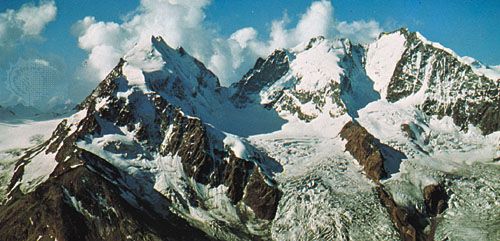
- Elevation: While the Western Alps contain the highest peaks, such as Mont Blanc (15,771 feet), the Rhaetian Alps feature Bernina Peak. At 13,284 feet, it is considered the last of the “giants” in the Alps exceeding 13,120 feet (4,000 meters) as one moves eastward.2
- Geography: The range is characterized by the Engadin valley, which cuts through its subranges, including the Silvretta, Rhätikon, Albula, and Bernina Alps.1
- Conservation: The region hosts the Swiss National Park, noted for its rugged scenery and protected wildlife, distinguishing it from more heavily industrialized or tourism-saturated areas of the Alps.13
What are some popular recreational activities and tourist attractions in the Rhaetian Alps?
The Rhaetian Alps offer a wide array of recreational activities and attractions, largely centered around the region’s dramatic mountain terrain and scenic valleys.
Popular Recreational Activities
- Winter Sports: The region is renowned for its numerous winter sports centers, with skiing and snowboarding being primary attractions across the various subranges, including the Silvretta, Albula Alps, and Bernina Alps.1567
- Mountain Climbing: The rugged peaks, such as Bernina Peak and those within the Silvretta Group, are popular destinations for mountaineers and climbers.57
- Hiking and Nature Observation: Visitors can explore the Swiss National Park via an extensive network of foot trails. While the park is a strict nature reserve—prohibiting activities like hunting, fishing, or flower picking—it is a premier location for observing wildlife such as ibex, chamois, red deer, and eagles.8
Tourist Attractions
- Health Resorts: The area is home to many health resorts, with Saint Moritz serving as a prominent hub for visitors.167
- Scenic Infrastructure: The Bernina Pass features a railway that was designated a UNESCO World Heritage site in 2008, offering spectacular views of the alpine landscape.7
What is the etymology of the name ‘Rhaetian Alps’?
The name “Rhaetian Alps” is derived from the ancient Roman province of Raetia, which encompassed parts of modern-day Austria, Switzerland, and Germany.1011
The etymology of the term “Rhaetian” traces back to the Latin Rhaetia, which was formed from the name of the region’s native inhabitants, the Rhaeti, combined with the suffix -ia (denoting a place or country). The English suffix -an was subsequently added to denote “of or relating to” that ancient province or its people.1213
Historically, the Rhaeti were a people of mixed Illyrian and Celtic stock who inhabited the region before it was conquered by Rome in 15 BCE. Because the province served as a strategic frontier that controlled vital mountain routes between Italy and the Danube River, the name became permanently associated with the geography of these Alpine ranges.1011
What are the major peaks and mountain ranges within the Rhaetian Alps?
The Rhaetian Alps are a segment of the Central Alps located primarily in the Graubünden canton of eastern Switzerland, extending along the borders of Italy and Austria.19
Major Peaks and Subranges
The range is defined by several prominent subranges and a high-altitude landscape:
- Bernina Alps: This subrange contains the highest point of the entire Rhaetian system, Bernina Peak, which reaches an elevation of 13,284 feet (4,049 meters).115
- Other Subranges: The system also includes the Silvretta, Rhätikon, and Albula Alps.1
It is important to distinguish these from the Bernese Alps, a separate segment of the Central Alps located in southwestern Switzerland, which features distinct peaks such as the Finsteraarhorn and Jungfrau.10
The Rhaetian Alps are characterized by the Engadin valley, which cuts through the subranges, and they house the Swiss National Park in their eastern section.1
Sources
- Rhaetian Alps — Encyclopædia Britannica
- Alps - Physiography — Encyclopædia Britannica
- Alps — Encyclopædia Britannica
- Alps - Plant and animal life — Encyclopædia Britannica
- Swiss National Park — Encyclopædia Britannica
- Silvretta Group — Encyclopædia Britannica
- Albula Alps — Encyclopædia Britannica
- Rhätikon Mountains — Encyclopædia Britannica
- Bernina Alps — Encyclopædia Britannica
- Rhaetian Alps — Merriam-Webster
- Raetia — Encyclopædia Britannica
- Rhaetia — Merriam-Webster
- Rhaetian — Merriam-Webster
- Rhaetian — Merriam-Webster
- Bernese Alps — Encyclopædia Britannica
Published on · 3 min read