Riccia
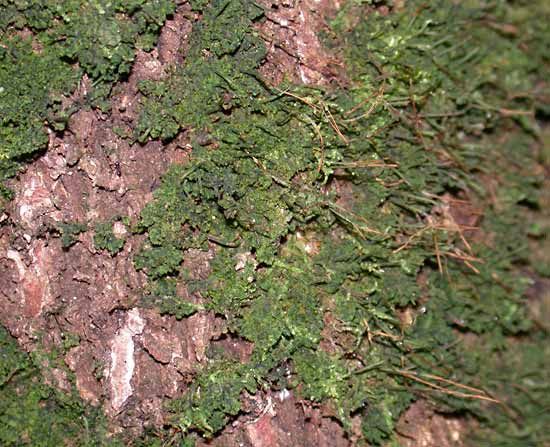
Riccia is a genus of liverworts—small, non-vascular, creeping plants belonging to the order Marchantiales. These plants are found globally and exhibit two…
What is Riccia?
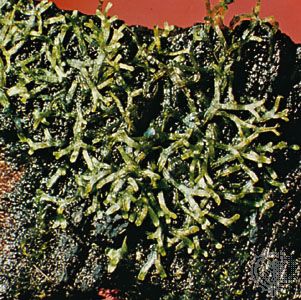
Riccia is a genus of liverworts—small, non-vascular, creeping plants belonging to the order Marchantiales. These plants are found globally and exhibit two primary growth forms depending on their environment.12
Some species, such as Riccia fluitans (often called slender riccia), grow as branching green ribbons that float in shallow ponds, frequently tangling into large masses. Other species are terrestrial, forming rosettes on moist soil. Characterized by a dichotomously branched thallus, the genus is the type member of the family Ricciaceae and is named after the 18th-century Italian nobleman P.F. Ricci.12
What are the main differences between liverworts and mosses?
While both mosses and liverworts are nonvascular bryophytes, they exhibit distinct differences in their physical structure and reproductive mechanisms.
Gametophyte Structure
- Mosses: The mature gametophore is typically leafy, with phyllids spirally arranged around a central stem.34
- Liverworts: These plants often have a flattened, ribbonlike body called a thallus, though some species are leafy. In leafy liverworts, the leaves are usually arranged in two or three rows and lie flat against the surface.34
Developmental Stages
- Protonema: In mosses, the protonema is an extensive, branched system of filaments that develops from a spore. In most liverworts, the protonema is a short, unbranched filament that quickly forms a three-dimensional cell mass called a sporeling.4
Spore Release
- Mosses: The sporangium typically opens via an operculum (lid). Once removed, a ring of teeth often controls the gradual release of spores.4
- Liverworts: The sporangium usually opens rapidly along four longitudinal lines. They contain elaters—elongated cells with coiled thickenings—that help propel spores into the air.4
How do liverworts reproduce without seeds?
Liverworts reproduce through both sexual and asexual means, neither of which involves the production of seeds.7
Sexual Reproduction
Liverworts exhibit an alternation of generations, where the dominant gametophyte (the green, leafy or ribbonlike plant body) produces sex organs.78
- Fertilization: Male organs (antheridia) produce biflagellate sperm that must travel through an aqueous environment, such as dew or raindrops, to reach the eggs held in the female organs (archegonia).75
- Sporophyte Generation: The resulting diploid embryo develops into a sporophyte, which forms a sporangium at its apex. This structure produces spores via meiosis, which are then released to germinate and begin a new gametophytic generation.75
Asexual Reproduction
Many liverworts can propagate without fertilization through vegetative methods:
- Gemmae: These are specialized disks of tissue produced by the gametophyte and held in gemma cups. They are typically dispersed by rainfall.7
- Fragmentation: The thallus can break apart, with each fragment capable of growing into a new, independent plant.7
What is a thallus in plant biology?
A thallus is a plant body characteristic of algae, fungi, and certain lower organisms, such as specific bryophytes like liverworts and hornworts.1011
Unlike higher plants, a thallus lacks specialized structures such as true stems, leaves, or vascular conducting tissues. Its physical form is relatively simple, ranging from a single cell to complex, treelike structures composed of plates or filaments of cells. In the context of bryophytes, the thallus is typically a flattened, ribbonlike body that is often pressed against the ground and attached by threadlike structures known as rhizoids.1011
The thickness and organization of a thallus can vary significantly; some are only one cell layer thick, while others possess complex tissue organization. Because they lack the specialized vascular systems found in higher plants, these organisms rely on their simple structure to interact with their environment.31011
Sources
- Riccia — Encyclopædia Britannica
- Riccia — Merriam-Webster
- bryophyte — Encyclopædia Britannica
- bryophyte - Classification — Encyclopædia Britannica
- bryophyte - Form and function — Encyclopædia Britannica
- plant reproductive system - The plant basis — Encyclopædia Britannica
- liverwort — Encyclopædia Britannica
- Alternation of generations — Encyclopædia Britannica
- plant reproductive system - Liverworts and hornworts — Encyclopædia Britannica
- thallus — Encyclopædia Britannica
- bryophyte - General features — Encyclopædia Britannica
Published on · 3 min read