Leafy Liverwort
A leafy liverwort is a member of the order Jungermanniales, a group of nonvascular liverworts characterized by a prostrate, horizontal plant body with…
What is Leafy liverwort?
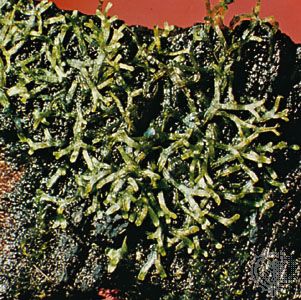
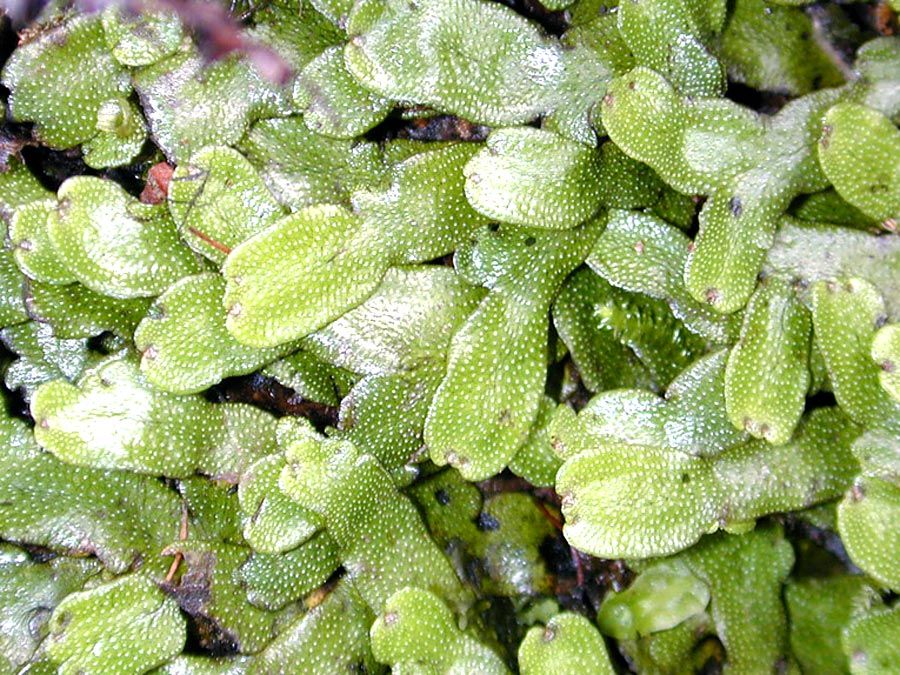
A leafy liverwort is a member of the order Jungermanniales, a group of nonvascular liverworts characterized by a prostrate, horizontal plant body with distinct, spirally arranged leaflike structures. Unlike thallose liverworts, which are ribbonlike, these plants feature a gametophyte with leaves typically organized in three rows.123
These plants are primarily found in moist environments, such as damp forests, swamps, and bogs, where they often grow on soil, rotted logs, or as epiphytes on tree trunks. While they are most diverse in tropical regions, they exist globally in various climates.12
The life cycle of a leafy liverwort involves a dominant gametophyte generation that produces spores via a dependent sporophyte. They are anchored to their substrate by filamentous rhizoids and play an ecological role by retaining moisture, facilitating log decay, and providing food for animals.12
How do leafy liverworts differ from thallose liverworts?
Leafy liverworts and thallose liverworts are distinguished primarily by the structure of their gametophyte (the dominant plant body). The differences between them include:
- Body Shape: Leafy liverworts (order Jungermanniales) possess a prostrate, horizontal stem with distinct, spirally arranged leaflike structures, typically in two or three rows. In contrast, thallose liverworts have a branching, ribbonlike thallus that often resembles a lobed liver.143
- Tissue Differentiation: The thalli of most thallose liverworts consist of relatively undifferentiated cell layers, though some, such as those in the order Marchantiales, exhibit complex tissue organization analogous to the leaves of vascular plants. Leafy liverworts generally lack this level of internal tissue complexity.4
- Habitat and Growth: While both groups thrive in moist environments, leafy liverworts are frequently found growing on tree trunks in damp woods, in addition to soil and rotted logs. Thallose liverworts are commonly found on moist soil or damp rocks.3
- Reproductive Structures: In many leafy liverworts, the archegonia are enclosed by a protective sleeve called a perianth, and antheridia are often located on specialized branches. Thallose liverworts vary, with some having reproductive organs embedded directly within the dorsal surface of the thallus.4
What are nonvascular plants and why do they need moisture?
Nonvascular plants, informally known as bryophytes, are a group of plants that lack specialized vascular tissue—specifically xylem and phloem—required for the internal conduction of water and nutrients. Because they lack these tissues and a well-developed cuticle to prevent water loss, they are unable to transport water efficiently over long distances or retain it effectively, making them highly dependent on their immediate environment for moisture.64
This reliance on moisture is driven by two primary factors:
- Physiological Needs: Lacking true roots, stems, and leaves, these plants absorb water and minerals directly from their surroundings, such as damp soil, rocks, or tree trunks.6
- Reproductive Requirements: As a vestige of their aquatic ancestry, bryophytes produce motile, flagellated sperm. These sperm require an external film of water to swim from the antheridia to the archegonia to achieve fertilization.6
How do liverworts reproduce using gemmae?
Liverworts frequently utilize asexual reproduction through the production of gemmae, which are small, disk-shaped clusters of tissue generated by the dominant gametophyte generation.3
These gemmae are housed within specialized structures called gemma cups located on the surface of the plant. When raindrops strike these cups, the force of the water splashes the gemmae out, effectively dispersing them to new locations. Once a gemma lands in a suitable, moist environment, it can develop into a new, independent liverwort plant, genetically identical to the parent. This method of propagation allows liverworts to colonize their immediate surroundings efficiently without the need for fertilization.3
Sources
- leafy liverwort — Encyclopædia Britannica
- leafy liverwort — Merriam-Webster
- liverwort — Encyclopædia Britannica
- bryophyte - Form and function — Encyclopædia Britannica
- bryophyte - General features — Encyclopædia Britannica
- Angiosperm - Evolution of the transport process — Encyclopædia Britannica
- Plant - Definition of the category — Encyclopædia Britannica
- magnoliid clade - Vegetative structures — Encyclopædia Britannica
- Plant - Evolution and paleobotany — Encyclopædia Britannica
- Plant - Definition of the category — Encyclopædia Britannica
- lower vascular plant - Reproduction — Encyclopædia Britannica
- Pollination - Water — Encyclopædia Britannica
Published on · 3 min read