Roadrunner
The term "Roadrunner" refers to three distinct subjects:
What is Roadrunner?
The term “Roadrunner” refers to three distinct subjects:
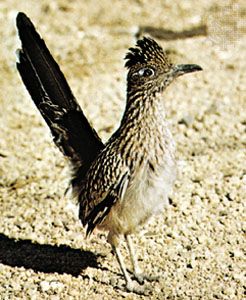
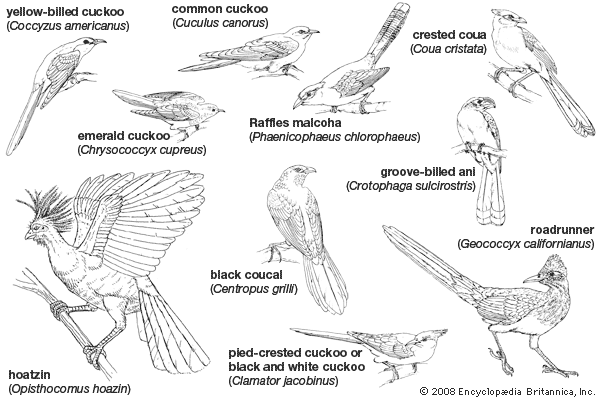
- Biological Bird: The roadrunner is a terrestrial bird of the cuckoo family, primarily found in the deserts of Mexico and the southwestern United States. Known for its speed, it inhabits arid regions and feeds on insects, lizards, and snakes.12
- Cartoon Character: The Road Runner is a famous animated character created by Chuck Jones for the Looney Tunes series. The character is a fast, slender bird that consistently outwits Wile E. Coyote in a series of comedic shorts.3
- Supercomputer: Roadrunner was a supercomputer built by IBM in 2008. Named after New Mexico’s state bird, it was the first machine to exceed a speed of 1,000 trillion floating-point operations per second (1 petaflop).4
How do roadrunners survive in harsh desert environments?
Roadrunners (Geococcyx californianus) have evolved several behavioral adaptations to thrive in the arid, harsh environments of the southwestern United States and Mexico. Because water is often scarce in these desert habitats, roadrunners utilize specific self-maintenance routines to stay clean and healthy. They frequently take dust baths by flopping into loose, dry dirt and fluttering their wings to coat their bodies in fine dust. This process helps them remove grease, dry skin, and external parasites like lice when they preen the dust from their feathers.5
In addition to these hygiene habits, roadrunners are highly efficient predators. They are well-adapted to their environment, using their speed to hunt insects, lizards, and snakes. They have been observed disorienting reptilian prey by running in circles around them before attacking with their stout bills. While they are capable of flight, they are relatively clumsy and tire quickly, preferring to spend most of their time running across desert flats, such as those covered in sagebrush, chaparral, or mesquite.53
What are some other unique adaptations of birds in the cuckoo family?
The cuckoo family (Cuculidae) exhibits a wide range of fascinating adaptations, particularly among the species that practice brood parasitism. These birds have evolved complex strategies to ensure their offspring are successfully raised by foster parents.
Key Adaptations of Parasitic Cuckoos
- Egg Mimicry: Many female cuckoos lay eggs that closely resemble the color and pattern of their host’s eggs, a phenomenon known as egg mimicry. This adaptation helps prevent the host from rejecting the foreign egg.89
- Nest-Mate Eviction: Shortly after hatching, many young cuckoos possess a specialized depression between their shoulder blades. They use this to heave the host’s eggs or nestlings out of the nest, ensuring they receive the full attention and food supply from the foster parents.89
- Host Manipulation: Some cuckoos remove one or more of the host’s eggs when laying their own to reduce competition and minimize the chance that the host will notice the addition.89
- Deceptive Appearance: Certain species of Cuculus have evolved to resemble bird-eating hawks in appearance and behavior, which can frighten potential hosts and allow the cuckoo to approach the nest unmolested.9
- Coevolutionary Alternation: Some cuckoo populations shift between different host species over generations, evolving new egg colorations to match the specific host they are currently targeting.10
How did Chuck Jones develop the rules for the Looney Tunes characters?
Animator Chuck Jones developed specific rules for his cartoons to ensure consistency and emotional resonance, particularly within the Road Runner series. As detailed in his autobiography, Chuck Amuck (1989), these guidelines were foundational to the success of the shorts.212
Key principles established by Jones included:
- Sympathy for the Characters: The audience was intended to retain equal sympathy for both the hapless Wile E. Coyote and his speedy prey.2
- Non-Harmful Interaction: A strict rule was that the Road Runner would humiliate, but never physically harm, the coyote.2
- Psychological Motivation: Jones focused on “personality animation,” where characters behaved according to their internal psyches rather than just plot requirements. For instance, he viewed the coyote’s pursuit not merely as a hunt for food, but as a struggle against a loss of dignity and a battle against his own ineptitude and unreliable tools.212
These rules helped elevate the Looney Tunes shorts from simple slapstick into classic examples of character-driven storytelling.12
Sources
- Roadrunner — Encyclopædia Britannica
- Road Runner — Encyclopædia Britannica
- 10 Fascinating Region-Specific Animals | Roadrunner — Merriam-Webster
- supercomputer - Historical development — Encyclopædia Britannica
- racerunner — Encyclopædia Britannica
- lizard - Thermoregulation — Encyclopædia Britannica
- Thermoreception - Reptiles and amphibians — Encyclopædia Britannica
- Cuculiform - Brood parasitism — Encyclopædia Britannica
- Cuckoo — Encyclopædia Britannica
- coevolutionary alternation — Encyclopædia Britannica
- mimicry - Parasitic weaverbirds — Encyclopædia Britannica
- Chuck Jones — Encyclopædia Britannica
Published on · 3 min read