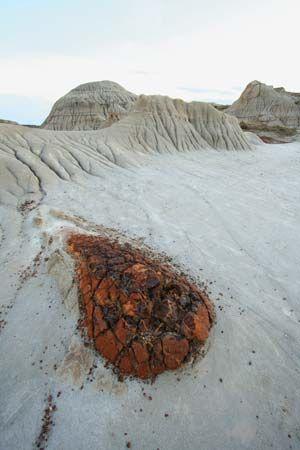
Rock Fan
The term "rock fan" can refer to two distinct concepts depending on the context:
What is rock fan?
The term “rock fan” can refer to two distinct concepts depending on the context:
Geological Definition
A rock fan is a fan-shaped bedrock surface located at the base of a mountain, typically where a stream emerges onto a piedmont slope. These formations are often covered by a thin layer of alluvium and are characterized by relatively steep slopes, usually between 20° and 26°. Geologists often consider them to be an early stage in the development of a pediment.1
Cultural Definition
In the context of music, a “rock fan” is an individual who identifies with the culture and ideology surrounding rock music. Unlike pop, which is often categorized as “instant” music for teenagers, rock is frequently defined by its listeners and musicians through an emphasis on “authenticity”—the belief that the music serves as a genuine expression of the artist’s feelings or a social situation, rather than a purely commercial product. Rock fans often value the “do-it-yourself” (DIY) ethos and the perceived artistic integrity of the performers.23
What is the difference between a rock fan and an alluvial fan in geology?
In geology, a rock fan and an alluvial fan are distinct landforms, though they are sometimes confused due to their similar fan-shaped appearance at the base of mountains.1
Rock Fan
A rock fan is a fan-shaped bedrock surface located at the foot of a mountain, typically where a stream emerges onto a piedmont slope. Key characteristics include:1
- Composition: It consists primarily of bedrock, often covered by only a thin veneer of alluvium.1
- Slope: These formations are relatively steep, typically featuring slopes between 20° and 26°.1
- Development: Geologists often view rock fans as an early stage in the development of a pediment.1
Alluvial Fan
An alluvial fan is a deposit of sediment (alluvium) created by a stream where it issues from a gorge onto a plain or at the junction of a tributary with a main stream. Key characteristics include:7
- Composition: It is composed of accumulated sediment transported and deposited by water.7
- Slope: Alluvial fans are generally much gentler than rock fans; slopes near the apex are typically less than 10°, and gradients at the distal margins can be as low as 1°.8
- Dynamics: These features are active depositional environments that evolve based on climate, sediment load, and tectonic activity.8
How did the hippie movement influence the development of rock music?
The hippie movement of the 1960s profoundly transformed rock music, shifting it from a commercial pop product into a medium for artistic expression, social commentary, and cultural exploration.11
The Soundtrack of Counterculture
As the hippie movement gained momentum, rock music became its primary soundtrack. Bands like the Grateful Dead and Jefferson Airplane emerged from bohemian collectives to create psychedelic rock, a style that utilized feedback, electronics, and intense volume to mirror drug-induced states. This music was deeply intertwined with the movement’s values, including anti-war protests, sexual liberation, and a rejection of mainstream consumerism.121113
Artistic Evolution and “The Rock Paradox”
The movement encouraged musicians to prioritize artistic integrity over commercial success. This shift was exemplified by:
- Folk Rock: Artists like Bob Dylan transitioned to electric instruments, blending the social consciousness of folk with the energy of rock.11
- Technical Innovation: Established acts like the Beatles and Pink Floyd pushed the boundaries of studio production and musical structure, treating rock as an art form rather than a commodity.1211
- The Paradox: A defining irony of the era was that this very commitment to “anti-commercial” artistic integrity led to unprecedented wealth, as rock albums and festivals like Woodstock became massive, profitable cultural phenomena.11
Ultimately, the hippie movement helped establish rock as a “battering ram” for youth culture, influencing future genres ranging from heavy metal and art rock to punk and rap.12
What are some key characteristics of pediment development in landscapes?
Pediments are erosional landforms characterized by a relatively flat or slightly concave bedrock surface located at the base of a mountain or hill. Key characteristics of their development include:1415
- Formation Processes: Pediments are believed to develop through a combination of backwearing of mountain front slopes, the weathering of the surface, and the removal of weathered material by fluvial and slope processes.15
- Slope and Geometry: They typically exhibit a gentle slope ranging from 0.5° to 7°. A sharp break in slope often exists between the pediment and the steeper mountain front above it.14
- Environmental Context: While most conspicuous in arid or semi-arid desert regions where rainfall is intense but spasmodic, beveled bedrock surfaces also occur in humid areas, though they may be obscured by soil and vegetation.1415
- Tectonic Stability: Pedimentation is most common in areas of relative tectonic stability, as rapid uplift tends to favor depositional processes (such as the formation of alluvial fans) over the erosional processes that create pediments.15
- Evolutionary Stages: Pediments are often considered a later stage of landform evolution compared to rock fans. When multiple pediments coalesce over a broad region, they form a pediplain.16151
Sources
- rock fan — Encyclopædia Britannica
- rock - Folk rock , the hippie movement, and “the rock paradox” — Encyclopædia Britannica
- rock - Rock and youth culture — Encyclopædia Britannica
- rock - The difficulty of definition — Encyclopædia Britannica
- rock - Authenticity and commercialism — Encyclopædia Britannica
- rock — Encyclopædia Britannica
- alluvial fan — Merriam-Webster
- piedmont — Encyclopædia Britannica
- Georgia - Soils — Encyclopædia Britannica
- river - Size, morphology, and surface characteristics — Encyclopædia Britannica
- psychedelic rock — Encyclopædia Britannica
- rock festival - Monterey, Woodstock, Lollapalooza, and beyond — Encyclopædia Britannica
- 1960s counterculture — Encyclopædia Britannica
- pediment — Encyclopædia Britannica
- Pediment — Encyclopædia Britannica
- planation surface — Encyclopædia Britannica
- pediplain — Encyclopædia Britannica
- continental landform - Climatically dominated epeirogenic realms — Encyclopædia Britannica
Published on · 4 min read