Roe Deer
Roe deer (Capreolus) exhibit several unique behavioral and biological traits that distinguish them from other deer species:
What are some unique behavioral traits of roe deer compared to other deer species?
Roe deer (Capreolus) exhibit several unique behavioral and biological traits that distinguish them from other deer species:
- Reproductive Strategy: Unlike many northern deer that store fat during the summer to survive the fall rut, roe deer use the summer vegetation pulse to fuel their mating season directly. To ensure fawns are born in the spring when food is abundant, roe deer utilize delayed implantation; the fertilized egg remains inactive in the uterus until January, resulting in a total gestation period of 276–295 days.1
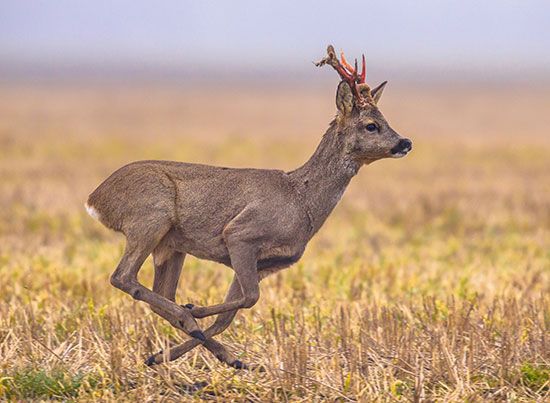
- Antler Growth Cycle: Roe bucks grow their antlers during the winter, rather than the summer, and shed the velvet in March to prepare for territorial battles.1
- Territorial Behavior: Roe bucks establish territories in late summer that overlap with the ranges of multiple females. Unlike species that form harems, roe bucks do not gather groups of females; instead, they focus on courting individual females to bond them to their territory.12
- Communication: When alarmed, roe deer are known to bark, a distinct vocalization compared to the silent or different alarm signals of other deer.1
What are the distinctive physical characteristics of roe deer?
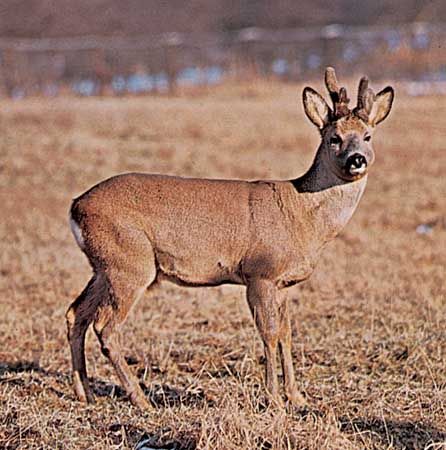
Roe deer (Capreolus) are small, graceful members of the family Cervidae characterized by several distinct physical features:
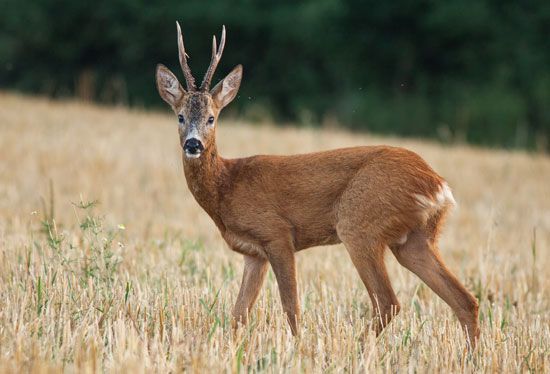
- Coat and Coloration: Their coat undergoes seasonal changes, appearing reddish-brown during the summer and shifting to a grayish-brown hue in the winter. A notable feature is a conspicuous white patch on the rump.14
- Size and Build: These deer are relatively small, with the European roe deer standing 66–86 cm (26–34 inches) at the shoulder and weighing up to 30 kg (66 pounds). The Siberian roe deer is larger, typically weighing around 50 kg (110 pounds). They are also noted for being almost tailless.1
- Antlers: Males possess short, typically three-tined antlers. These antlers are roughened and enlarged at the base, an adaptation believed to protect the skull from punctures during combat. Unlike many other deer species, roe deer grow their antlers during the winter.1
- General Morphology: As members of the deer family, they share common traits such as the lack of a gall bladder and the presence of four teats in females.2
Where are roe deer typically found, and what is their natural habitat?
Roe deer (Capreolus) are widely distributed across Eurasia, ranging from northern Europe and Asia into the high mountains of Central Asia, and extending south to Spain.1
Their natural habitat is primarily defined by the forest edge. Roe deer are highly adept at exploiting ecological opportunities created by natural disturbances, such as wildfires and floods, which generate the nutrient-rich, early-successional vegetation they require for their high-energy needs. Because they are specialized feeders that rely on high-quality plant matter—such as buds, foliage, and herbs—they avoid nutrient-poor environments like deserts or dry grasslands.12
Beyond natural landscapes, roe deer are remarkably adaptable and frequently take advantage of human-altered environments, including areas affected by forestry, agriculture, and urbanization. They are known to thrive in these settings when provided with a modicum of management and protection. As expert hiders that prefer thickets, they utilize these diverse landscapes to find cover and food, demonstrating a strong ability to colonize transient, disturbed habitats.152
How do roe deer interact with their environment and what is their ecological role?
Roe deer (Capreolus) interact with their environment primarily as specialized, highly selective feeders that thrive in disturbed ecosystems. Because they require high-quality, nutrient-rich plant matter—such as buds, foliage, herbs, and young grasses—they are ecologically confined to productive habitats and avoid nutrient-poor areas like dry grasslands or deserts.12
Their ecological role is defined by their ability to quickly colonize and exploit transient, nutrient-rich environments created by natural disturbances, including wildfires, floods, and wind-felled trees. These events generate the early-successional vegetation necessary to meet the deer’s high metabolic demands. Furthermore, roe deer are remarkably adaptable to human-altered landscapes, such as areas managed for forestry or agriculture, provided they have sufficient cover.12
As “expert hiders” that rely on thickets for protection, their antipredator strategy segregates them from other herbivores that may occupy the same general region, thereby minimizing direct food competition. By effectively utilizing these shifting, disturbed habitats, roe deer maintain a high birth rate and successfully navigate the challenges of their seasonal environments.12
Sources
- roe deer — Encyclopædia Britannica
- deer - Morphology and behaviour — Encyclopædia Britannica
- artiodactyl - Social behaviour — Encyclopædia Britannica
- roe deer — Merriam-Webster
- 9 of the World’s Deadliest Mammals - Deer (Order Artiodactyla) — Encyclopædia Britannica
Published on · 3 min read