Rosefinch
Rosefinches, which belong to the songbird family Fringillidae, are generally about 15 cm (6 inches) in length.
What are the physical characteristics of rosefinches?
Rosefinches, which belong to the songbird family Fringillidae, are generally about 15 cm (6 inches) in length.1
Their physical appearance is characterized by the following traits:
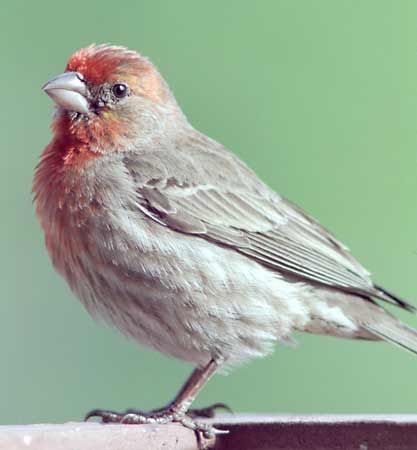
- Coloration: Most species are primarily gray or brownish in color.1
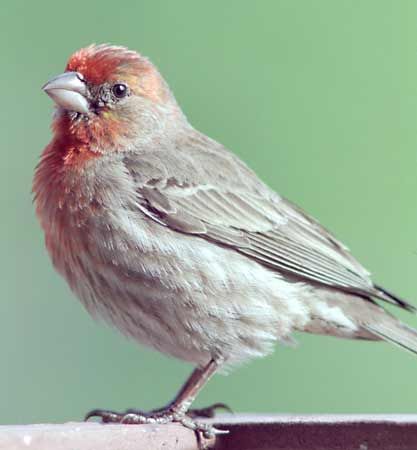
- Sexual Dimorphism: Males typically display red plumage on their head, breast, and rump.1
- Species Variations:
These birds are highly adaptable, with some species, such as the rose-breasted rosefinch, capable of breeding at altitudes as high as 5,500 metres (18,000 feet) in the Himalayas.1
Where are rosefinches typically found in the world?
Rosefinches are found across several regions of the world, with their distribution varying by species:
- Eurasia: The common, or scarlet, rosefinch (C. erythrinus) is native to this region.1
- North America: The purple finch (C. purpureus) breeds in the northern parts of the continent. The house finch (C. mexicanus) is a common sight throughout western North America and has expanded its range along the Atlantic seaboard following its introduction to New York in 1940.1
- Hawaii: The house finch has also become established in these islands.1
- The Himalayas: The rose-breasted rosefinch (C. puniceus) is found at high altitudes, breeding as high as 5,500 metres (18,000 feet).1
How many species of rosefinches are there, and what are some examples?
There are approximately 21 species of rosefinches belonging to the genus Carpodacus within the songbird family Fringillidae.1
Notable examples of these species include:
- Common (or scarlet) rosefinch (C. erythrinus): A species native to Eurasia, sometimes referred to as the scarlet grosbeak.1
- Purple finch (C. purpureus): A bird that breeds across northern North America.1
- House finch (C. mexicanus): A common bird in western North America, also known as the linnet, which has been introduced to the Atlantic seaboard and Hawaii.1
- Rose-breasted rosefinch (C. puniceus): A species found in the Himalayas that breeds at altitudes up to 5,500 metres (18,000 feet).1
Additionally, some authorities classify Przewalski’s rosefinch (Urocynchramus pylzowi) within the family Emberizidae rather than Carpodacus.1
How do rosefinches differ from other finch species?
Rosefinches, which belong to the genus Carpodacus within the Fringillidae family, share many general characteristics with other finches, such as being small, seed-eating songbirds with conical bills. However, they are distinguished by specific physical traits and behaviors:14
- Distinctive Coloration: While many finches exhibit shades of red or yellow, male rosefinches are specifically noted for having red on their heads, breasts, and rumps, while their bodies remain mostly gray or brownish.14
- Size: Rosefinches are typically about 15 cm (6 inches) long, falling within the broader size range of 10 to 27 cm observed across the various species of finches.14
- Extreme Altitudes: The rose-breasted rosefinch (C. puniceus) is notable for breeding at altitudes as high as 5,500 metres (18,000 feet) in the Himalayas, which may be higher than any other songbird.1
- Classification: While most finches are classified within the family Fringillidae, some authorities place the unique Przewalski’s rosefinch in the family Emberizidae.14
Sources
- Rosefinch — Encyclopædia Britannica
- Carpodacus — Merriam-Webster
- Migration - In Europe — Encyclopædia Britannica
- Finch — Encyclopædia Britannica
- Carpodetus — Merriam-Webster
Published on · 2 min read