Linnet
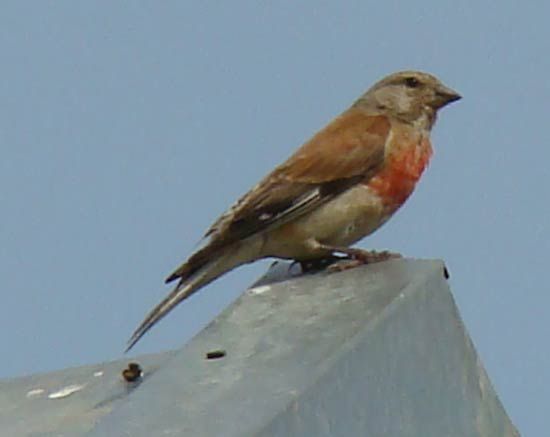
The linnet (Linaria cannabina, formerly Carduelis or Acanthis cannabina) is a small, seed-eating finch belonging to the family Fringillidae.
What is Linnet?
The linnet (Linaria cannabina, formerly Carduelis or Acanthis cannabina) is a small, seed-eating finch belonging to the family Fringillidae.12
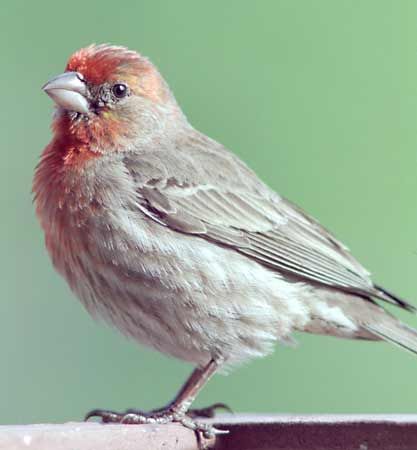
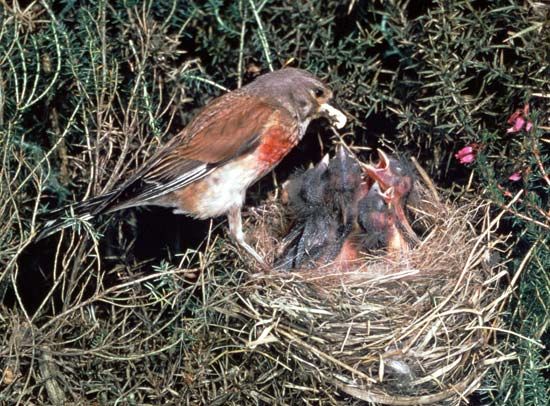
Measuring approximately 13 cm (5 inches) in length, the bird is characterized by its brown-streaked plumage and a white-edged, forked tail. During the breeding season, the male displays distinctive red patches on its crown and breast. Known as a hedgerow singer, the species typically forages for seeds in flocks across open country. The name is derived from the Middle French linette and the Latin linum (flax), reflecting the bird’s historical tendency to feed on flax seeds. In the United States, the term is also frequently used to refer to the house finch, which is a type of rosefinch.12
What other birds belong to the finch family?
The family Fringillidae, often referred to as “true finches,” comprises approximately 230 species of seed-eating songbirds. While the term “finch” is sometimes applied broadly to other families, the true finches within Fringillidae include a diverse range of birds.34
Notable members of the Fringillidae family include:
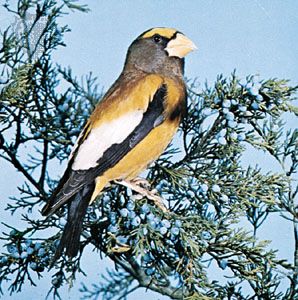
- Grosbeaks: Known for their heavy, powerful bills.34
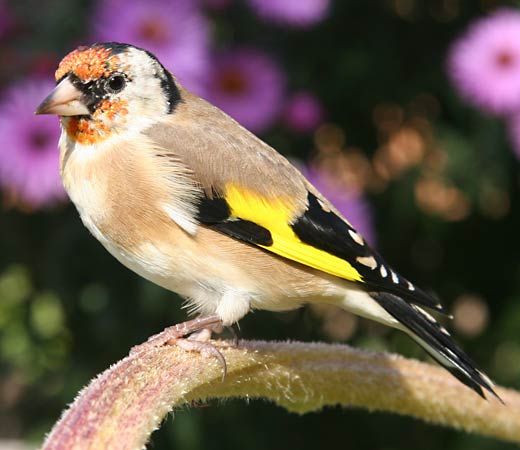
- Goldfinches: Small birds often featuring yellow plumage and delicate, sharp-pointed bills.56
- Chaffinches: Common songbirds found across various regions.34
- Crossbills: Distinctive for their crossed bill tips, adapted for extracting seeds from cones.46
- Canaries: Popular songbirds belonging to the genus Serinus.46
- Bullfinches and Siskins: Active, often gregarious birds.6
- Rosefinches: Members of the genus Carpodacus.6
- Euphonias: Small, often brightly colored birds.34
It is important to note that the common name “finch” is also used for species in other families, such as Emberizidae, Thraupidae, and Estrildidae.34
Why do male linnets have red feathers during breeding season?
The presence of red feathers in male linnets during the breeding season is primarily driven by sexual selection, an evolutionary process that enhances a male’s reproductive success9.
These bright colors serve two main purposes in the mating game:
- Intersexual Selection (Female Mate Choice): Bright plumage acts as a signal of a male’s health and genetic robustness. In many finch species, coloration is linked to diet; a brighter male often indicates he possesses a high-quality territory capable of providing superior food resources for a mate and their offspring.8
- Intrasexual Selection (Male-Male Competition): Vivid colors can also serve as a signal of dominance, helping to intimidate rivals when competing for mates or resources.8
While these colors increase a male’s “sex appeal,” they can also be a disadvantage under natural selection by making the bird more visible to predators. Therefore, a male that displays such striking colors and still manages to survive demonstrates his overall fitness as a suitable mate. The development of these specific seasonal colors is often regulated by sex hormones, which trigger the expression of these traits in response to environmental cues.89
What are some common seeds that finches eat?
Finches are primarily granivorous birds, meaning their diet consists largely of seeds. Most species possess heavy, conical bills specifically adapted for cracking the seeds of various grasses and weeds.4
Beyond basic grasses and weeds, the diet of many finches—such as the American goldfinch—is quite varied. Common food sources include:
- Seeds: They consume seeds from a wide range of woody plants and flowers.10
- Plant Matter: Many species also eat berries, buds, bark, and sap.10
- Specialized Sources: Some finches, such as crossbills, are known to extract seeds from pine cones.410
- Insects: While adults focus on seeds, many species supplement their diet with insects. Notably, nestlings are typically fed insects because they are not yet able to crack hard seeds.410
Sources
- Linnet — Encyclopædia Britannica
- linnet — Merriam-Webster
- Fringillidae — Encyclopædia Britannica
- Finch — Encyclopædia Britannica
- Goldfinch — Encyclopædia Britannica
- Carduelidae — Encyclopædia Britannica
- Fringillidae — Merriam-Webster
- coloration - Physiological control — Encyclopædia Britannica
- Why are male animals more colorful? — Encyclopædia Britannica
- American goldfinch: Top Questions — Encyclopædia Britannica
Published on · 3 min read