McMurdo Sound
McMurdo Sound is historically significant as a primary gateway for Antarctic exploration. First discovered in 1841 by Sir James Clark Ross, the sound…

What is the historical significance of McMurdo Sound in Antarctic exploration?
McMurdo Sound is historically significant as a primary gateway for Antarctic exploration. First discovered in 1841 by Sir James Clark Ross, the sound provided a vital access route to the continent’s interior.12
Its shores on Ross Island served as the headquarters for legendary expeditions. Robert Falcon Scott established his base there, as did Ernest Shackleton during his 1908 expedition. Today, historic sites like Cape Royds and Cape Evans are preserved as monuments to this era of discovery.13
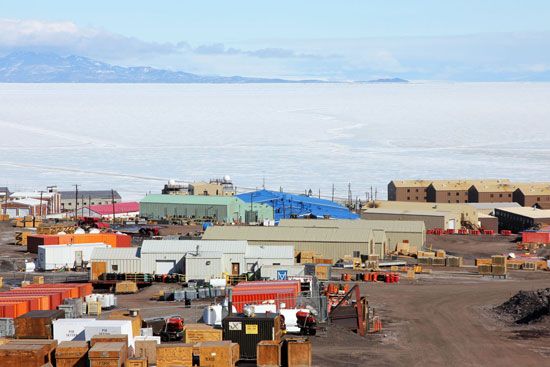
Since the 1950s, the region has transitioned into a hub for modern science. It hosts major research stations, including the United States’ McMurdo Station and New Zealand’s Scott Base. Due to its extensive history and accessibility, the area surrounding the sound remains the most thoroughly studied region on the continent.132

How do researchers and support staff access McMurdo Sound throughout the year?
Access to McMurdo Station in Antarctica is primarily facilitated through air and sea transport, though the harsh environment dictates strict seasonal limitations.
- Air Travel: During the peak summer months (October through February), multiple flights per week transport researchers and support staff between the station and New Zealand. Because extreme weather and plummeting temperatures make air travel hazardous during the Antarctic winter, flights are suspended for much of the year. Operations resume in early August with a period known as “Winfly” (winter fly-in), which marks the return of supply and personnel transport flights.4
- Sea Travel: The station is situated alongside a harbor capable of accommodating deep-keel ships, which serve as a critical means of access for heavy logistics and resupply.45
- Logistical Support: The U.S. military plays a significant role in maintaining these connections, particularly by operating many of the flights to and from the station as part of their logistical support mission.4
Where is McMurdo Sound located and what are its geographical features?
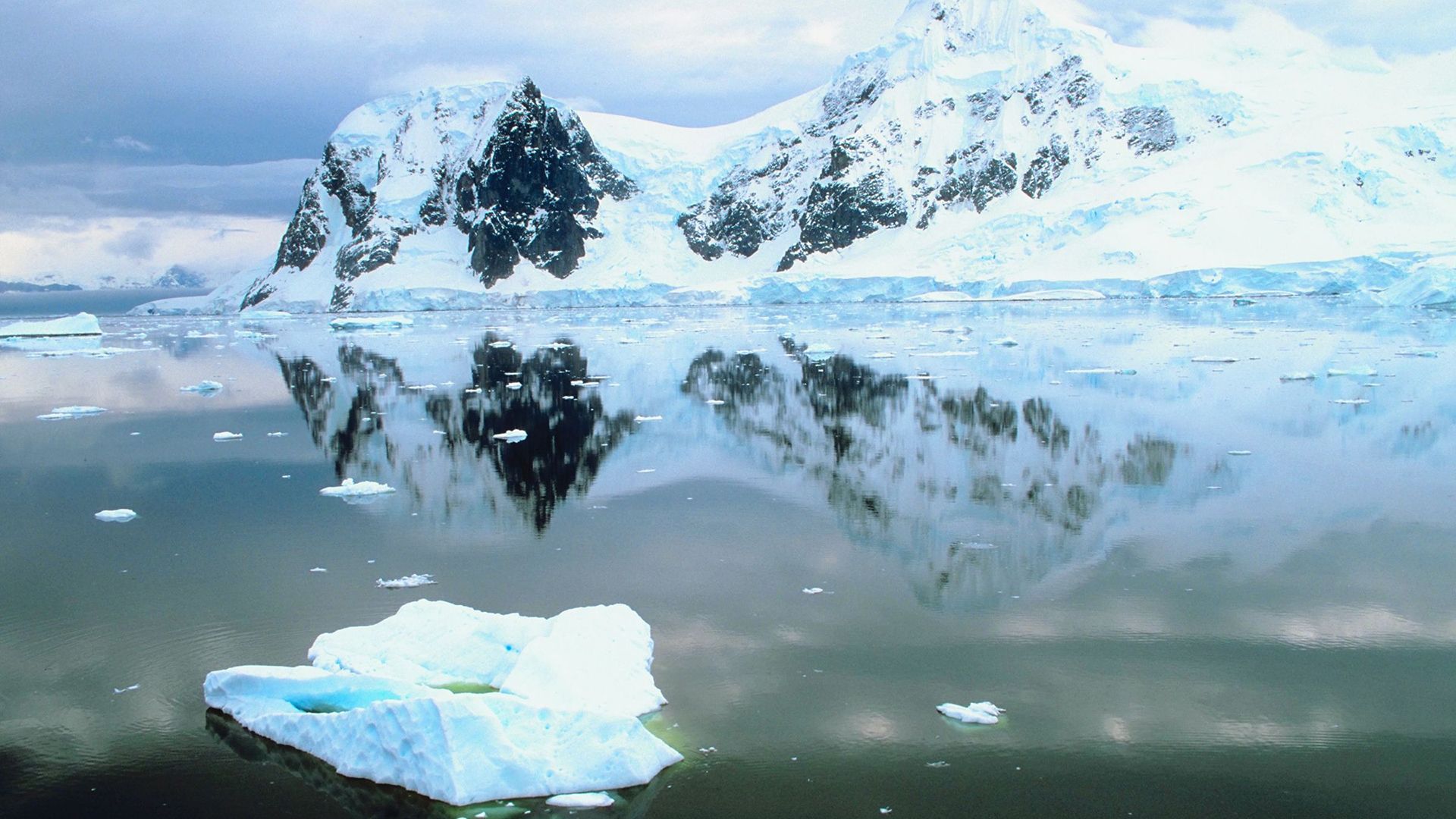
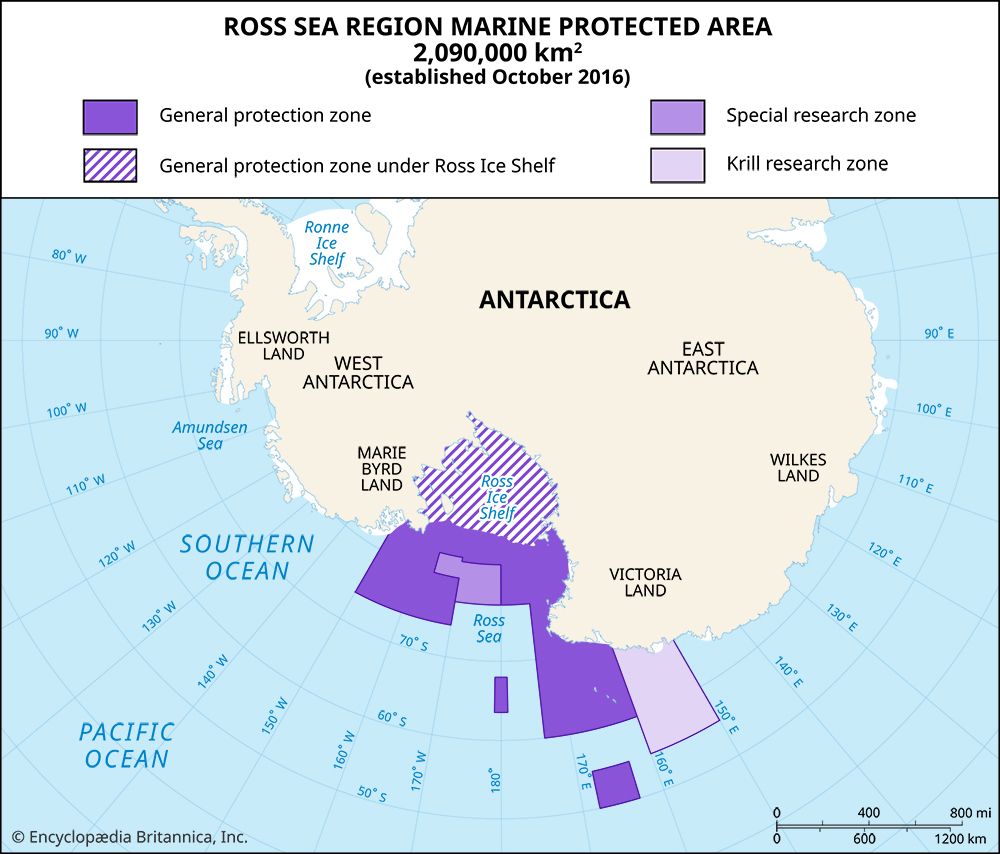
McMurdo Sound is a bay located in Antarctica that serves as the western extension of the Ross Sea1. It is situated at the edge of the Ross Ice Shelf, positioned specifically between Ross Island to the east and Victoria Land to the west Victoria Land to the west.1
Geographically, the sound is a channel measuring approximately 92 miles (148 km) in length and reaching widths of up to 46 miles (74 km). Its location at the western margin of the Ross Ice Shelf—the world’s largest body of floating ice—has historically made it a critical gateway for expeditions attempting to reach the Antarctic interior. The surrounding area is characterized by the volcanic terrain of Ross Island, which features prominent landmarks such as the active volcano Mount Erebus and Mount Terror.782
What scientific research is conducted in and around McMurdo Sound?
Scientific research conducted in and around McMurdo Sound is extensive, as the area serves as a primary hub for Antarctic research. Researchers based at McMurdo Station and nearby Scott Base engage in a wide variety of projects across several disciplines:
- Earth and Environmental Sciences: Scientists study the continent’s geology, glaciers, and ice sheets to understand environmental changes, including the impacts of global warming and the disintegration of ice shelves.410
- Atmospheric Science: A major focus is the study of the ozone layer and the processes behind the annual springtime depletion of stratospheric ozone, often referred to as the “ozone hole”.10
- Astronomy and Astrophysics: The region’s atmospheric clarity and high geomagnetic latitude make it an ideal location for observing the Sun and studying interactions between the Sun and Earth’s upper atmosphere. Projects also include measuring relict radiation from the big bang and using the deep ice as a medium for detecting high-energy neutrinos.10
- Marine Biology: The nutrient-rich waters of the Ross Sea support diverse planktonic life, fish, seals, whales, and penguins, which are subjects of ongoing biological and ecological study.1
Sources
- McMurdo Sound — Encyclopædia Britannica
- Ross Island — Encyclopædia Britannica
- Ross Sea — Encyclopædia Britannica
- McMurdo Station — Encyclopædia Britannica
- sea ice - The emerging impacts of recent changes to sea ice — Encyclopædia Britannica
- McMurdo Station — Merriam-Webster
- Ross Ice Shelf — Encyclopædia Britannica
- Ross Island — Merriam-Webster
- McMurdo Sound — Merriam-Webster
- Antarctica - Climate of Antarctica — Encyclopædia Britannica
Published on · 3 min read