St. Gotthard Pass
Sorry, the Britannica knowledge base does not contain information regarding legends or myths associated with the St. Gotthard Pass. The available records…
Are there any legends or myths associated with St. Gotthard Pass?
Sorry, the Britannica knowledge base does not contain information regarding legends or myths associated with the St. Gotthard Pass. The available records focus on its history as a transit route, the development of its various tunnels, and the origin of its name, which is believed to be derived from a hospice built in honor of St. Godehard, an 11th-century bishop of Hildesheim.1
Where is St. Gotthard Pass located in Switzerland, and what are its key geographical features?
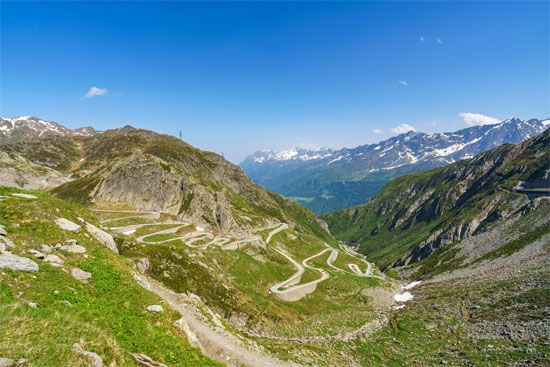
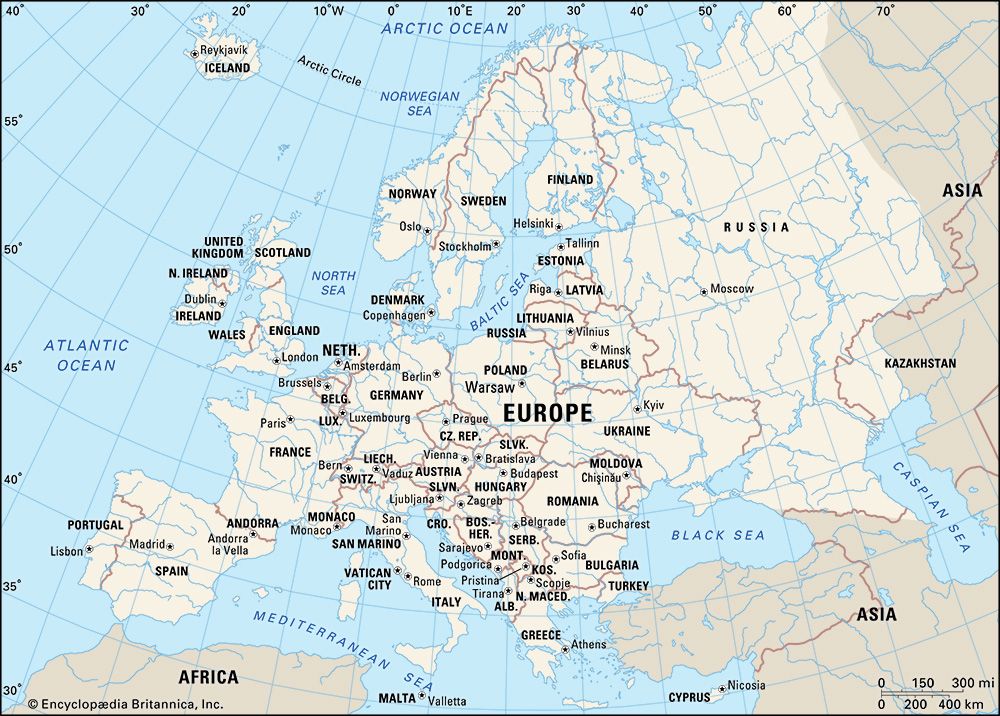
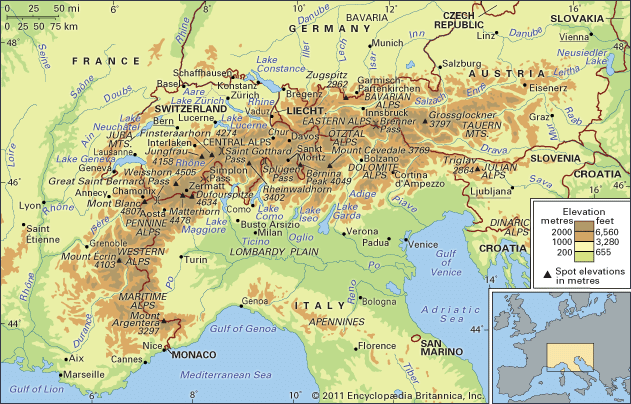
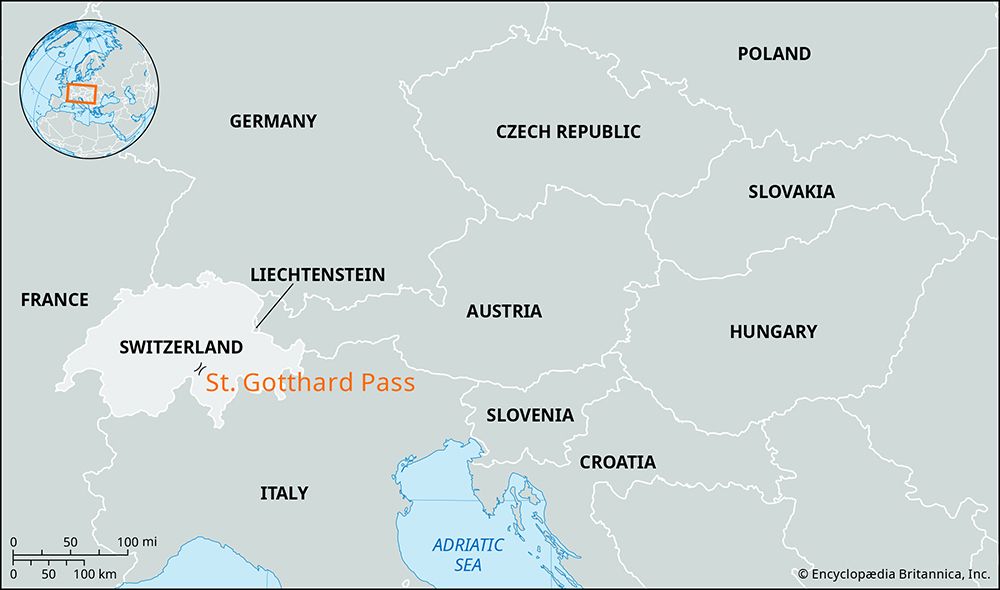
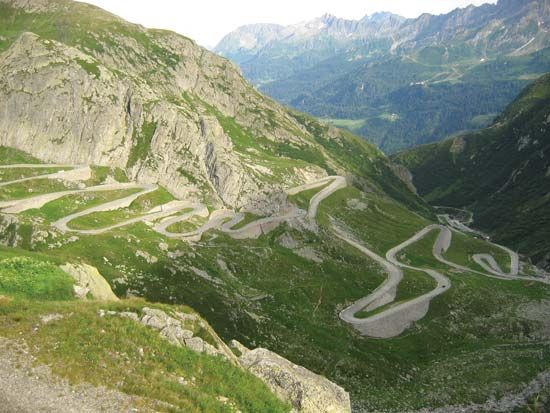
The St. Gotthard Pass is located in the Lepontine Alps of southern Switzerland. It serves as a vital transit corridor connecting central Europe and Italy.1
Geographical Features
- Elevation and Length: The pass sits at an elevation of 6,916 feet (2,108 meters) and spans 16 miles (26 km) in length.1
- Regional Context: It is situated within a segment of the Central Alps that features deep valleys, such as the Leventina, and serves as a geographic reference point for the surrounding mountain range.4
- Hydrology: The region is significant for its proximity to the sources of major European rivers, including the Rhône and the Rhine.4
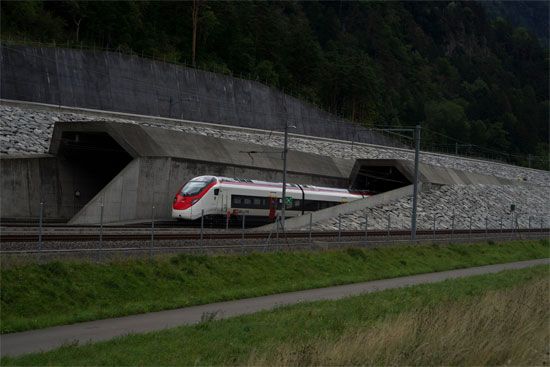
The pass is characterized by its complex infrastructure, including a winding motorway and several subterranean tunnels, most notably the Gotthard Base Tunnel, which is the world’s longest and deepest railway tunnel.14
What is the elevation of St. Gotthard Pass, and how does it compare to other major Alpine passes?
The St. Gotthard Pass is situated at an elevation of 6,916 feet (2,108 meters).1
When compared to other major Alpine passes in Switzerland, the St. Gotthard Pass sits at a moderate elevation. For instance, it is lower than the Furka Pass, which reaches an elevation of 7,976 feet (2,431 meters), and the Albula Pass, which rises to 7,585 feet (2,312 meters).56
Despite its elevation, the St. Gotthard Pass remains one of the most significant transit corridors in the region, serving as a critical link between central Europe and Italy. Its importance is further underscored by the modern infrastructure built beneath it, including the Gotthard Base Tunnel, which provides a high-speed rail connection far below the pass itself.17
What are some notable landmarks or attractions along the St. Gotthard Pass route?
The St. Gotthard Pass route is defined by its historical significance and remarkable engineering feats that connect northern and southern Europe. Notable landmarks and attractions along this corridor include:
- The Summit Hospice: The pass is named after a hospice originally built at the summit by the dukes of Bavaria to honor St. Godehard, an 11th-century bishop of Hildesheim.1
- Engineering Marvels: The route features a long, winding motorway that offers dramatic alpine scenery. Beneath the surface, the area is home to several historic and modern tunnels, including the original St. Gotthard Tunnel (1882) and the St. Gotthard Road Tunnel (1980).1
- Gotthard Base Tunnel: A major modern attraction is the Gotthard Base Tunnel. Opened in 2016, it is the world’s longest and deepest railway tunnel, representing a pinnacle of modern high-speed rail infrastructure.18
- Natural Landscapes: The pass is situated in the Lepontine Alps, providing access to the scenic Reuss and Ticino river valleys, which are popular for mountain climbing and exploring the sources of the Rhône and Rhine rivers.18
Sources
- St. Gotthard Pass — Encyclopædia Britannica
- Saint Gotthard — Merriam-Webster
- Gotthard Base Tunnel — Encyclopædia Britannica
- Lepontine Alps — Encyclopædia Britannica
- Alps - Physiography — Encyclopædia Britannica
- Albula Pass — Encyclopædia Britannica
- Furka Pass — Encyclopædia Britannica
- Stelvio Pass — Encyclopædia Britannica
Published on · 3 min read