Sakaki
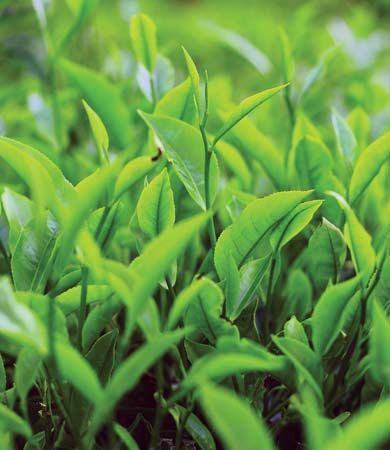
The sakaki (Cleyera ochnacea) is a low-spreading, flowering evergreen tree belonging to the family Pentaphylacaceae. Native to warm regions of Japan, Korea…
What is sakaki?
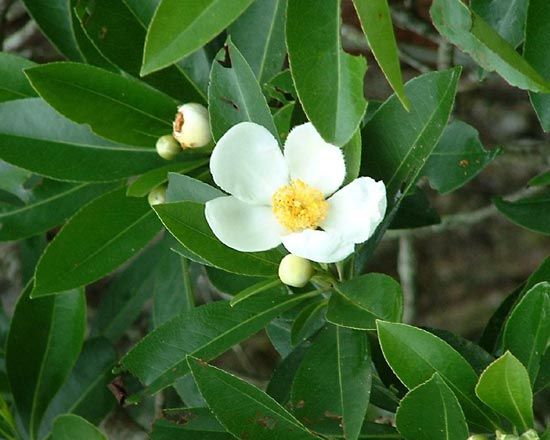
The sakaki (Cleyera ochnacea) is a low-spreading, flowering evergreen tree belonging to the family Pentaphylacaceae. Native to warm regions of Japan, Korea, Taiwan, and mainland China, the tree can reach heights of approximately 10 meters (30 feet) and produces fragrant, white, drooping flowers in the spring.12
In Shintō, the sakaki holds significant religious importance. Its branches are traditionally used to decorate shrines and demarcate sacred spaces, and the trees are sometimes featured in festival processions. While some sources classify it within the family Theaceae as Cleyera japonica, it is widely recognized for its role as a sacred plant in Japanese culture.12
Please note that the term “sakaki” is distinct from the “Sakaida” family, which is a renowned lineage of Japanese potters famous for their porcelain work.3
What are the core beliefs of the Shinto religion?
Shintō is the indigenous religion of Japan, characterized by its lack of a single founder, official dogmas, or a central sacred scripture in the strict sense. Instead, it is defined by traditional beliefs and practices that are deeply integrated into Japanese social life and values.456
Core Concepts
- Kami: The central objects of worship are kami, which include deities, spirits, and forces of nature. Kami can manifest in animate or inanimate things, such as rocks, trees, birds, and ancestors. Shintō mythology speaks of an infinite number of kami (“800 myriads”), reflecting a worldview where the spiritual realm is manifest in the natural world.758
- Nature and Humanity: Shintō emphasizes a sense of proximity to nature, viewing it as inherently benevolent and instructive. Humans are considered “kami’s children,” possessing a divine nature that is inherently sacred.89
- Purity and Purification: A fundamental aspect of Shintō is the focus on purity. Rituals of purification (harae) are performed to remove “dust and impurities” that cover the inner mind. Contact with the sacred or the polluted requires careful handling, as the sacred is viewed as highly powerful and potentially overwhelming if one is not properly purified.910
- Continuity and Community: Shintō is a religion of tsunagari (continuity or communion), emphasizing that individuals are part of a long history connecting ancestors to descendants. It promotes harmony and peace, often expressed through communal festivals and the role of local shrines in uniting communities.96
How are sacred spaces defined in Shinto traditions?
In Shintō tradition, sacred spaces are defined by their separation from the secular world and their role as dwellings or sites of visitation for kami (deities or sacred powers).
Demarcation and Entry
The boundary between ordinary space and a sacred precinct is traditionally marked by a torii, a symbolic gateway consisting of two vertical posts topped by crossbeams. This structure serves as a threshold, signaling that the area beyond is consecrated. Before entering, visitors typically perform purification rituals, such as washing their hands and rinsing their mouths at a temizu-ya (ablution basin), to cleanse themselves of impurities before approaching the divine.1415161718
Architectural Structure
Sacred sites, or jinja, generally consist of three primary units:16
- Honden (Main Sanctuary): The innermost area where the shintai (a sacred object representing the kami) is housed. This space is typically restricted to priests.1617
- Heiden (Hall of Offerings): A space where religious rites and prayers are performed to summon or send away the kami.1617
- Haiden (Hall of Worship): The area accessible to devotees for prayer and offerings.1617
Historically, these sites were often located in areas of natural beauty, such as forests or mountains, reflecting the Shintō belief that kami are found in the forces of nature.1615
What other plants hold symbolic meaning in Japanese culture?
In Japanese culture, several plants hold deep symbolic significance, often reflecting the country’s connection to nature, spirituality, and seasonal cycles.
- Sakaki (Cleyera ochnacea): This evergreen tree is central to Shintō traditions. It is used to demarcate or decorate sacred spaces, and its branches are frequently employed in rituals and festivals to signify the presence of the divine.120
- Cherry Blossoms (Sakura): These flowers are perhaps the most iconic symbol of spring in Japan. The annual “cherry blossom front”—the northward progression of blooming trees—is a major cultural event, celebrated through hanami (flower viewing). They are deeply revered and have become a profound symbol of the fleeting nature of beauty and life.2122
- Chrysanthemum: Highly significant in Japanese history and art, the chrysanthemum is the namesake of the Order of the Chrysanthemum, the nation’s highest and most exclusive honor. It is frequently depicted in traditional art and is a staple of Japanese floral aesthetics.2324
- Lotus: Holding great importance in Buddhism, the lotus is a symbol of purity and enlightenment. It is famously referenced in the Lotus Sutra, where it represents the ability to flourish and remain untainted despite growing in “muddy waters,” symbolizing the path to spiritual awakening.4
Sources
- sakaki — Encyclopædia Britannica
- sakaki — Merriam-Webster
- Sakaida family — Encyclopædia Britannica
- Shintō - Varieties of festival , worship, and prayer — Encyclopædia Britannica
- kami — Encyclopædia Britannica
- Shintō — Encyclopædia Britannica
- purification rite - Pollution and the sacred — Encyclopædia Britannica
- purification rite - Purity and pollution in relation to religious concepts — Encyclopædia Britannica
- Shintō - Nature of humanity and other beliefs — Encyclopædia Britannica
- Shintō - Nature and varieties — Encyclopædia Britannica
- shinten — Encyclopædia Britannica
- Shintō - Shintō literature and mythology — Encyclopædia Britannica
- Japanese architecture - General characteristics — Encyclopædia Britannica
- torii — Encyclopædia Britannica
- Jinja — Encyclopædia Britannica
- Ise Shrine — Encyclopædia Britannica
- Shintō - Shintō religious arts — Encyclopædia Britannica
- Shintō - Types of shrines — Encyclopædia Britannica
- harai — Encyclopædia Britannica
- Floral decoration - Japan — Encyclopædia Britannica
- Lotus Sutra — Encyclopædia Britannica
- Japanese flowering cherry — Merriam-Webster
- cherry blossom — Merriam-Webster
- Order of the Chrysanthemum — Encyclopædia Britannica
- Japan - Social customs — Encyclopædia Britannica
- Chrysanthemum — Encyclopædia Britannica
Published on · 4 min read