Theaceae
The Theaceae family, commonly known as the tea family, consists of approximately 9 to 40 genera and 200 species of trees and shrubs primarily native to…
What are the main characteristics of plants in the Theaceae family?
The Theaceae family, commonly known as the tea family, consists of approximately 9 to 40 genera and 200 species of trees and shrubs primarily native to temperate and tropical regions, particularly Southeast Asia and Malesia.12
Key characteristics of the family include:
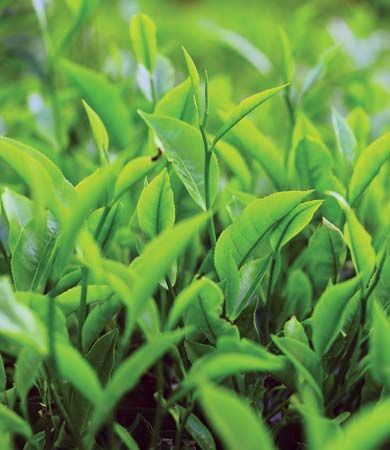
- Foliage: Members typically feature evergreen, thick, and toothed leaves that often turn red before falling.12
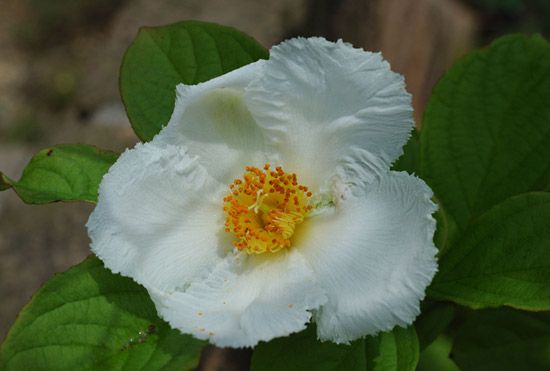
- Flowers: The flowers are generally large and showy, characterized by five free sepals and petals, and numerous stamens with long filaments.12
- Reproduction: Bees are considered primary pollinators, often attracted by pollen or “pseudopollen”—specialized cells from the anthers that mimic pollen size.2
- Fruit and Seeds: The fruit is typically a capsule containing a persistent central column, with seeds that are often flattened. Seed dispersal is largely achieved through wind.2
The family is economically significant, most notably for Camellia sinensis, the source of tea, and various ornamental plants such as Franklinia, Gordonia, and Stewartia.12
How do pollination and seed dispersal occur in Theaceae plants?
In the Theaceae family, pollination and seed dispersal rely on specific biological mechanisms adapted to the family’s structure.
Pollination
Bees are considered the primary pollinators for members of the Theaceae family. Because these plants typically offer pollen as their main reward for visitors, they have evolved to attract bees effectively. In addition to standard pollen, some species produce “pseudopollen”—specialized cells derived from the interior of the anthers that possess different cell wall thickenings but are similar in size to actual pollen grains. While the precise function of pseudopollen in the pollination process remains unclear, it is a notable feature within the family.3
Seed Dispersal
The fruit of Theaceae plants is generally a capsule that features a persistent central column, and the seeds themselves are often flattened. Once these capsules mature, the primary method of seed dispersal for the family is wind. This reliance on wind dispersal is consistent with the family’s general reproductive strategy, which facilitates the spread of seeds away from the parent plant to ensure the successful establishment of the next generation.34
What is the geographical distribution of Theaceae plants?
The Theaceae family, or tea family, comprises approximately 200 species of trees and shrubs with a distribution primarily centered in the Southeast Asia–Malesia region. While the family is represented in both temperate and tropical zones across both hemispheres, its diversity is most concentrated in Asian territories.12
Specific distribution patterns include:
- Southeast Asia and Malesia: This region serves as the primary hub for the family, hosting the majority of its genera and species, including the genus Pyrenaria and the widespread Camellia genus.1
- East Asia: Many species, particularly within the genus Stewartia, are native to East Asian countries, most notably China. Other genera, such as Eurya and Cleyera, are also characteristic of this region.12
- United States: A limited number of species are found in the southeastern United States. This includes some Stewartia species and the genus Franklinia, which was native to Georgia but is now considered extinct in the wild.1
- India: The tea plant, Camellia sinensis, is native to the Assam region of northeastern India](https://www.britannica.com/topic/tea-beverage), is native to the Assam region of northeastern India.2
What are some notable ornamental plants from the Theaceae family?
The Theaceae family includes several notable ornamental plants prized for their showy, often camellia-like flowers and attractive foliage.
Popular Ornamental Genera
- Camellia: This genus is perhaps the most famous for its ornamental varieties. C. japonica is widely cultivated for its double, multi-petaled flowers in shades of white, pink, and red. C. sasanqua is a hardy, autumn-blooming shrub often used for hedges, while C. reticulata is noted for its exceptionally large flowers.1910
- Stewartia: These shrubs and small trees are valued for their showy white blooms and striking, peeling bark. The Japanese stewartia is particularly popular, while North American species include the silky camellia and the mountain stewartia.1210
- Franklinia: Known for its camellia-like white blooms, this genus is historically significant as it is now extinct in the wild, though it remains in cultivation.110
- Gordonia: Another genus recognized for producing attractive, camellia-like white flowers.1
- Cleyera japonica: This plant is cultivated for its fragrant, creamy-white flowers and decorative dark red berries.1
- Eurya: These are often used as slow-growing, low-maintenance foundation plants, favored for their glossy leaves.1
Sources
- Theaceae — Encyclopædia Britannica
- Ericales - Theaceae — Encyclopædia Britannica
- Myrtales - Natural history — Encyclopædia Britannica
- Asteraceae - Pollination — Encyclopædia Britannica
- Seed - Dispersal by wind — Encyclopædia Britannica
- Pollination - Bees — Encyclopædia Britannica
- Major types of pollinators - Bees — Encyclopædia Britannica
- Seed dispersal — Encyclopædia Britannica
- stewartia — Encyclopædia Britannica
- Camellia — Encyclopædia Britannica
Published on · 3 min read