San Cristóbal Island
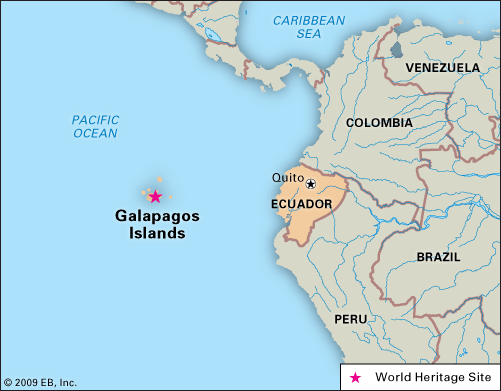
San Cristóbal Island holds historical significance in the scientific study of the Galápagos Islands. In 1835, the English naturalist Charles Darwin landed on…
What role does San Cristóbal Island play in scientific research and education about the Galápagos ecosystem?
San Cristóbal Island holds historical significance in the scientific study of the Galápagos Islands. In 1835, the English naturalist Charles Darwin landed on the island and compiled essential data that he later incorporated into his seminal work, On the Origin of Species (1859), which introduced the theory of natural selection.12
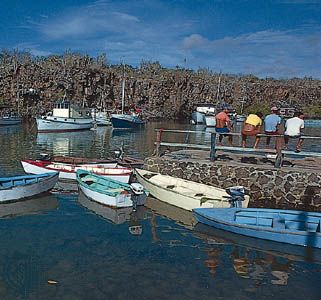
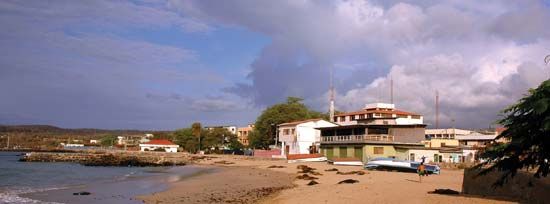
While the Charles Darwin Research Station on Santa Cruz Island is the primary hub for ongoing scientific studies and the protection of the archipelago’s indigenous flora and fauna, San Cristóbal remains a vital part of the human and ecological landscape of the region. As the most populated and fertile island in the group, it serves as a center for human settlement and activity, including agriculture and administration.231
What historical significance does San Cristóbal Island have in relation to Charles Darwin’s visit?
San Cristóbal Island holds significant historical importance as one of the locations visited by the English naturalist Charles Darwin during his 1835 voyage aboard the HMS Beagle.14
During his time on the island, Darwin compiled essential observations and data regarding the local flora and fauna. These findings proved instrumental in the development of his groundbreaking theories on natural selection, which he later detailed in his seminal work, On the Origin of Species (1859). To commemorate his visit and his contributions to science, a monument to Darwin was erected on San Cristóbal in 1935.14
How does San Cristóbal Island’s geology differ from other Galápagos Islands?
Like the other Galápagos Islands, San Cristóbal is volcanic in origin and composed of lava piles. However, it possesses a distinct geological feature that sets it apart from the rest of the archipelago: it is the only island in the group that maintains a regular water supply. This supply is sourced from rainwater that collects within its broken craters.12
While the broader Galápagos archipelago is characterized by an arid landscape featuring shield volcanoes, high volcanic mountains, and cliffs, San Cristóbal is noted for being the most fertile island in the group. Its highest point reaches 2,940 feet (896 metres), which is significantly lower than the highest point of the entire archipelago, Mount Azul on Isabela Island, which stands at 5,541 feet (1,689 metres).12
What unique wildlife species can be found on San Cristóbal Island?
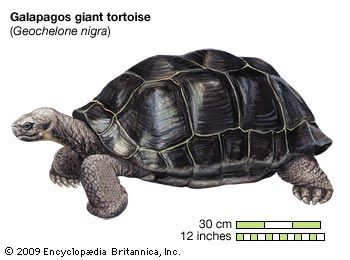
The provided search results do not contain specific information regarding unique wildlife species exclusive to San Cristóbal Island. While the Galápagos Islands as a whole are renowned for their endemic fauna—such as giant tortoises, Galápagos finches, marine iguanas, and blue-footed boobies—the available data does not distinguish which of these are unique specifically to San Cristóbal.12
Sources
- San Cristóbal Island — Encyclopædia Britannica
- Galapagos Islands — Encyclopædia Britannica
- Santa Cruz Island — Encyclopædia Britannica
- Charles Darwin - Early life and education — Encyclopædia Britannica
- San Cristobal — Encyclopædia Britannica
- San Cristóbal — Merriam-Webster
Published on · 2 min read